









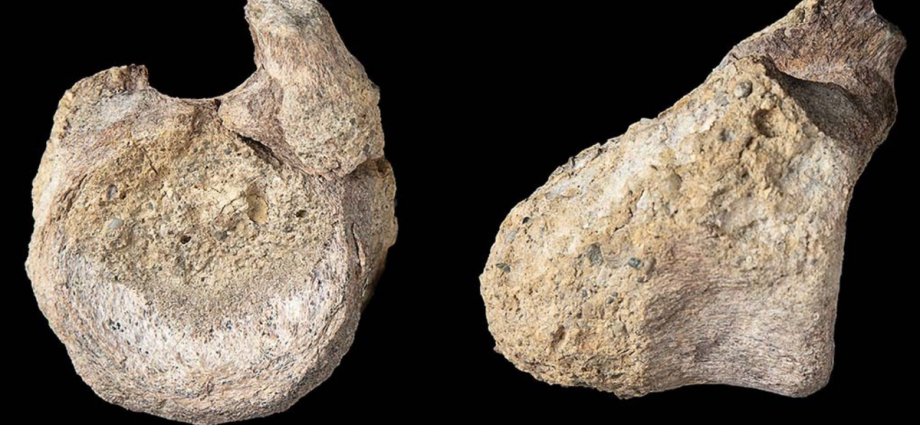
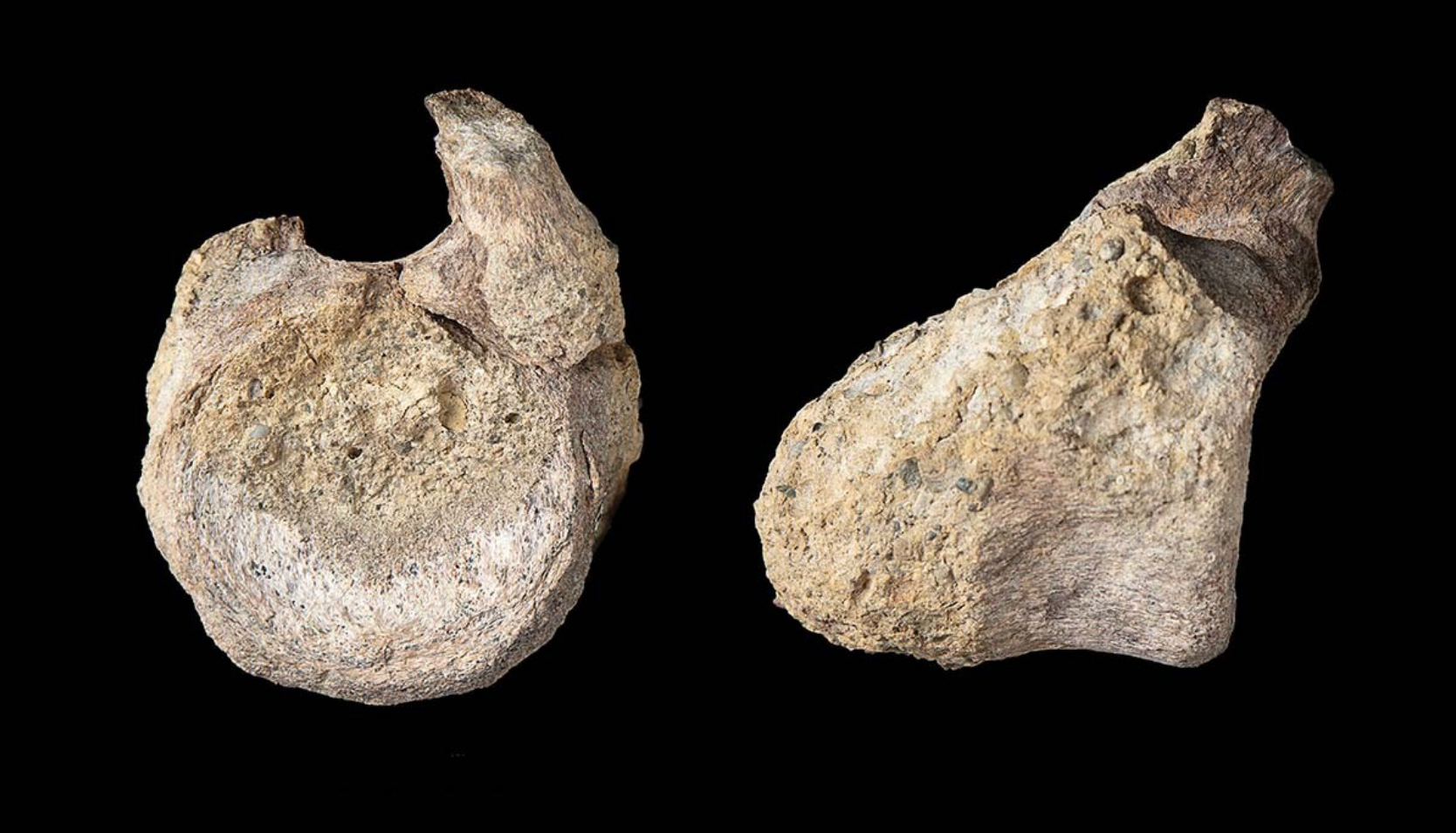
A fossil which was left in archives for 40 years has now been confirmed as the first-ever dinosaur bone to be found in Antarctica.
Originally unearthed on James Ross Island during a 1985 British Antarctic Survey expedition, the fossil was initially misidentified as a prehistoric reptile and quietly stored away in the organisation’s massive geology collection.
Now, four decades later, modern analysis has confirmed that this forgotten artefact is actually a tail vertebra belonging to a Titanosaur, a group of colossal, long-necked sauropods.
The discovery marks a new chapter for palaeontology in the region, where only one other sauropod bone has ever been found in Antarctica.
Professor Paul Barrett, a dinosaur researcher at the Natural History Museum who helped verify the find, said: “Believe it or not, this is the first bit of dinosaur ever discovered on Antarctica. It was overlooked because I think it was misidentified while under harsh field conditions, but it is a sauropod and it’s only the second sauropod bone from the entire continent.”
Dr Mark Evans, collection manager at the British Antarctic Survey, had spotted the specimen among thousands of archived items.
He told the BBC: “It’s only when you start thinking, ‘What’s in this drawer,’ that sometimes you come across something and you think, ‘Ah, this looks interesting.’”
Recognising that the bone closely resembled a dinosaur vertebra, Dr Evans immediately called in Prof Barrett. His confirmation, alongside the date of its discovery, means this Titanosaur bone is the first dinosaur fossil ever discovered on the continent. An analysis of the find has been published in the journal Acta Palaeontologica Polonica.
“As soon as I saw it, I knew what we were dealing with,” Prof Barrett told the BBC. “It was a dead cert we were dealing with a Titanosaur.”
More than 100 species of these four-legged, plant-eating giants have been identified globally, primarily across South America and Central Asia.
While the largest Titanosaurs could reach staggering lengths of over 35 metres and weigh up to 60 tonnes, researchers estimate this specific Antarctic individual was a more modest juvenile or smaller species, measuring roughly six to seven metres long.
Titanosaurs fall under the sauropod clade, a group which features some of the largest creatures to have walked on Earth such as the Brontosaurus and Brachiosaurus, both of which measured more than 20 metres in length.
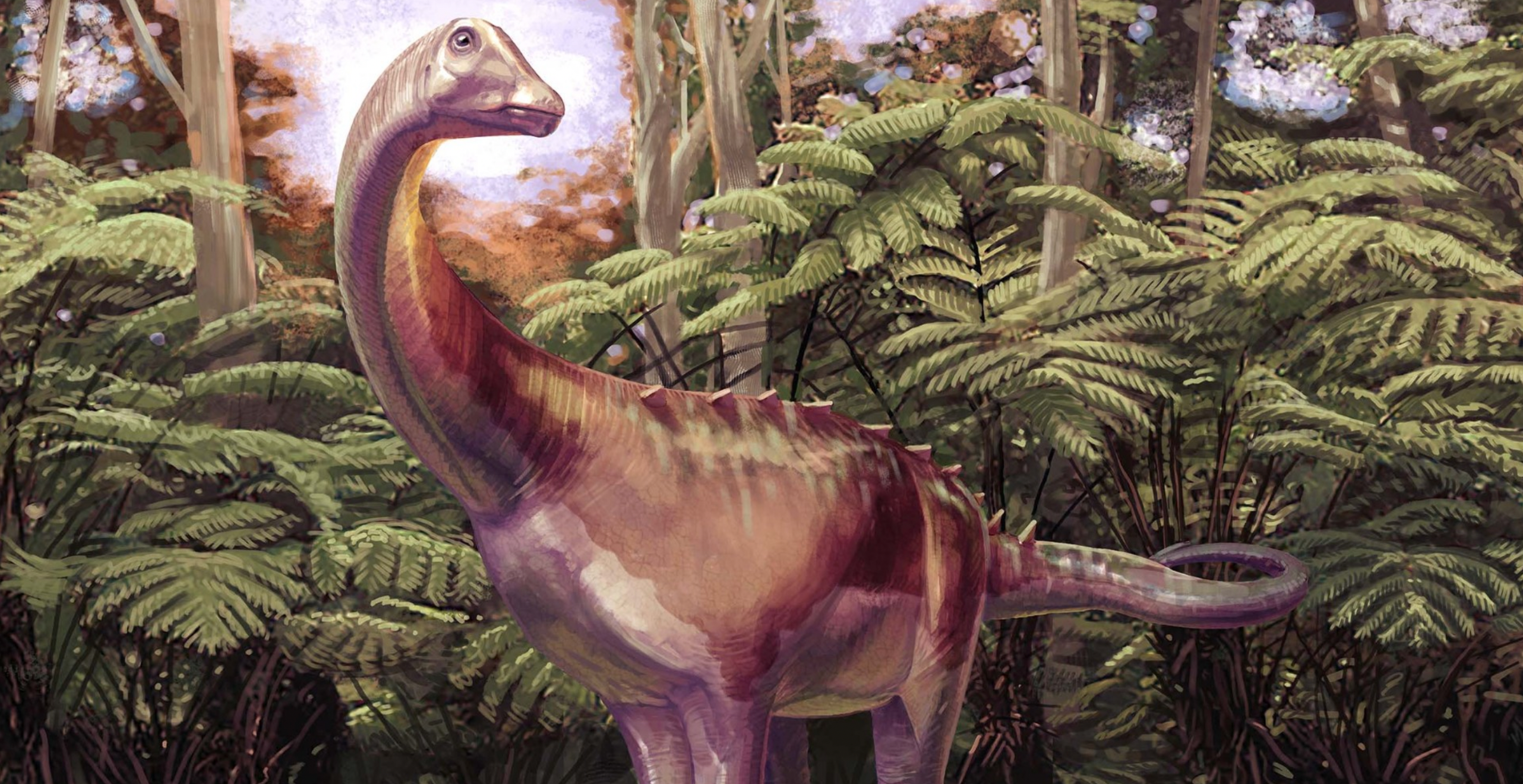
This particular dinosaur is estimated to have roamed the region 82 million years ago during the Late Cretaceous Period, a time when Antarctica was covered in lush, green forests that provided ample food for herbivores.
While it is usually hard to date back such fragmented fossils, Prof Barrett explained how scientists have been able to trace back the origins of the Titanosaur’s fossil: “It’s quite precisely dated because it’s from marine rocks.
“The vertebra was found alongside bits of ammonite, and so this is an animal that would have floated out to sea after it died, perhaps washed out by a river.”
Although the specimen is too fragmented to identify the exact Titanosaur species, it marks a significant milestone in scientific reconstructions of Antarctica’s prehistoric ecosystems.
Today, Antarctica remains one of the most challenging places on Earth for paleontological fieldwork, with up to three kilometres of solid ice concealing the prehistoric record trapped in the bedrock beneath.
Because of these extreme conditions, only around half a dozen dinosaur species have been discovered from the continent so far, although the Natural History Museum suggests the real number is likely higher.