










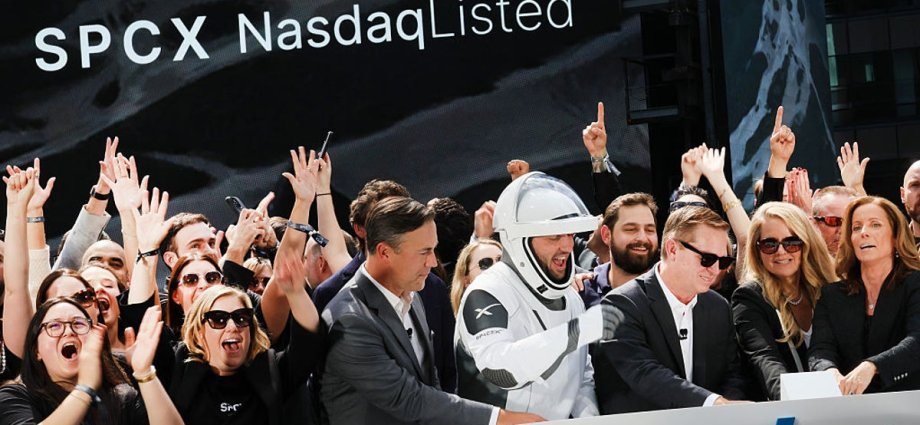
SpaceX investors were flying high in the aftermath of the company’s initial public offering (IPO) earlier this month.
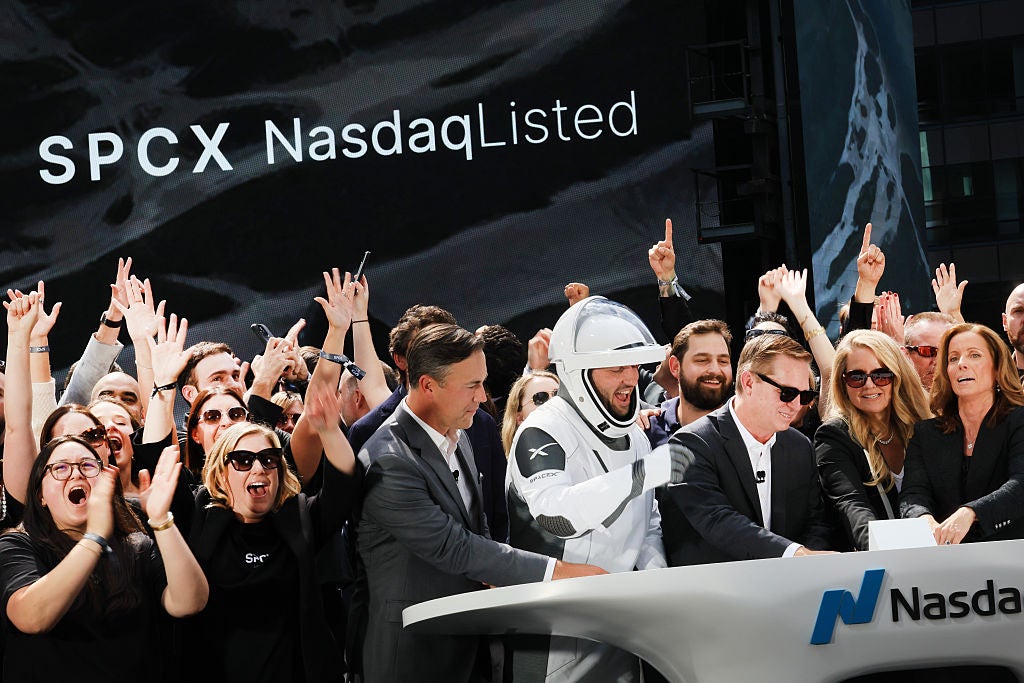
The share price of the Nasdaq-listed stock initially rose 19 per cent on its day of listing on 12 June, from $135 per share and closed at $160.95, making founder Elon Musk the world’s first trillionaire.
The share price has since dropped from its initial highs, underlying the risk of getting caught up in the frenzy of an IPO and the importance of researching hte fundamentals of a stock and whether it fits with your risk profile.
Jason Hollands, managing director of Bestinvest, said: “The challenge for investors who feel they have missed out on the SpaceX IPO is that they need to distinguish between gaining exposure to the company and overpaying for that exposure.
“This was the largest IPO in history in terms of the market-cap of the business, arriving with a valuation that already reflects very high expectations for future growth with a launch price of almost 100 times its revenues.
“It was a controversial IPO in many ways, as only a relatively small number of shares were made available, helping ensure demand would outweigh interest sending the price rocketing – excuse the pun – over the first few days.”
Investors can still purchase shares in SpaceX directly of course, through any stocks and shares provider, but there are other ways to gain exposure that could be seen as lower risk.
Index funds
You could eventually find yourself exposed to SpaceX through a pension fund or via US and global tracker funds – once it is admitted to different indices.
Get a free fractional share worth up to £100.
Capital at risk.
Terms and conditions apply.
ADVERTISEMENT

Get a free fractional share worth up to £100.
Capital at risk.
Terms and conditions apply.
ADVERTISEMENT
Mr Hollands added: “The speed at which this will happen depends on which indices are tracked – and that could mean more meaningful differences in returns between index funds that in the past have been quite similar.”
Historically, most index providers have had guardrails on how quickly a stock is admitted to the ranks of their benchmarks, with rules often including a minimum amount of tradable shares, so-called seasoning periods having passed which enable the share prices to settle, or requirements for a company to deliver a sustained period of profitability.
But ahead of the mega-sized SpaceX IPO, and expected major IPOs of Anthropic and OpenAI, some index providers have changed their rules to accelerate the entry of these stocks.
Mr Hollands said: “The indices expected to include SpaceX shortly include the MSCI World, MSCI AC World, MSCI USA, the FTSE Russell 1000, the Nasdaq Composite and Nasdaq 100 indices.
“Notably, S&P Dow Jones decided not to change their rules and so SpaceX won’t be added to the heavily tracked S&P 500 Index any time soon.”
Tesla, another Musk business, “had to wait ten and a half years from its IPO before it joined the S&P 500 in 2020, having recorded four quarters of being profitable,” Mr Hollands added.
Investment trusts
There are, however, investment trusts that already have exposure to SpaceX, including the Edinburgh Worldwide Investment Trust, the Scottish Mortgage Investment Trust and Baillie Gifford US Growth.
But Nouran Moustafa, practice principal at Roxton Wealth, warns that while SpaceX is an extraordinary business, it quickly became priced with huge expectations attached.
The danger after a blockbuster listing, she says, is that people stop buying a business and start buying a story, which is where investors can get hurt.
“For anyone who wants indirect exposure, a broader aerospace, defence or technology fund may be more sensible than making one company the whole bet,” she said. “There are also listed companies linked to satellites, launch services, semiconductors and space infrastructure, but each comes with its own risks and none is simply ‘the next SpaceX’.
“The smarter question is not ‘how do I buy SpaceX late?’, but ‘how much of my portfolio can I afford to expose to a high-risk, high-expectation theme?’
“Space is exciting. That does not make it automatically suitable for everyone,” Ms Moustafa concluded.
Graham Nicoll, financial planner at NCL Wealth Partners, suggests that rather than trying to pick the next SpaceX, investors may be better served by diversified funds or companies involved in satellites, aerospace, semiconductors and launch technology.
He added: “The long-term growth opportunity in space is broader than any single company, and diversification reduces the risks of backing one high-profile name.”
When investing, your capital is at risk and you may get back less than invested. Past performance doesn’t guarantee future results.