










Extraordinary new discoveries are suggesting, for the very first time, that archaic (non-Homo-sapiens) early human society was far more complex and advanced than previously thought.
New scientific evidence is now revealing that, some 300,000 years ago, a little-known and now long-extinct species of hominid – Homo naledi – developed what appears to have been a very complex form of communal organisation, involving extreme sex-based cultural segregation and very strong female gender identity.
The evidence strongly suggests that the species segregated dead males and females – and that potentially implies that the two sexes may well also have been socially and culturally segregated during their lives. It suggests that the female of the species developed a form of very strong gender-based cultural identity that may, potentially in some respects, have been a form of prehistoric feminism.
Ancient protein tests on their teeth have revealed that the species seem to have operated female-only cemeteries. What’s more, some evidence strongly suggests that the individuals who transported those deceased females to their final resting place (a remote cave inside a hill) and then actually buried them, were themselves also female.
The species’ males are archaeologically totally invisible. None have ever been found – and archaeologists have absolutely no idea what their role in society was or where they were buried.
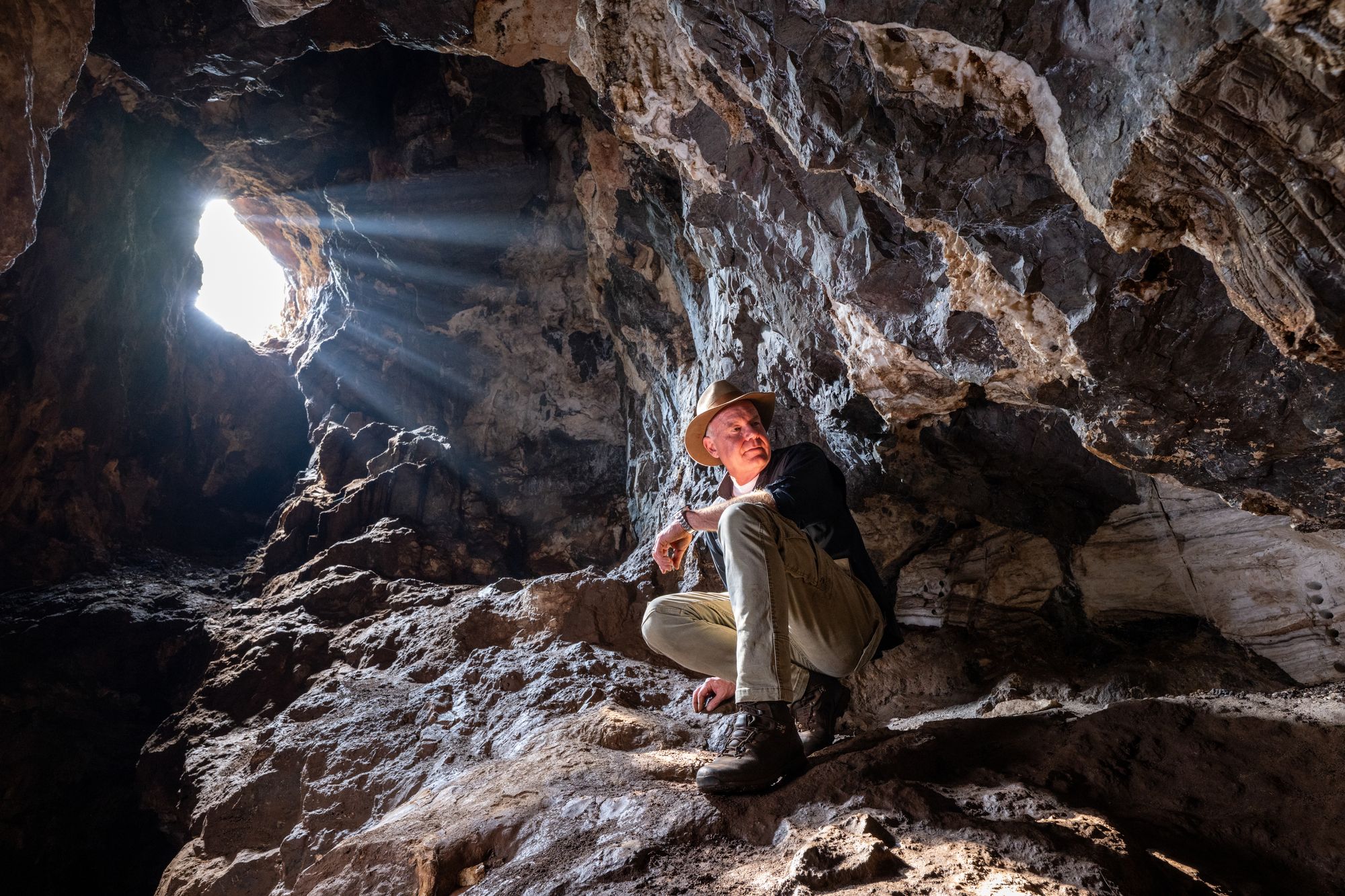
The female cave cemetery, located in Rising Star Cave, near Johannesburg, South Africa, is being investigated by a team of South African scientists, led by Professor Lee Berger, formerly of the University of the Witwatersrand and now with the US-based National Geographic Society, publisher of National Geographic Magazine.
It is the world’s first ever example of a prehistoric female-only cemetery. What’s more, even in more modern times, gender segregation after death has been extraordinarily rare. Apart from some cemeteries attached to a few all-female institutions like nunneries, the only known example of a women-only cemetery is in Rwanda, where women who died in childbirth used to be buried on special islands in a local lake.
The South African cave cemetery not only represents a totally unexpected level of early societal complexity – but also shows the extraordinary lengths that the women of the species were prepared to go to in order to carry out their female-only rituals and traditions.
To transport dead bodies into the cave cemetery, the probably female mourners would have had to spend at least an hour crawling through ultra-narrow passages and down difficult shafts. Indeed most male hominids (of various species) have tended to be 15-50% larger than female ones – and Naledi males would therefore have almost certainly found it much more difficult or indeed impossible to reach the interior of the cave.
Additionally, the probable females, escorting the female dead, would have had to use very long-lasting burning torches (and/or a series of cave-floor bonfires) to illuminate their journey to the underworld.
What’s more, they are by far the oldest culture to have adopted the practice of burying their dead.
And last but not least, emerging evidence (due to be published shortly) strengthens the argument that the Naledi women created a form of geometric art which still adorns more than five square metres of the cave’s walls.
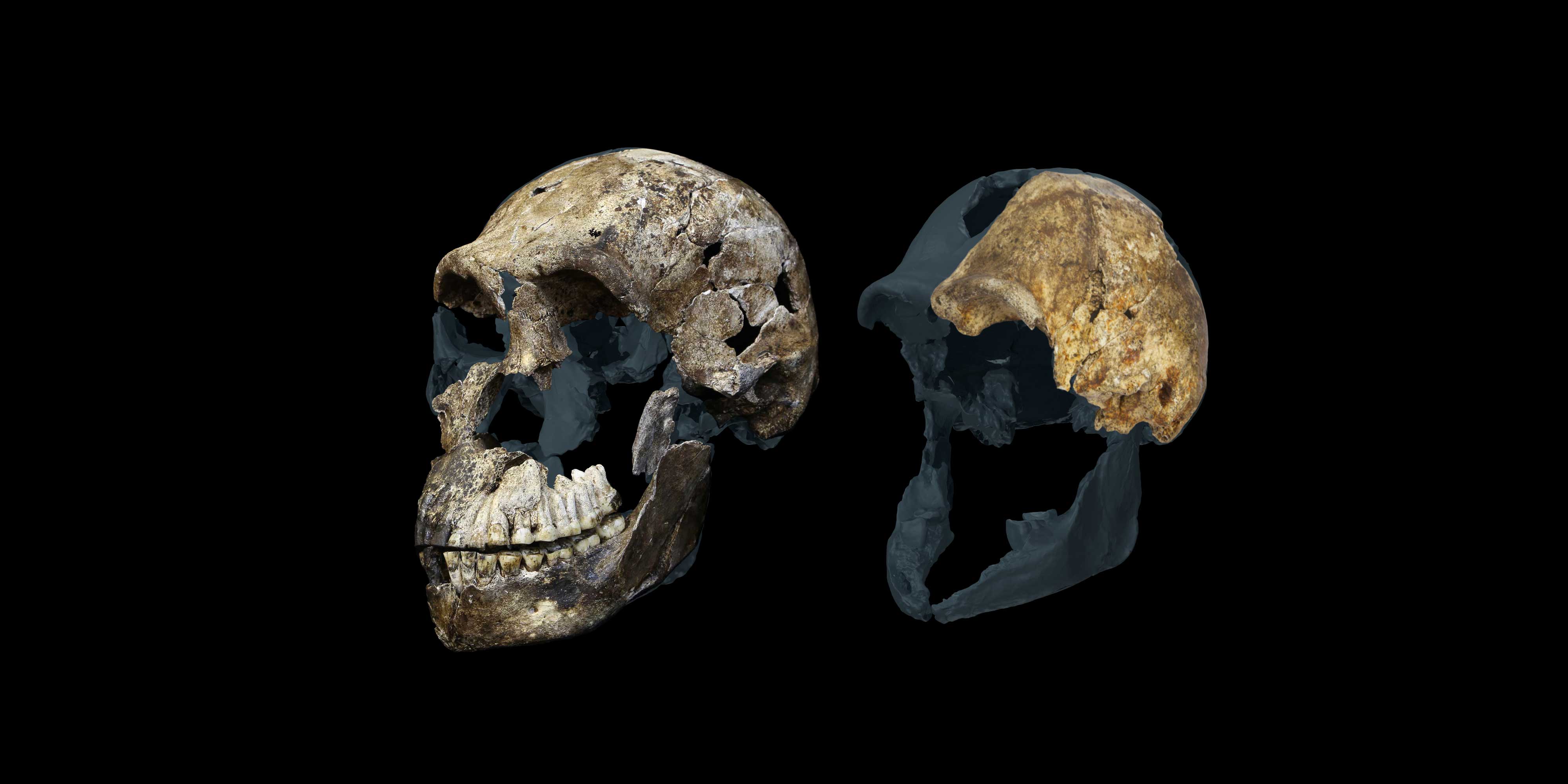
But by far the biggest puzzle about the Naledi culture is the fact that (in terms of complex behaviour, culture, art, ritual, fire-making, etc) they were able to function in so many ways like anatomically modern humans (ie., Homo sapiens) – but did so with brains that were 54-63 percent smaller than ours.
For the first time, anthropologists are now being forced to jettison their long-held belief that really complex primate culture requires a species’ members to have big brains.
Although, in terms of brain size, Naledi’s brain is not much bigger than a chimpanzee’s, endocasts (moulds) of the inside of their skulls have revealed that, in terms of brain architecture, they were not chimp-like at all – but human-like in their complexity.
That suggests that in human evolution, brain architecture (especially a large frontal lobe) may well have been at least as important as overall brain size.
And that, in turn, has implications for investigating and understanding the brain power of some of some of Homo sapiens’ early ancestors – the so-called Australopithecines who lived in eastern and southern Africa between 4.2 and 1.9 million years ago (and who had brains roughly the same size as those of the 300,000 year old culturally very advanced Naledi ones).
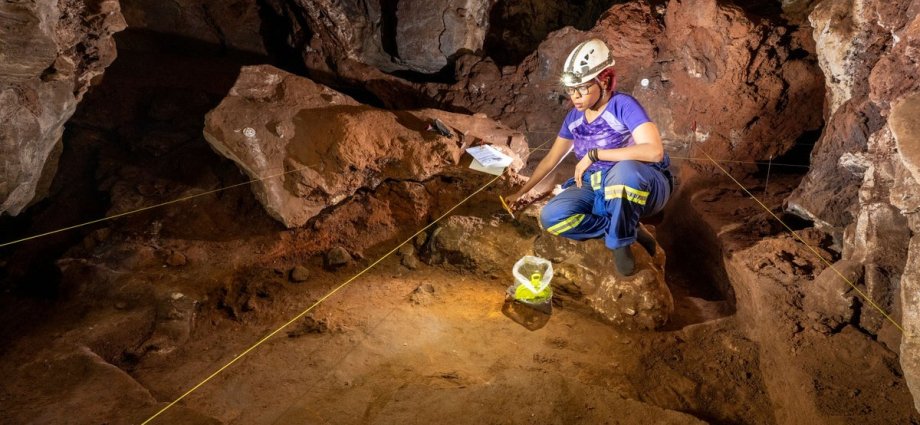
Much of the exploratory work inside Rising Star Cave (where the Homo naledi female cemetery is) was initially carried out by a group of six women scientists, nicknamed the “Underground Astronauts” – because of the difficulty and danger involved in reaching the cave’s main chamber. They had been selected by the expedition leader, Lee Berger, who had used social media to recruit scientists with experience in paleontological excavations and caving but were also small enough and slender enough to crawl through the cave’s extraordinarily narrow access passages. Indeed one of the most challenging passages was dubbed “Superman’s Crawl,” because, to pass through it, the scientists had to extend one arm forward – similar to images of Superman in flight.
“The protein test results conclusively argue for cultural complexity” in Homo naledi society said the leader of the Rising Star Cave project, Professor Berger.
“This will undoubtedly force us to reconsider the timing and origins of complex cultural behaviour”.
“That’s particularly fascinating because Homo naledi and our species’ most recent common ancestor was almost certainly Australopithecus over two million years ago,” he said.
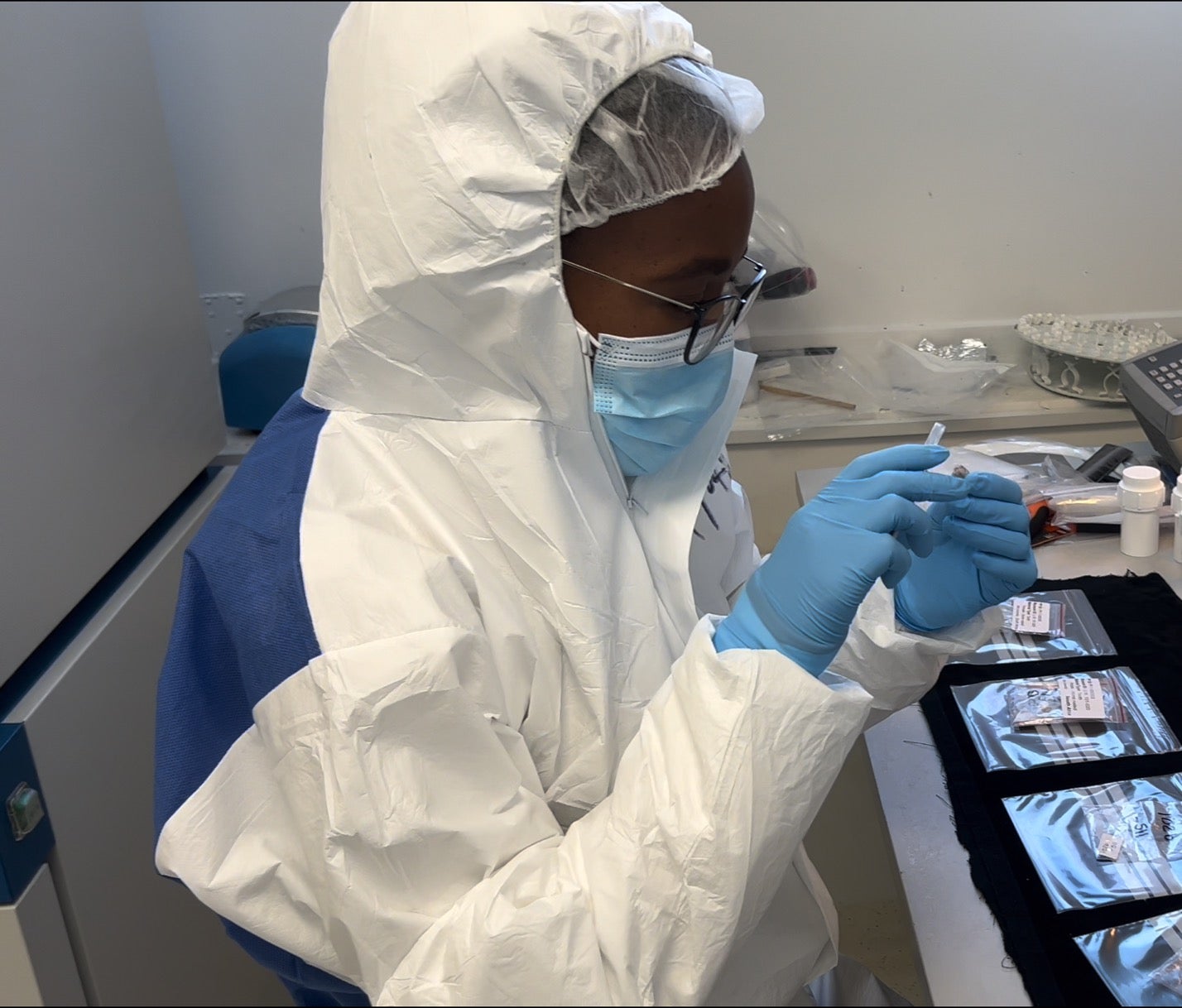
The scientific evidence suggesting that the 300,000 year old subterranean Naledi graveyard was a female-only cemetery has just been published in Cell – a US-based academic journal. The key protein tests, revealing the almost certainly female identity of the individuals buried in the cave, were carried out by the South African scientist, Dr Palesa Madupe, at the University of Copenhagen’s Globe Institute.
The cemetery appears to have been the final resting place for at least several dozen Homo naledi women (and female babies, toddlers, older children and teenagers). They were buried, by probably female mourners, in this subterranean underworld over a substantial period of time. So the cultural tradition of female-only burials seems to have been a relatively long-lasting one within Naledi society.