










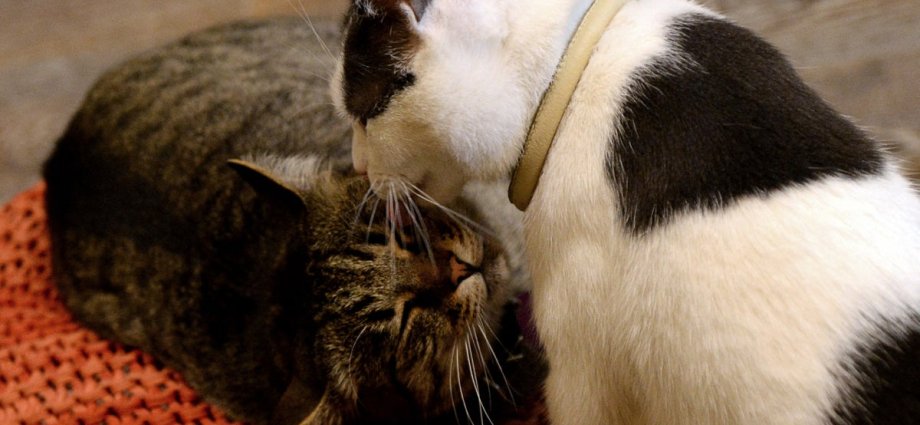
House cats grooming each other is not always a sign of affection and friendship, but can even indicate conflict, according to a new study that upends long-held assumptions about their behaviour.
In homes with multiple cats, it’s assumed that a feline licking another, known as allogrooming, is a sign that they are getting along with each other.
But comprehensive research investigating the behaviour, researchers say, is lacking.
In a new study, researchers from Ghent University and the University of Lincoln teamed up with amateur scientists to film allogrooming across 53 households with two cats.
They found that allogrooming was not always a sign of affection and could sometimes even show conflict.
“Allogrooming in domestic cats has multiple social functions,” researchers concluded in the study published in the journal Applied Animal Behaviour Science, adding that context of the particular activity could help understand the behaviour better.
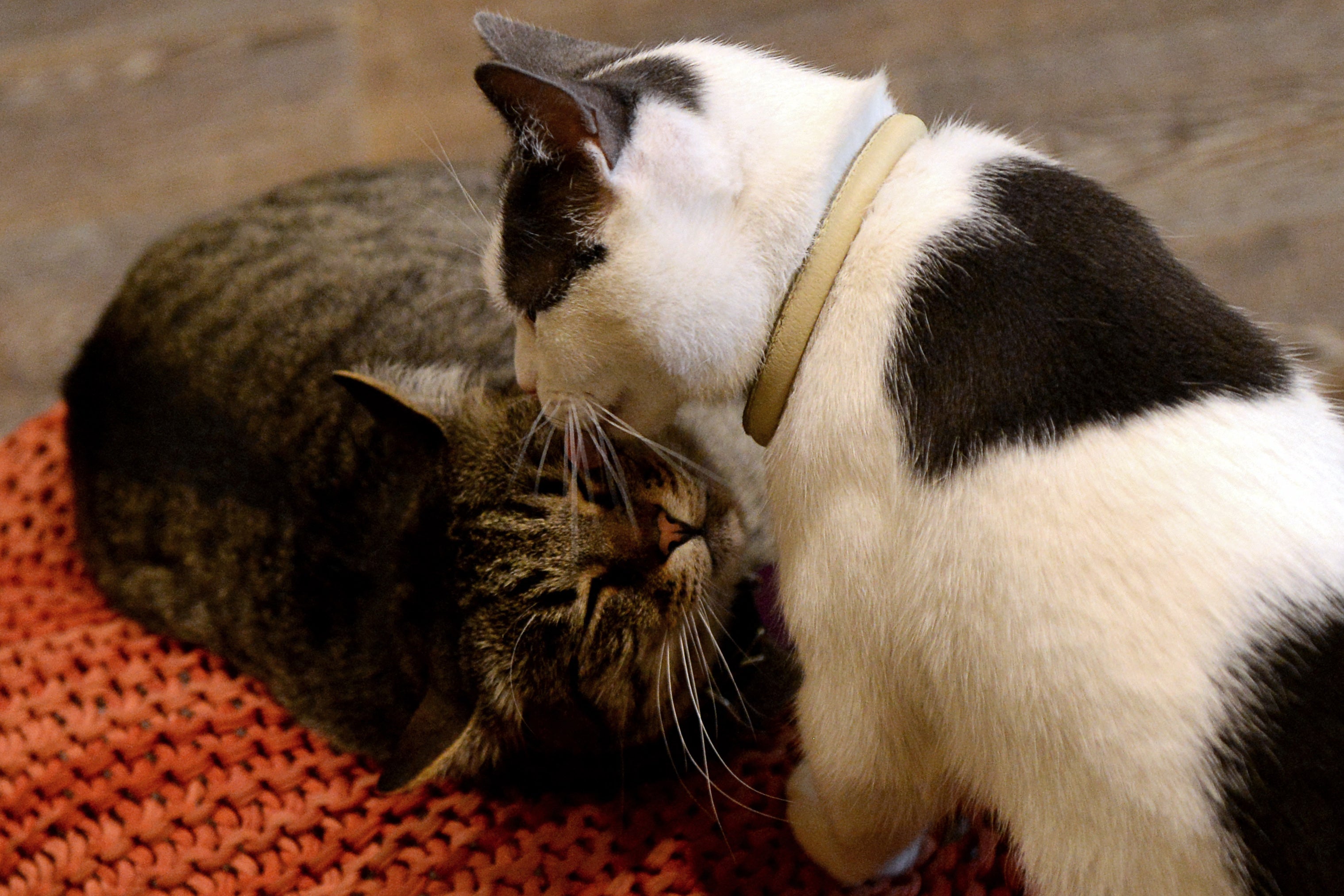
In some cases, allogrooming can strengthen social bonds, serve a hygienic purpose or help the recipient relax.
Cats synchronising their posture, such as lying down or sitting together, indicates a positive setting. The grooming in such cases usually focuses on the head or the ear of the recipient. Cat ears, researchers say, are very sensitive and contain scent glands that can make the activity pleasant.
In some cases, allogrooming is also linked to play. Scientists observed that when many cats wrestled, allogrooming was sometimes used to initiate play.
In these cases, they say, licking typically occurs in the neck region, where cats also frequently bite each other.
In certain situations, allogrooming could be a signal to avoid conflict or convey a passive-aggressive message. This could be the intention in cases like a cat wanting a favourite spot to rest. In such cases, the recipient may flatten its ears when it’s licked by the other cat as it doesn’t particularly enjoy the interaction, according to the study.
Some allogrooming activities involve cat swiping with its paw, shaking its head, scratching behind its ears, biting, yawning, or licking lips. These may be subtle stress signals and happen particularly when the body posture isn’t in sync, such as when one cat is leaning over the other.
Overall, researchers say, the findings indicate the importance of paying attention to the wider posture when understanding cats grooming each other.
“More research is needed to further explore and confirm the suggested functions for allogrooming in cats,” they wrote in the study.
“Ultimately, this knowledge can contribute to the recognition, resolution and prevention of social stress between cats in multi-cat households.”