










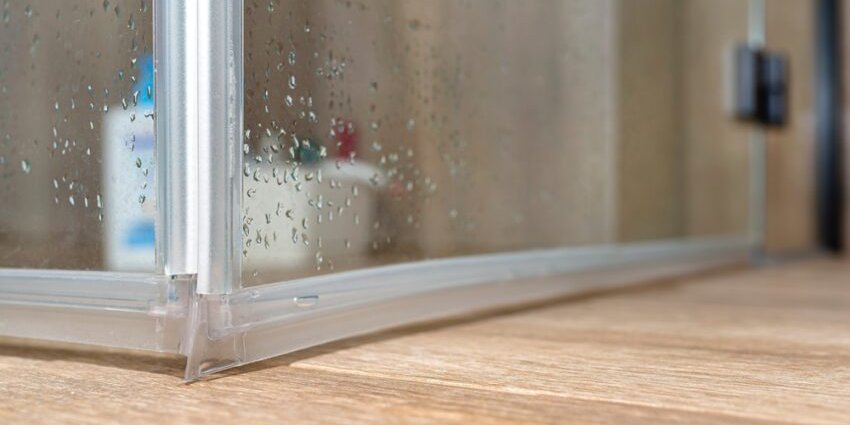
Not every repair economy is built around expensive parts or major refurbishments. Much of it depends on small components that keep everyday products usable for longer.
A worn gasket, a damaged hinge, or a leaking shower door seal hardly sounds like the foundation of a long-term business.Yet these small components support steady demand in the repair and replacement-parts market.
The market for the replacement shower door seal provides one small example of how everyday components can support specialist businesses built around recurring maintenance problems.
Small Components Create Ongoing Demand
In a typical UK home, the bathroom contains many components that wear out long before the main fixture reaches the end of its life.
Most replacement parts are not impulse purchases. People buy them because something they already own is no longer working properly. That means demand is usually practical, specific and often urgent.
When a shower door starts leaking, tenants want a quick solution before water damages flooring or creates a dispute over responsibility. Homeowners would rather replace a small component than replace an entire shower enclosure because of a gap around the door. Property managers often want to solve a maintenance issue quickly without having to investigate larger structural or plumbing problems.
These products exist because the underlying problem keeps appearing in homes, rentals and commercial properties.
The Hard Part Is Knowing Which Replacement Fits
The challenge for customers in the replacement-parts market is often not finding a product. It is knowing which one to buy.
Many replacement parts look almost identical in online photos, yet perform very differently once installed. Small differences can determine whether a replacement actually solves the issue.
In niche markets, large retailers may stock thousands of products, but customers are often left to work out the differences themselves. Specialist suppliers can provide a clearer map of products, making the selection process far easier.
That clarity often comes down to how well the products are explained: clear categories, accurate measurements, useful installation guidance, comparison images, and help for customers who do not know the name of the profile they are trying to replace.
Even a product category that appears simple can be surprisingly complex. A shower door bottom seal, for example, is far from a standard plastic strip.
Differences may include:
- Glass thickness
- Gap size
- Profile design
- Deflector or wiping fin configuration
- Suitability for framed or frameless doors
Many customers do not want to dig through technical product details. They take photos of the old seal, hoping to match the same profile. But with so many similar-looking products online, the subtle differences can be hard to spot. If the shower door is older, the original seal may also be outdated and difficult to identify.
Specialist suppliers with real product depth can meet this demand. For example, showerdoorseal.uk, operated by Simba International Limited, is a UK-focused shower door seal supplier that helps customers narrow down suitable replacements from photos of the door or old seal, including older, discontinued, and hard-to-identify profiles.
That kind of support makes a large product range easier to navigate, especially for customers who only know what the old seal looks like, not what it is called.
Quality Is Hidden in the Details
Many replacement parts look much simpler than they actually are. A shower door seal may appear to be nothing more than a piece of plastic, yet it has to grip the glass, move with the door, contain water and maintain its shape through years of daily use.
As a result, product quality is often determined by details that customers never notice at first glance.
Material formulation affects flexibility and durability. Profile wall thickness affects long-term stability. Profile design affects how effectively water is directed back into the enclosure.
The connection between softer and harder materials also plays an important role. Over time, repeated bending and movement place stress on this area. If the soft wiping section begins to separate from the harder gripping section, the seal may still appear intact while no longer performing as intended.
That is why replacement parts should not automatically be viewed as low-value consumables.
Poor-quality components can allow the same problem to return, while better-designed products are more likely to maintain their performance over time. Specialist manufacturers that focus on the same category for years often understand these weak points well and design products to address them.
The Real Cost Is the Second Repair
A replacement part may be inexpensive. Getting it wrong often is not.
A seal that almost fits can still leak. A hinge that is slightly off-specification can prevent a door from closing correctly. A gasket with the wrong profile can allow the original problem to return. The result is another order, another wait and another attempt to complete the repair.
For a specialist supplier, reducing that cycle is part of the service. Customers are not only paying for the product itself. They are also paying for fewer mistakes, fewer delays and a better chance of solving the problem the first time.
Small Parts, Real Value
A leaking shower door seal is rarely a dramatic problem. It is just one of those small household faults that needs sorting before it becomes more annoying or more expensive.
That is why narrow repair categories keep creating room for specialist suppliers. People are not always looking for the cheapest strip of plastic. They are trying to avoid buying the wrong one, waiting twice, or discovering after installation that the leak is still there.
In that kind of market, the useful business is often the one that knows the category well enough to remove the guesswork. The part may be small, but getting it right is what makes the repair feel simple.