










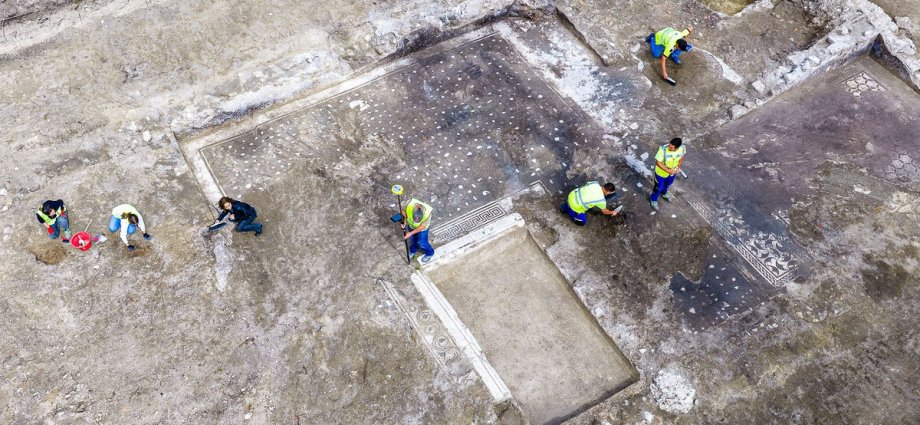
Archaeologists have unearthed a lavish first-century villa visited by three emperors in the Castel di Guido region on the outskirts of Rome, shedding new light on the life of elite Romans of the time.
The villa was discovered during digs about 19km (12miles) west of the city walls of Rome in the ancient region of Lorium, where previously a property linked to emperor Antoninus Pius was found.
It came to light after local police were alerted to illegal excavations at government-owned land in the region.
Archaeologists then undertook emergency excavations to document and stabilise the architecture at the site.
“Thanks to the local report and prompt intervention, it was possible to identify part of a large, previously unknown imperial-period villa and uncover a splendid array of decorations, as well as the discovery of a statue in fine white marble,” said archaeologist Alessia Contino from Italy’s Ministry of Culture.
“The discovery of the Roman villa in Castel di Guido demonstrates the exceptional archaeological richness of our city even outside the historic centre,” said Daniela Porro, the Special Superintendent of Rome under Italy’s Ministry of Culture.
It also shows the effectiveness of a protection based on cooperation and promptness to intervene, Mr Porro said.
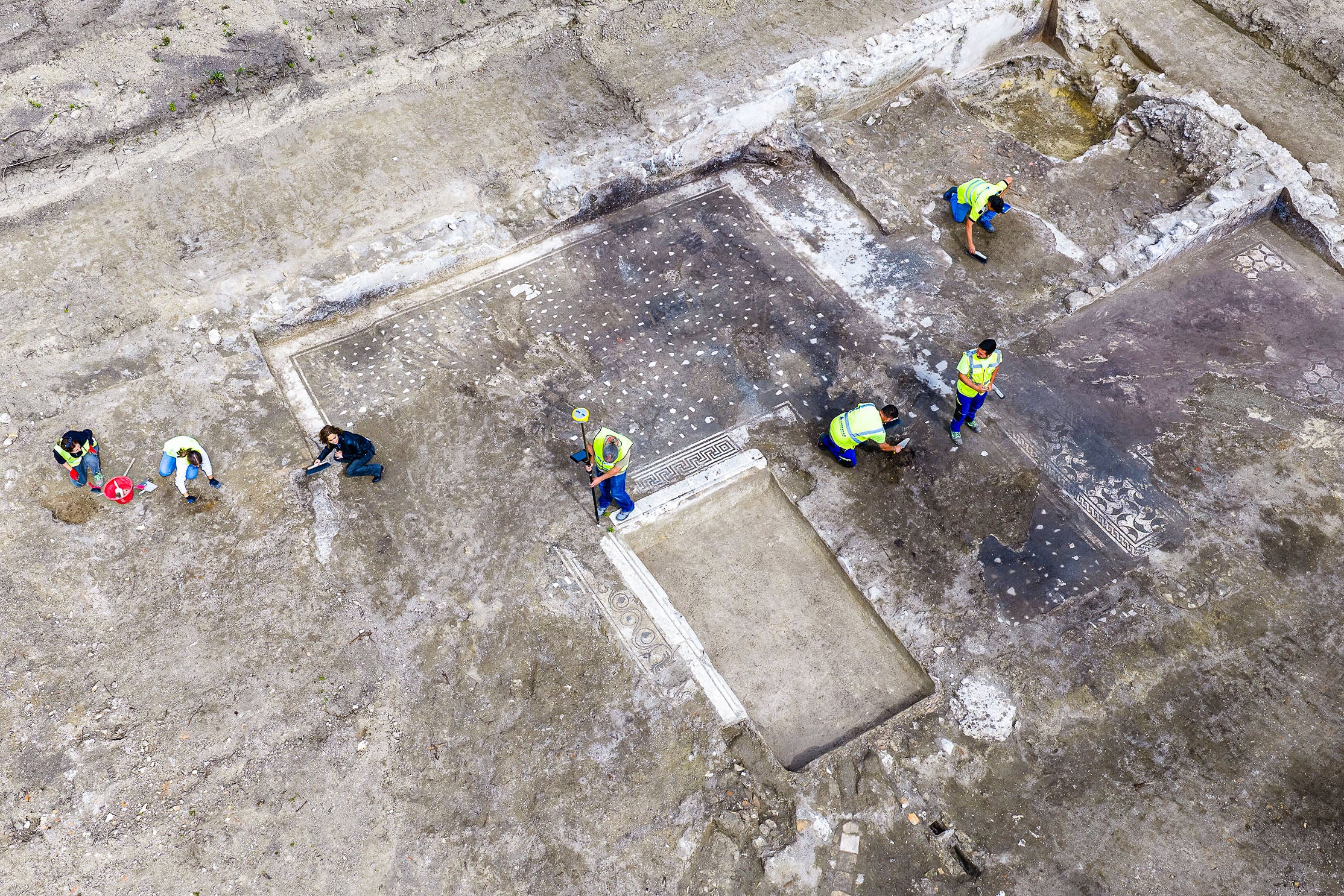
Excavations at the site brought to light very well preserved walls up to 1.5m high, mosaics and painted plasters.
Researchers could identify the atrium of the villa, characterised by a central sunken pool and refined decorations with geometric and plant motifs.
One of the excavated rooms had nine black-and-white geometric panels, and another had black octagons on a white background, and a third room had black rectangle motifs.
Mosaic-paved rooms and structures linked several activities of the villa were also found, they say.
A fragmented statue depicting a bearded character carrying a small pet, likely a calf or a piglet, was also found.
This character was probably the god Silvano, a rural deity linked to the rural world, researchers say.
“The quality of the finds, the mosaic and pictorial decorations testifies to the high social level of the owners of the villa,” they say.
The villa’s true owner remains unclear, but evidence so far indicates it belonged to Roman aristocracy, likely close members of the imperial family.
Evidence suggests the villa was likely built in early first century and abandoned in the third.
The Lorium region itself was frequented by Roman emperors Hadrian and later by Antonino Pio, who built his residence there, and also by Marcus Aurelius.
Historical records suggest that the paternal and maternal families of Antoninus Pius, who reigned from 138AD to 161AD, lived in Lorium.
Overall, the villa opens up new perspectives for understanding the Roman empire in the first century, scientists say.