









Oil prices steadied on Tuesday after surging more than 5 per cent the previous day, pulled back by US president Donald Trump’s claim that he had brokered a halt to Israeli military action in Lebanon and that US-Iran negotiations were still on track.
Brent crude slipped 0.6 per cent to $94.45 a barrel, retracing some of Monday’s gains. West Texas Intermediate, the US crude benchmark, traded near $90.60 a barrel during Asian trading.
Both had jumped sharply on Monday after Iran said it was suspending talks with Washington in protest at Israeli military action in Lebanon. Front-month Brent finished Monday 4.2 per cent higher at $94.98 a barrel, its strongest session since 4 May, while WTI jumped 5.5 per cent to $92.16 a barrel, its biggest gain since 29 April.
Monday’s moves were triggered by reports from Iran’s semi-official Tasnim news agency that Tehran had halted indirect negotiations with Washington. The agency also reported that Iran and its allies across Yemen, Lebanon and Iraq had established an agenda to completely block both the Strait of Hormuz, the narrow waterway through which roughly a fifth of the world’s oil and gas flows, and the Bab el-Mandeb Strait, a second key shipping route connecting the Red Sea to the Gulf of Aden. An Axios report said Iran had deployed additional naval mines in the strait last week, compounding fears of a prolonged closure.
Prices fell back on Tuesday after Mr Trump said he had not been informed that Iran had suspended talks and that negotiations were continuing “at a rapid pace.” He said he had spoken with Israeli prime minister Benjamin Netanyahu and representatives linked to Hezbollah’s leadership, claiming both sides had agreed to stop firing.
“There will be no troops going to Beirut,” he wrote on Truth Social, adding that Hezbollah “agreed that all shooting will stop.” Mr Netanyahu said separately that he had told Mr Trump Israel would attack targets in Beirut if Hezbollah did not stop striking Israeli cities, and that the Israeli military would continue operating as planned in southern Lebanon. Lebanon’s presidency said negotiations would continue through the week to expand a US-brokered ceasefire beyond southern Lebanon to cover the entire country.
Mr Trump said in an interview with ABC News that a memorandum of understanding with Iran to reopen the strait could be reached within a week, though “a few more points” still needed to be resolved.
Analysts, however, were less optimistic, pointing to a pattern of repeated false starts since the ceasefire began in April.
“Ceasefire negotiations between the US and Iran have seen repeated false starts since April, and today’s lack of progress is no exception,” Fabien Yip, a market analyst at IG in Sydney, told Reuters. “The market has grown accustomed to the back-and-forth.”
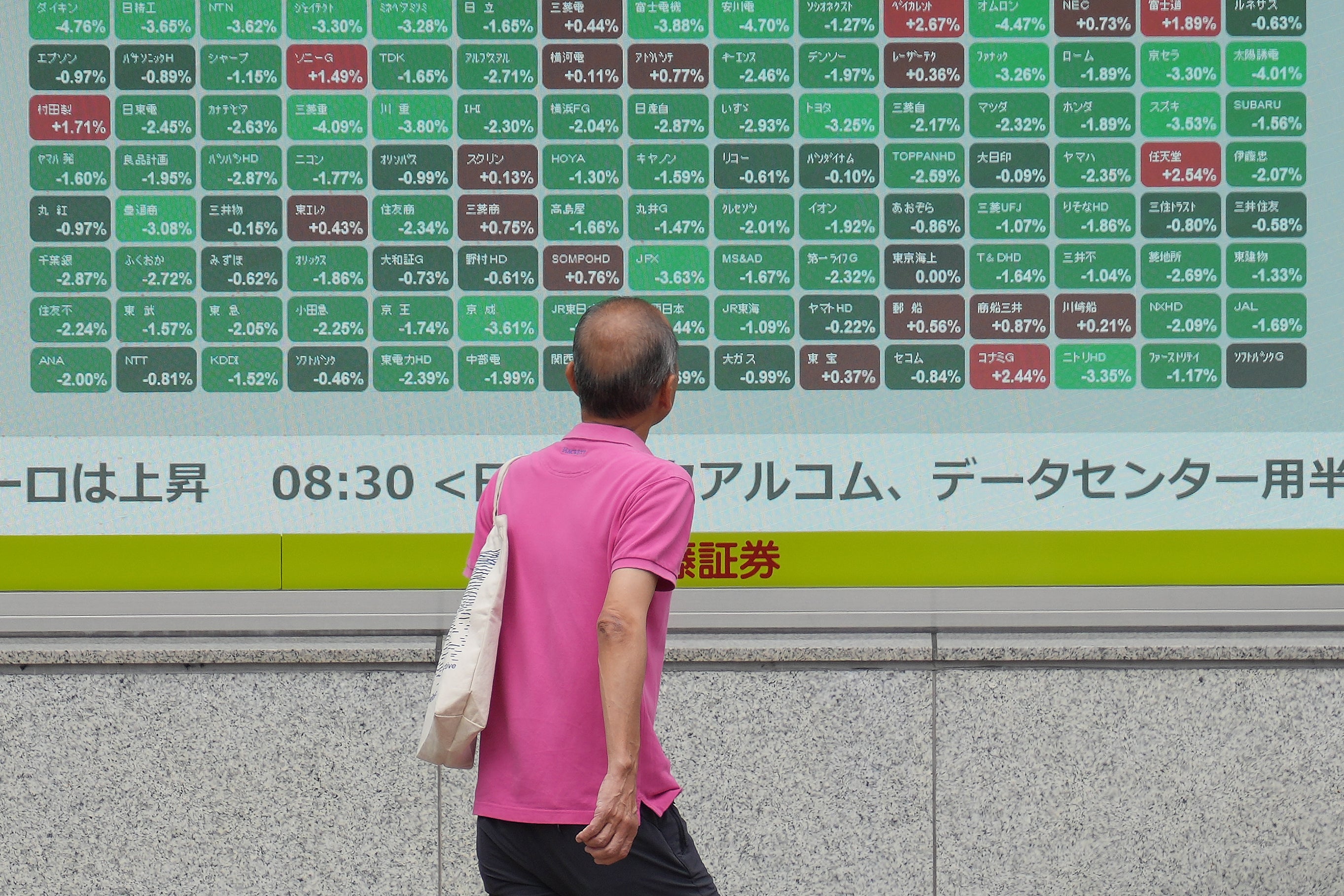
Asian stock markets fell broadly on Tuesday. MSCI’s broadest index of Asia-Pacific shares outside Japan fell 0.6 per cent, fluctuating between gains and losses through the session. Japan’s Nikkei 225 slumped 1.9 per cent, while South Korea’s KOSPI swung as much as 3.3 per cent lower before recovering some ground, with Samsung Electronics and SK Hynix moving between gains and losses.
South Korea’s consumer price inflation quickened to a more than two-year high in May, bolstering expectations of a rate hike at the Bank of Korea’s next meeting. The central bank last week signalled an imminent shift toward a more restrictive policy stance to curb inflation and support a slumping won.
On Wall Street, the S&P 500 closed 0.3 per cent higher overnight after US manufacturing activity rose to its highest level in four years in May, likely driven by businesses front-loading orders in anticipation of rising prices and supply shortages linked to the Iran war. The index has now risen for nine consecutive weeks.