










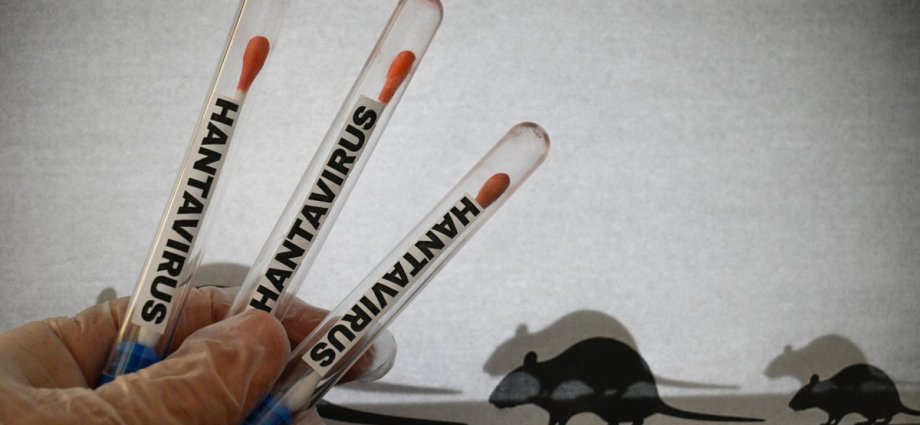
Hantavirus, the pathogen responsible for the deadly outbreak on a Dutch cruise ship, could be far more prevalent among rats than previously believed, according to a new study conducted in the US.
Global agencies, including the WHO, are still monitoring the hantavirus outbreak on MV Hondius, which infected 11 people and resulted in three deaths.
The infected people are from 23 different countries across North America, South America, and Europe, prompting them and their neighbours to broaden testing and monitoring for the deadly virus.
Hantavirus was thought to spread mainly via contact with infected rodents but one of its types, called the Andes “Sin Nombre” strain, was recently found to show a rare capacity for human-to-human transmission in very close quarters.
Even though the risk to the general global population remains low, authorities in places exposed to the outbreak are attempting to survey rats for the virus to understand its prevalence in the wild.
A new study conducted in the Pacific Northwest suggests that nearly one in three rodents, of all types, in Washington and Idaho may be infected with the virus.
Some 10 per cent of the surveyed rats in the region were actively infected in the past, meaning they were carrying and could potentially shed the virus and infect humans.
“We were surprised both by how common the virus was locally and by how little data existed for the Pacific Northwest,” Stephanie Seifert, author of the study published in Emerging Infectious Diseases, said. “We are really just beginning to understand how widespread and complex this virus is in rodent populations here.”

The study captured rodents from farms and natural areas in Washington’s Whitman County and Idaho’s Latah and Benewah counties.
In all, researchers sampled 189 rodents, including deer mice, voles, and chipmunks, and discovered that the hantavirus strain infecting rats in the region was different from the Andes strain responsible for the cruise ship outbreak.
The Andes strain is found mainly in South America.
Hantavirus infects rodents through each other’s saliva and direct contact. It reaches humans when they inhale airborne particles from contaminated rodent droppings, urine or nesting materials.
Scientists warn that disturbing rodent nests can increase the risk of exposure by sending virus particles into the air. They say using equipment like leaf blowers in enclosed areas can be particularly hazardous.
To cut the risk of hantavirus infection, researchers urge people in these areas to ventilate spaces and use wet-cleaning methods.
In future studies, researchers hope to expand the work to understand how often people are exposed and how human behaviour influences infection risk.
“People may be exposed more often than we realise, but severe cases are more likely to be tested for hantavirus,” Pilar Fernande, another author of the study, said.
“Understanding that gap – how exposure translates into disease – is the next big step.”