










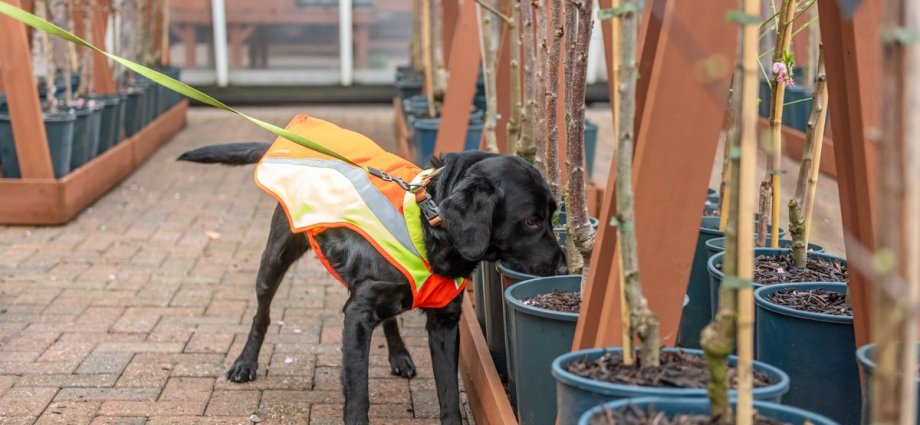
Sniffer dogs are being deployed in an innovative new programme to safeguard Britain’s precious gardens, landscapes, and vital forestry sector from devastating plant diseases and pests, officials have announced.
This initiative sees government agencies collaborating with Cape-SPC, a specialist canine detection firm known for its work on issues from bed bugs to water leaks.
The partnership aims to harness the dogs’ acute sense of smell to pinpoint specific plant health threats.
Among the targets is Phytophthora ramorum, described as a “highly destructive” fungal-like organism capable of causing widespread damage and death across more than 150 plant species, including commercially significant larch trees and various other shrubs.
Dogs are also being trained to locate Ips typographus, commonly known as the eight-toothed spruce bark beetle. This pest, a serious concern for spruce in Europe, has recently been identified in the wider English environment.
Officials warn that an uncontrolled spread of the beetle, particularly in conjunction with harmful fungi, could inflict significant damage upon the British forestry and timber industries, which heavily rely on spruce.
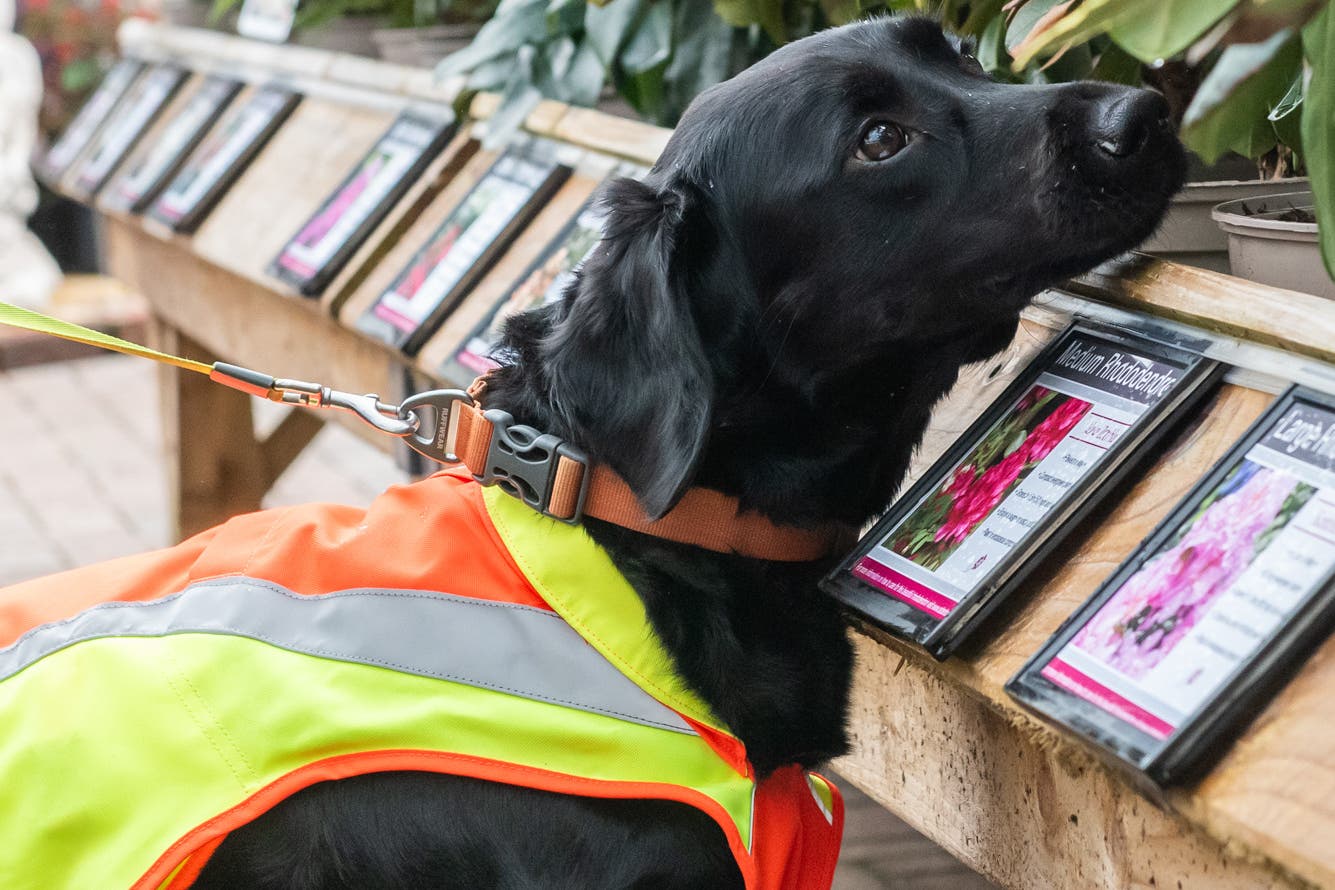
Luke Jones, founder of Cape-SPC, explained that detection dogs like Zinc – who recently featured at the RHS Chelsea Flower Show to demonstrate the power of scent detection – and Neon are initially trained to focus on a single scent before expanding their repertoire to detect multiple threats.
The Environment Department’s (Defra) chief plant health officer Professor Nicola Spence said: “This is a really exciting possibility for environmental detection of new and emerging pests, and particularly where there are pests of trees, we can use a dog to indicate which trees might be infested.”
She said pests are not always visible, with the spruce beetle sitting underneath the bark, but dogs can run to a tree and indicate it is infested, with follow-up testing to confirm the presence of the bug.
Dogs could speed up woodland surveying for Ips typographus – currently done with aerial surveys from helicopters, followed up by on-the-ground examination.
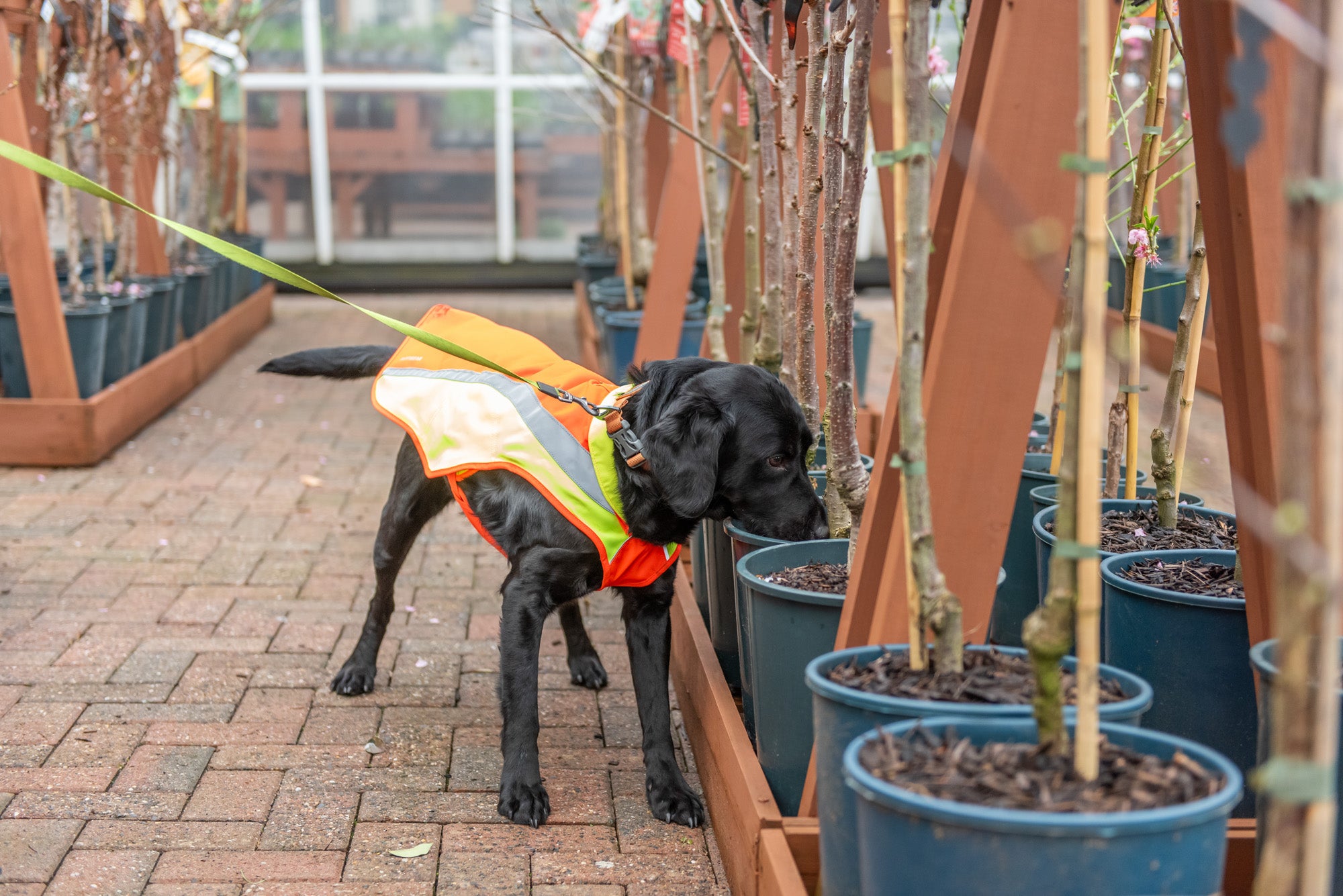
They could also be deployed to run along a stack of timber that is being moved, and indicate quickly if it is infested, she said.
Government agencies including Forest Research and the Animal and Plant Health Agency have been testing out the dogs to see what the potential is.
“We’ve had proof of concept, so now we’re looking at how might we scale that up, and how might we use these dogs in an operational setting in the future,” Prof Spence said.