










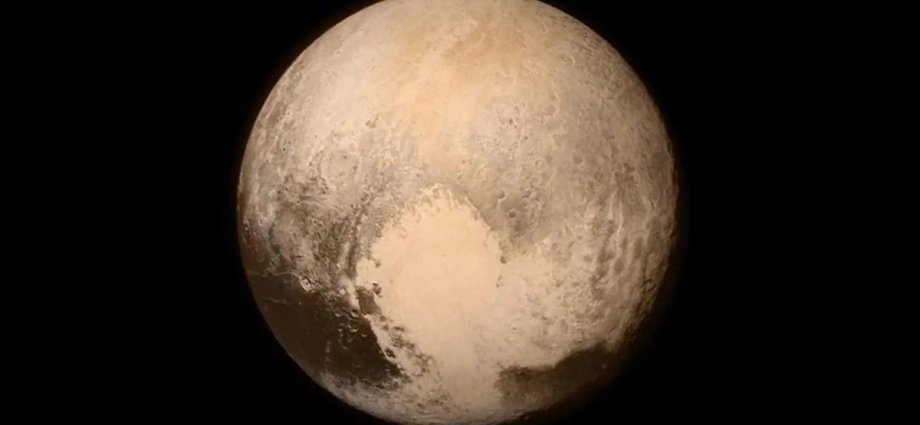
NASA Administrator Jared Isaacman wants to put an end to a decades-long debate among scientists. Is Pluto a planet or not?
Isaacman says it should be — but it hasn’t been one for 20 years. That’s because of a decision from the International Astronomical Union, which said it met the definition of a dwarf planet due to the other objects that orbit chilly Pluto. But, critics point out that Earth and Jupiter share orbital space with asteroids and research since 2006 has revealed more about Pluto.
“I am very much in the camp of [making] Pluto a planet again,” the billionaire SpaceX astronaut told Kansas Sen. Jerry Moran Tuesday in a hearing on Capitol Hill, adding that some papers were underway to “revisit this discussion.”
He had previously responded to a post on the social media platform X asking for him to make Pluto a planet again. “We are looking into this,” Isaacman wrote. The position also has continued support from former Administrator Jim Bridenstine.
However, experts on Pluto remain very much divided on the issue.

“While NASA administrators are free to wax nostalgic for the days when Pluto was a planet, the actual scientists working in the field will continue to try to explain and classify objects in the solar system in the way that actually helps us understand the world in which we live,” Mike Brown, a professor of planetary astronomy at the California Institute of Technology, told The Independent in an email.
Brown, who announced in 2016 that he had found evidence for a ninth planet at 5,000 times the mass of Pluto, had a hand in the International Astronomical Union’s decision and wrote a book about killing Pluto’s status as a planet in 2011.
The union acknowledges that its decision continues to fuel intense emotions — but that its definition of what makes a planet remains accurate, a spokesperson also told The Independent.
“We understand that many people feel Pluto was ‘demoted; but in fact, Pluto became the leading object of a new family of solar system bodies,” Ramasamy Venugopal, press and media coordinator for the International Astronomical Union, wrote in an emailed statement. “…Scientific classifications are determined through international consensus and evidence-based processes. While they are not subject to unilateral change, they can be amended if the supporting evidence changes.”
Adam Frank, a professor of astrophysics at the University of Rochester, said that the science behind demoting Pluto was “really important and really exciting.” Frank wrote a piece in Forbes on Tuesday telling people to quit “whining” about Pluto’s fate.
“Pluto is part of the rest of the solar system, the outer parts that are construction debris left over from building the planets. We didn’t know this just 30 years ago,” he told The Independent.
Still, others are not as settled on the terminology.
“Of course Pluto’s a planet, but it is a dwarf planet, a subspecies of planet. The argument seems to swirl about those who wish to say whether dwarf planets are or are not planets. This is a waste of time,” Bill McKinnon, Director of the McDonnell Center for the Space Sciences at Washington University in St. Louis, told The Independent. “Pluto is part of the rest of the solar system, the outer parts that are construction debris left over from building the planets. We didn’t know this just 30 years ago.”
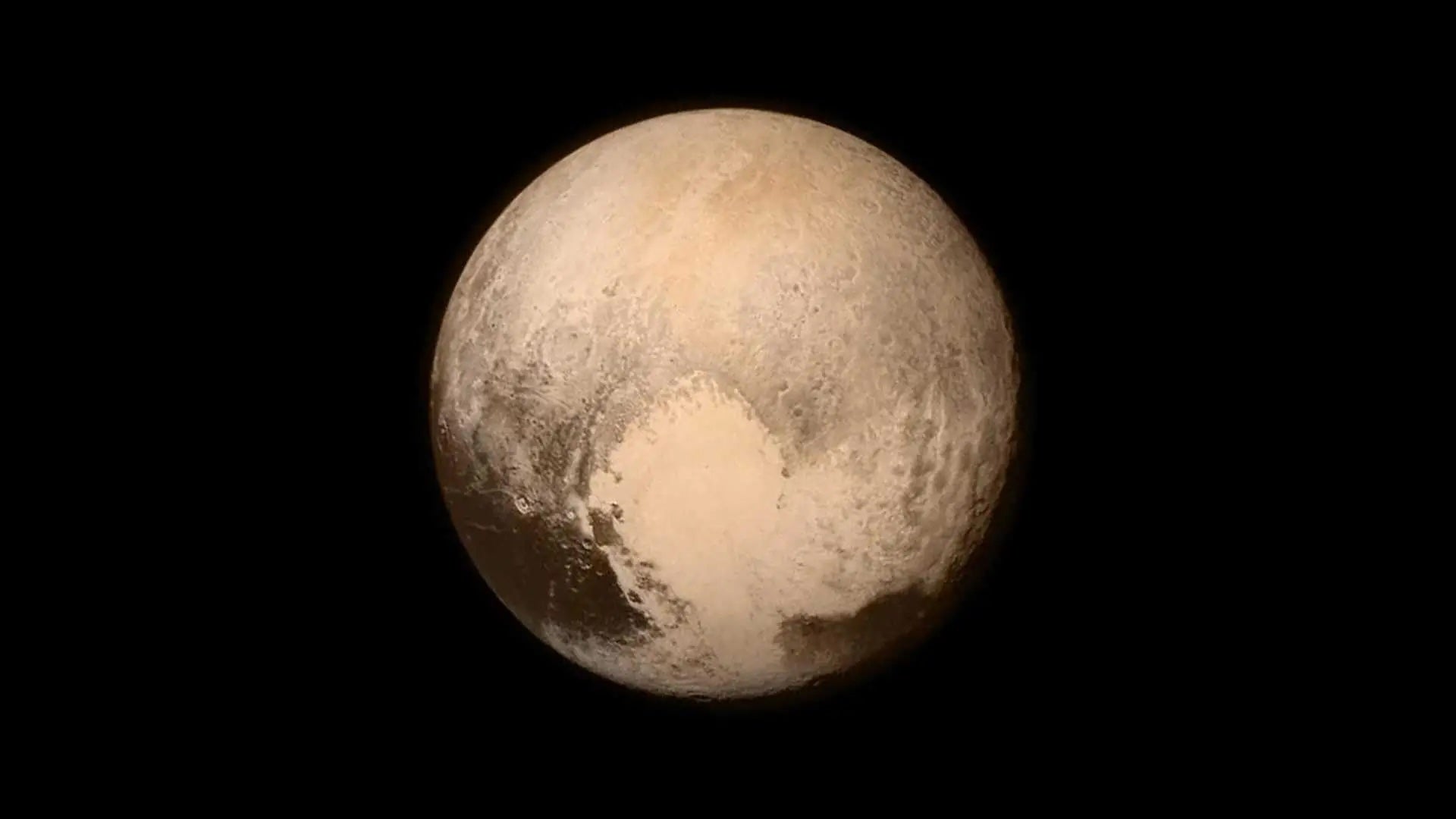
“Pluto is round, has an atmosphere, active geology and five (!) moons. What more does a planet need?” he asked, noting that he wasn’t trying to pretend it’s as big or in the same category as Mars or Earth.
Pluto was discovered in 1930 by astronomer Clyde Tombaugh and named – after the Greek god of the underworld – by an 11-year-old English girl named Venetia Burney, according to NASA. It was declared the ninth planet in our solar system.
Although it is only about 1,400 miles wide – half the width of the U.S. – recent findings show that it may harbor a deep ocean, contain an “active” heart and have icy mountains rising as high as 11,000 feet.
But, the thing is that there are many other dwarf planets out there. The union has only recognized five so far, but more than 100 may wait to be discovered, the space agency notes. And Ceres, which was also previously classified as a planet, is closer to Earth and is the largest object in the asteroid belt between Mars and Jupiter.
“It’s easier to have a solar system with eight planets than with, say, 12 or more if all the Pluto-sized bodies get in the mix. If Pluto is a planet again, things get complicated for all those other dwarf planets,” Adeene Denton, a geologist and planetary scientist who worked on research about Pluto’s heart, told The Independent. “I personally subscribe to what’s sometimes called the geologic/geophysical definition of a planet – if it’s big enough to have its own active geology, it’s a planet!”
Denton’s colleague Erik Ian Asphaug, a planetary science professor at the University of Arizona, said that the formal definition of a planet “has a lot of problems.”
“If one day we discover an Earth-mass planet full of inhabitants, orbiting a super-Jupiter, it would not be a planet according to the IAU — how silly is that!” he said.
“One of the arguments against making a Pluto is a planet is that we’d then have to include everything we currently call a ‘dwarf planet,’ and that would make for too many planets. How would kids remember them all?” added Paul Byrne, an associate professor of Earth, Environmental and Planetary Sciences at Washington University in St. Louis.
“But there are 1,025 officially recognized Pokémon, and at least that many dinosaur species, and when has that ever stopped a kid being able to name them all?” he questioned.
To once again be officially labeled one of the planets of our solar system, Pluto would need the backing of the union. As of today, that looks largely unlikely.
But for many, Pluto has remained a planet — if only in heart and mind.
“When Pluto was discovered at Lowell Observatory in 1930, it was classified as a planet. In the hearts and minds of many scientists and the public, it has remained a beloved planet, despite its reclassification to a dwarf planet in 2006,” Amanda Bosh, the the Executive Director of Arizona’s Lowell Observatory told The Independent.