








A British billionaire has vowed to move back to the UK so he can continue donating millions of pounds to Reform UK.
Ben Delo has accused Sir Keir Starmer of creating a “rigged game” after Labour introduced an annual £100,000 cap on donations to political parties from Britons living abroad, following an independent review into electoral interference.
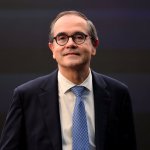
Mr Delo, 42, who co-founded a cryptocurrency trading platform, lives in Hong Kong and is reported to have given Nigel Farage’s party £4m earlier this year.
Writing in The Telegraph, he pledged to return to the UK to defy the cap and give millions more to fund Reform UK’s “war chest”.
“The government should not be allowed to get away with it. I will move back to Britain early so I can contribute more to Reform’s budget,” he wrote.
“I also urge other people who care about fair play and Britain’s future and who are fortunate enough to have deep pockets to reach out to me. Let’s build a war chest and win back our country.”
Sir Keir announced the cap following a review into electoral interference, which was ordered after Reform UK’s former leader in Wales, Nathan Gill, was jailed for taking bribes to make pro-Russia statements while a member of the European parliament.
Alongside the £100,000 cap, a temporary ban on cryptocurrency donations was also announced, in a major blow to Mr Farage, whose party has accepted several crypto donations, including £12m last year from the Thai-based British investor Christopher Harborne.
The review warned that Iran, Russia and China are trying to “cause harm” to Britain’s democracy, that foreign interference is “real and persistent”, and the government needs to make it a “far higher” priority.
Zia Yusuf, home affairs spokesperson for Reform, described the ban at the time as “a dark day for Britain”.
Referring to the report, Mr Delo said: “The whole thing is so tinpot that it would be laughable if it wasn’t part of Labour’s effort to stack the political deck against the most popular opposition party.
“Of course, the poison pill was set among other, less controversial proposals, including one I support to impose a moratorium on political donations being made with cryptocurrency.”
He added: “I have enough experience of the complexities of managing crypto to believe that the UK’s Electoral Commission is not currently equipped to regulate it. I also know the difference between a straight proposition and a rigged game.”
Mr Farage was forced to defend the donations from Mr Harborne, made in two payments of £9m and later £3m, according to the Electoral Commission, insisting he “wants nothing from me”.
But the payments prompted concerns about political funding, as Mr Farage publicly promoted Tether, the cryptocurrency company in which Mr Harborne is a shareholder, shortly after receiving the donation.