










Children’s clothes in the US contain lead beyond safety limits, with even short periods of chewing on the fabric exposing children to “harmful levels” of the toxic metal, scientists warn.
Lead in the form of lead (II) acetate is widely used as a low-cost way to help dyes adhere to fabric and produce bright, long-lasting colours.
It can appear in the metal components of children’s clothing, including zippers, buttons, and snaps, and has also been found directly in fabrics, in some cases, including on items sold to adults.
Studies have shown that lead is harmful at any level, linked to behavioural problems, damage to the brain and central nervous system, and other adverse health effects.
Currently, the US Consumer Product Safety Commission sets a 100 parts per million (ppm) limit for lead in children’s products such as toys and clothing.
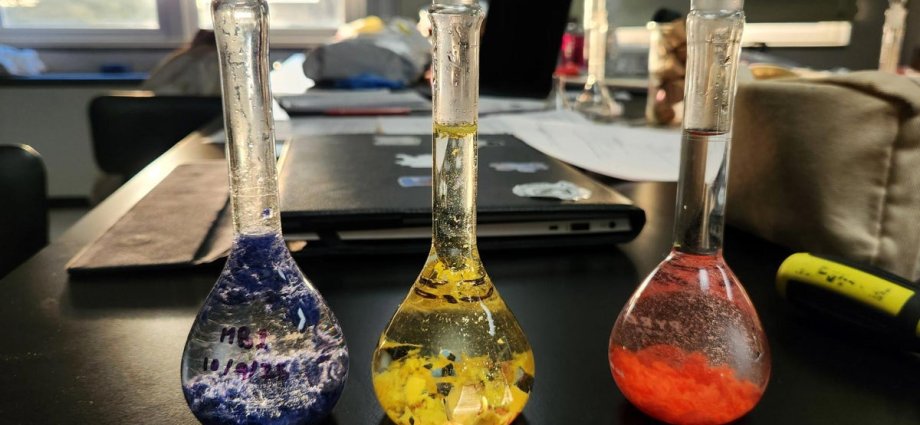
-and-red-(right)-samples-shown-here-ten.jpeg)
In the latest study, researchers assessed how lead used in fast fashion might affect children’s health.
They examined 11 shirts in a range of colours, including red, pink, orange, yellow, grey, and blue, purchased from four retailers that included fast-fashion and discount brands.
Although the study sample size was limited, researchers found that none of the items tested met US federal safety standards.
“We saw that the shirts we tested were all over the allowed limit for lead of 100 ppm,” said Priscila Espinoza, an author of the research presented at the American Chemical Society’s Spring 2026 meeting.
“Not only are children the most vulnerable to the effects of lead, but they’re also the population that is going to be putting their clothes in their mouths,” explained Cristina Avello from Marian University.
Scientists found that fabrics like red and yellow tend to contain higher levels of lead than more muted tones.
Researchers then simulated how the body might absorb lead if children mouthed or chewed on clothing.
They modelled potential exposure in children during mouthing behaviour like sucking, holding, or chewing on fabric.
Lead exposure through such behaviour could exceed the daily lead ingestion limit for children set by the US Food and Drug Administration, scientists found.
In further studies, researchers hope to expand testing to more garments and probe how laundering affects lead(II) acetate.
They suspect washing could create a lead-containing residue inside washing machines.
Scientists hope the findings could encourage more thorough screening of clothing before it reaches consumers.
The research also lays the spotlight on alternative fixing dyes to lead acetate that also maintain vibrant colour, such as those derived from plants like oak bark, pomegranate peel, and rosemary.