










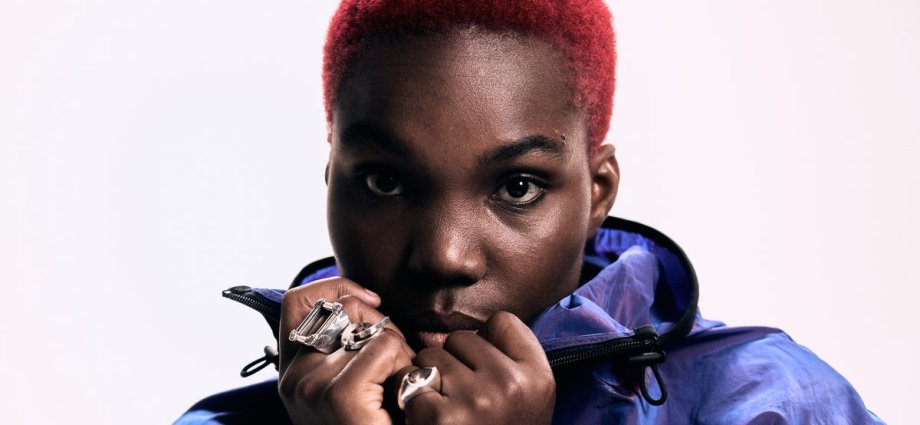
As a sensitive, young artist best known for her poetic lyrics, shy-girl vocals and gentle indie-pop sounds, Arlo Parks didn’t seem to be on track for a Brat summer. But it turns out she’s been partying hard since the release of her second album, 2023’s My Soft Machine, and has flooded her third record, Ambiguous Desire, with house, techno and UK garage beats. Embedded in these songs are tales of strobe lights, DJ decks, gin, chips and hand-rolled cigarettes “in the guts of New York”. The tense, murky blur of bass and click-tap-rattle percussion contrasts powerfully with the sweetness of her voice, singing of her innocent yearning for connection.
Born Anaïs Oluwatoyin Estelle Marinho in 2000, Parks felt like an outsider while growing up in west London. She once described a high-school experience of “feeling like that Black kid who couldn’t dance for s***, listening to too much emo music and crushing on some girl in her Spanish class”. But the delicate feng shui of her introspective, interior music resonated with the “Super Sad Generation” (after whom she named her debut EP). Meanwhile, her first album Collapsed in Sunbeams (2020) became a lockdown hit, winning the 2021 Mercury Prize.
The mental health issues Parks addressed on that album and followed up on her sunnier second album (made after she’d relocated to Los Angeles) are still lurking in the corners of Ambiguous Desire. Over the shimmering synths and echoing snares of “Beams”, she conjures a moment of “sobering up on a stranger’s stairs”. On “South Seconds”, one of the album’s few slow, sloshy, guitar-based tracks, she croons softly of a “mood swinging under”. Sampha (whose gorgeous fluid vocal adds depth to Parks’ feathery tone) joins her on “Senses” for its melancholy chorus of “I can’t find no love for myself”.
But any fear, dissociation and sorrow Parks describes is repeatedly shaken off in the communion of the dancefloor. The trancey hooks of singles “2SIDED” and “Get Go” lift the body into soothing, repetitive motion. There’s a sway to the melodies that slip around you, supportive but unassuming, like an old friend’s arm around the waist.
While too much of this can make parts of the album feel a little same-y, the mood clearly isn’t intended to hit you round the head like the confrontational lime green of Charli XCX’s Brat. Parks operates in smudgier terrain. I love the way the beats shift and layer over soupy bass, like doodlings on an old-school folder. There’s a tangible imagery of “Adidas and gasoline” paired with “concrete washing with metallic green”. And her careful choice of words means there’s a closeness even in Parks’ more abandoned moments. Perfect for the more fragile clubbers among us.