










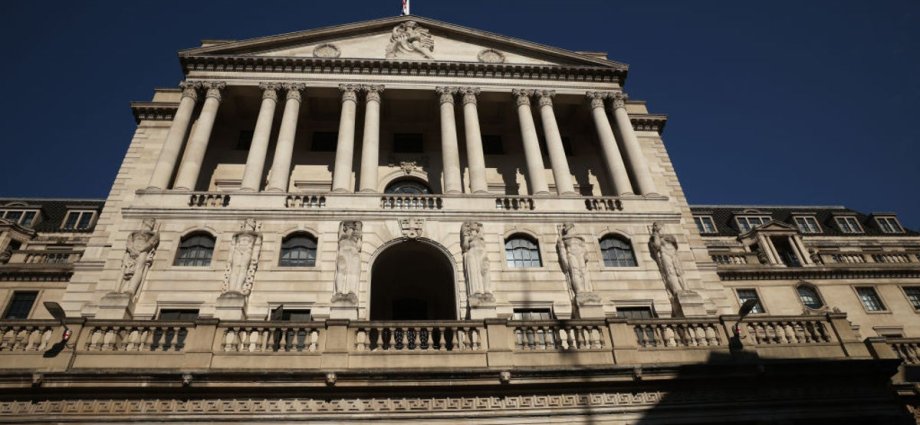
The Bank of England (BoE) has held interest rates at 3.75 per cent in its first vote of the year, after it was cut six times in 18 months.
Although the result was expected, the nine-person Monetary Policy Committee (MPC) vote turned out much closer than anticipated, with a 5-4 result paving the way for cuts if the future economic outlook is positive.
Minutes from the MPC meeting suggested inflation, wage growth and unemployment were the driving factors in making the decision.
Andrew Bailey, the Bank’s governor, said: “We now think that inflation will fall back to around 2 per cent by the spring. That’s good news.
“We need to make sure that inflation stays there, so we’ve held interest rates unchanged at 3.75 per cent today.
“All going well, there should be scope for some further reduction in the bank rate this year.”
Despite a December uptick, several of the voting committee think inflation remains on a manageable path with the outlook described as “welcome”. But their concerns lie over wage growth staying higher than required if interest rates come down too soon.
The four members who voted to cut this time around “judged that the risk from greater inflation persistence had receded materially”.
Markets had mostly been pricing in two rate cuts during the current calendar year, but few were expecting the first of those to come before summer. Following Thursday’s vote, that has now been brought forward to April.
Several mortgage lenders have been raising their products slightly across the past week or so, some of the best deals leaving the market in the process, with experts now suggesting that the market may stabilise somewhat following the MPC’s vote.

Get a free fractional share worth up to £100.
Capital at risk.
Terms and conditions apply.
ADVERTISEMENT
Get a free fractional share worth up to £100.
Capital at risk.
Terms and conditions apply.
ADVERTISEMENT
“Rates have started to creep back up over the last couple of weeks,” added Peter Stimson of MPowered Mortgages. “However, the surprise voting pattern behind today’s Bank of England decision may mean that a fall in swap rates, which lenders use to determine the fixed rates they offer to customers, could appear in the coming days. Competition is still intense amongst lenders, and this combined with falling funding costs could be great news for borrowers in the days ahead.”
The other side of the equation when it comes to interest rates is savings, with industry voices urging consumers to ensure they are getting a good rate. Up to 4.5 per cent is still attainable for easy access accounts.
For those sitting on cash piles in savings accounts, Bestinvest’s personal finance expert Alice Haine reminded them to check the level of interest they are earning.
With rates on the decline and inflation still a factor, it remains it vital to ensure money is earning at a higher level than prices rise at – currently 3.4 per cent from December’s data.
“Savings rates have been drifting lower since peaking in the Autumn of 2023. And while inflation rose more than expected in December, much of that increase was largely attributed to temporary factors, including high airfare prices over the festive season. Inflation is still expected to ease back, which is expected to pave the way for further interest rate cuts,” Ms Haine explained.
“With this in mind, savers should avoid sitting on the sidelines waiting for conditions to improve. Money languishing in an account paying a dismal rate should be moved swiftly to a more competitive option to ensure it works as hard as possible. Few things are more frustrating for savers than seeing inflation quietly erode the value of their cash.”
In terms of the economy, meanwhile the British Chambers of Commerce signalled positivity at the prospect of future rate cuts.
“Businesses tell us inflation risks are likely to persist in the short term, but a lower interest rate will be a key part of kickstarting the economy,” said David Bharier, head of research. “However, today’s more optimistic MPC forecast, predicting inflation returning to target by April, will be welcomed by the firms we represent.
“For businesses across the UK, greater policy certainty and a clear path to lower borrowing costs are essential to unlock investment, boost productivity and transform trade.”
However, Deloitte’s director of economic research, Debapratim De, warned that unemployment rates were still likely to rise even as inflation continued to fall.
“We expect the labour market to slacken further, with unemployment rising to 5.7 per cent by autumn, and headline inflation to fall sharply over the summer months. This should create room for two further 25-basis-point rate cuts this year,” they added.
The next MPC meeting is on 19 March and Sanjay Raja, chief UK economist at Deutsche Bank, predicted the next rate cut could even be seen then.
“We continue to think that further rate cuts are coming. We stick to our call for the next Bank Rate cut to come in March and a final rate cut to come in June, taking Bank Rate to 3.25 per cent – broadly consistent with our estimates of neutral,” he said.
“Risks are still skewed to a slower pace of rate cuts. But we remain confident that Bank Rate will be cut twice this year.”