










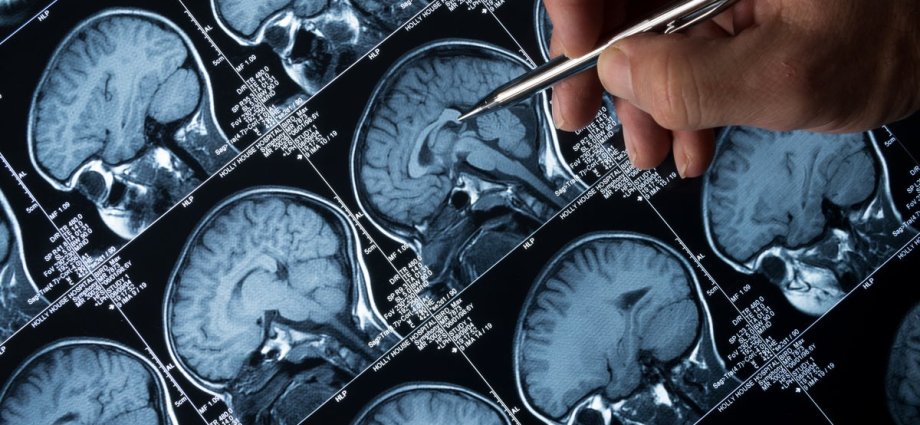
Nine in 10 Alzheimer’s cases would not develop without the contribution of a single gene, nor would almost half of all dementia cases, researchers find.
Alzheimer’s is the most common form of dementia, making up 60 to 80 per cent of the almost one million dementia cases in the UK.
A complex mix of factors including age, lifestyle choices such as smoking, and environmental factors like air pollution and genes, can all contribute to the risk of developing Alzheimer’s disease.
One gene called APOE has long been known to increase the risk of Alzheimer’s disease.
But scientists have found that without a certain variant of this gene, most cases would not occur, making it a powerful target for drug development, according to researchers at University College London (UCL) and the University of Eastern Finland.
Everyone carries two APOE genes with three common types of the gene known as ε2, ε3, and ε4. Previous studies suggested the ε4 variant may increase dementia risk because the protein it produces is less effective at clearing harmful amyloid-beta – a sticky protein that forms plaques between brain cells eventually leading to cognitive decline.
Lead author Dr Dylan Williams from UCL said: “We have long underestimated how much the APOE gene contributes to the burden of Alzheimer’s disease. The ε4 variant of APOE is well recognised as harmful by dementia researchers, but much disease would not occur without the additional impact of the common ε3 allele (variant), which has been typically misperceived as neutral in terms of Alzheimer’s risk.
“When we consider the contributions of ε3 and ε4, we can see that APOE potentially has a role in almost all Alzheimer’s disease. Consequently, if we knew how to reduce the risk that the ε3 and ε4 variants confer to people, we may be able to prevent most disease from occurring.”
In the 1990s, geneticists found people carrying one or more ε4 variants face a much greater risk of Alzheimer’s than those with two copies of the more commonly inherited ε3 variant, and that groups with ε2 experience less risk relative to the ε3 carriers.
But this latest study suggests most cases of Alzheimer’s and dementia would not happen without the ε3 variant.
For the study published in the journal npj Dementia, researchers pulled together evidence of how much the ε3 and ε4 variants are linked to an increased risk of Alzheimer’s disease, any form of dementia, and the brain changes that lead to Alzheimer’s, using databases from four large studies with a total of 450,000 participants.
Using the data, researchers estimated 72 to 93 per cent of Alzheimer’s cases would not have occurred if it weren’t for the ε3 and ε4 variants of the APOE gene, and approximately 45 per cent of all dementia cases would not arise without the gene’s influence.
Although Alzheimer’s and other dementia diseases are not caused solely by the APOE gene and many people with these genetic risk factors won’t get dementia in a typical lifetime, understanding the risk provides “potential for preventing or treating a large majority of Alzheimer’s disease”, Mr Williams explained.
Dr Sheona Scales, director of research at Alzheimer’s Research UK, said: “This study highlights that more Alzheimer’s cases are linked to the APOE gene than previously thought. However, not everyone with these variants will develop Alzheimer’s, demonstrating the complex relationship between genetics and other risk factors for dementia.
“Despite APOE being linked to Alzheimer’s, very few treatments in clinical trials target this gene directly. Findings from this study show that further research into APOE will be important for developing future prevention and treatment strategies for Alzheimer’s.”
Masud Husain, professor of neurology at the University of Oxford said: “This is a really important study. It reveals how significant the different variants of the APOE gene are in affecting the risk of developing Alzheimer’s disease. But it also raises the question of whether knowing your APOE genotype would be useful. Currently, this is not available routinely in the NHS.
“This is largely because it is unclear what someone could do if they found that their risk of developing dementia is high. We definitely need clinical trials that focus on these higher-risk people to establish whether new treatments can make a difference to them.”