










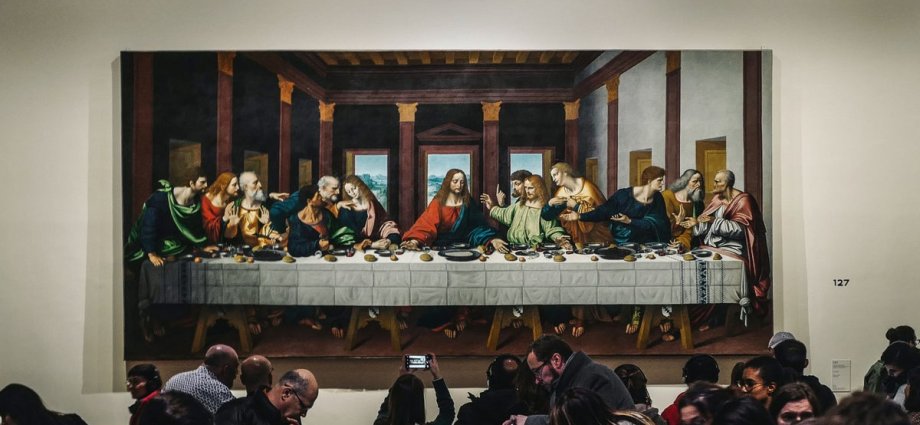
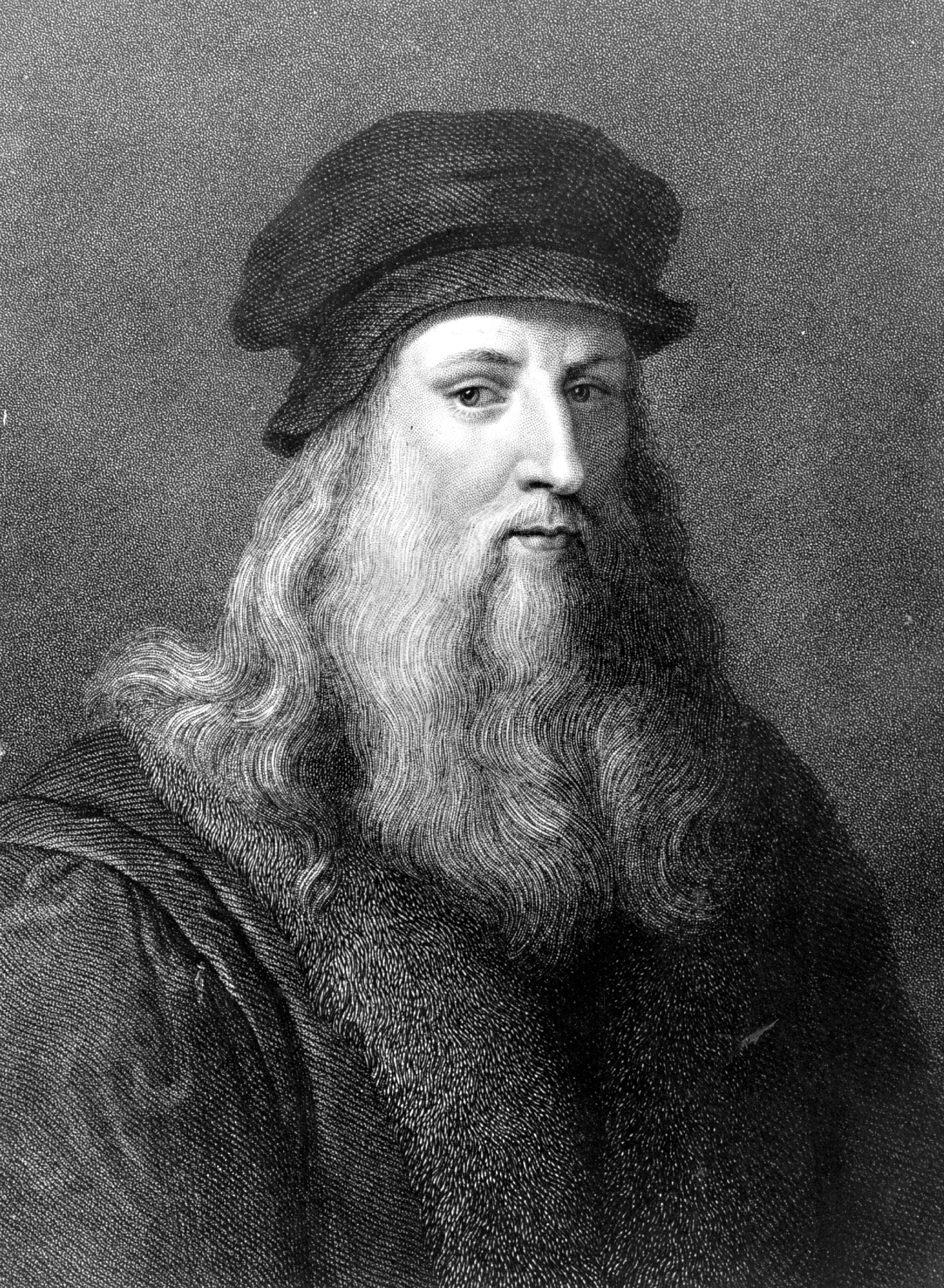
Scientists have recovered tiny DNA traces left on Renaissance artefacts, at least some of which they suspect belong to visionary Italian polymath Leonardo da Vinci.
They have recovered trace DNA from a red chalk drawing on paper called “Holy Child”, possibly made by da Vinci, and letters written by his ancestor, Frosino di Ser Giovanni da Vinci, held at a historical archive in Italy.
Some Y-chromosome DNA sequences from the “Holy Child” artwork and from a letter penned by one of Leonardo’s cousins appear to belong to a genetic grouping of people with a shared ancestry in Tuscany, where the painter was born, according to the study.
When scientists compared the Y-chromosome DNA sequences from the artefacts with large Y-chromosome reference databases, they found the closest match within the broad E1b1 / E1b1b lineage. This Y-chromosome lineage is found today at notable frequencies in southern Europe, including Italy, North Africa and parts of the Near East.
Some of the DNA may be from da Vinci himself, Science Magazine reported.
However, this is not conclusive proof, as establishing that any DNA trace from the artefacts indeed belongs to da Vinci is extremely complex, researchers said.
This is because scientists can’t verify genetic sequences from the artefacts against DNA known to have come from da Vinci himself. The iconic inventor has no known descendants and his burial site was disturbed in the early 19th century.
Historical artefacts can accumulate DNA from their environments and can potentially offer useful information about the people who created and handled them, the materials used to make them as well as the environments they passed through.
But studying such precious objects without damaging or contaminating them has long been a challenge.
Now, though, scientists have developed a “minimally invasive” method to recover “biological signatures of history” from Renaissance artwork and correspondence associated with da Vinci’s ancestors.
Most of the DNA traces belong to bacteria, fungi, plants, and viruses, shedding light on the nature of the materials of these artefacts, their storage environment, conservation treatments, and handling over the years. Some of the genetic material, however, comes from humans.
“We recovered heterogeneous mixtures of non-human DNA,” researchers wrote in a yet-to-be peer-reviewed study published on arXiv, “and, in a subset of samples, sparse male-specific human DNA signals.”
Researchers employed a gentle swabbing method similar to that used in museums to collect flakes of skin, sweat residue, microbes, plant pollen, fibres, and environmental dust from the artefacts. From these biological materials, they extracted tiny amounts of DNA, which provided useful information about the artefacts.
“Certain non-human DNA may help us to understand the artefact composition, possible materials used, and the environment and geology of the pieces obtained during the Renaissance in Florence and other areas of Europe,” they said.
Citing an example, they said finding traces of plants like the Italian ryegrass could indicate that the artefact came from Italy in the 1400s and 1500s.
“Riparian species such as Salix spp were abundant along the Arno river and were commonly used for basketry, bindings, scaffolding, and charcoal production within artisanal workshops,” scientists explained.
“The unique presence of Citrus spp in the ‘Holy Child’ may provide a direct link to historical context.”
Since the artefacts assessed in the new study were associated with male historical figures, scientists looked at markers of Y-chromosome DNA found in the biological samples.
“To enable stronger claims, especially relating to provenance, geolocation, or historical characteristics, future work is needed to help distinguish artefact-associated signal from modern handling,” researchers said.