








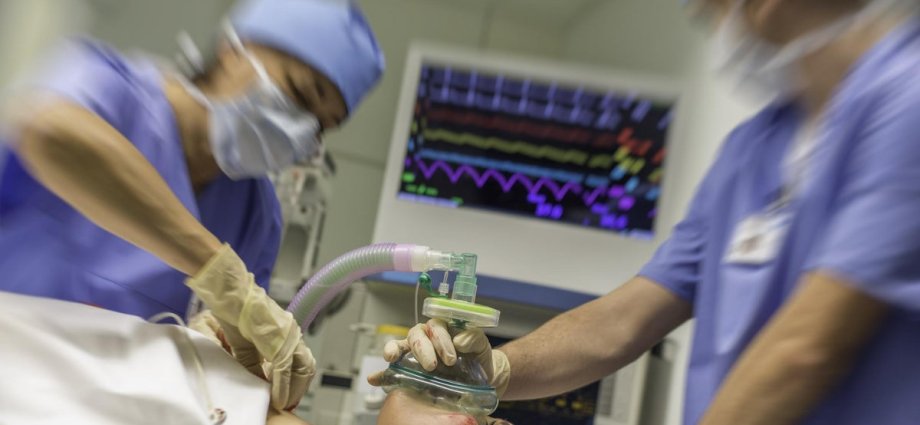
Children’s operations are being cancelled because paediatric intensive care units across the country are full as a result of the severe spike in flu cases, The Independent has been told.
Cardiac and other operations are being postponed, increasing the risk of medical emergencies, because of the pressure on children’s ICU beds, medics have warned.
Dr Adrian Plunkett, president of the Paediatric Critical Care Society (PCCS), and Dr Arun Ghose, PCCS council member and communications lead, told The Independent: “The UK’s paediatric intensive care capacity is a scarce national resource currently under severe and sustained pressure.”
In the last few weeks, paediatric critical care units across the country have consistently reported a higher number of patients in beds than staff available to run them, according to the PCCS medics.
“This has led to local centres surging, with nursing and medical staff doing extra clinical work to manage the increased demand,” they said in a joint statement. “This surge in admissions is being driven predominantly by influenza and other respiratory viruses.”
Dr Plunkett and Dr Ghose also warned: “This pressure has also led to the cancellation of elective paediatric intensive care unit admissions, including cardiac and other specialist surgeries. In some cases, delays to these procedures can result in previously elective cases becoming more urgent and requiring emergency surgery.”
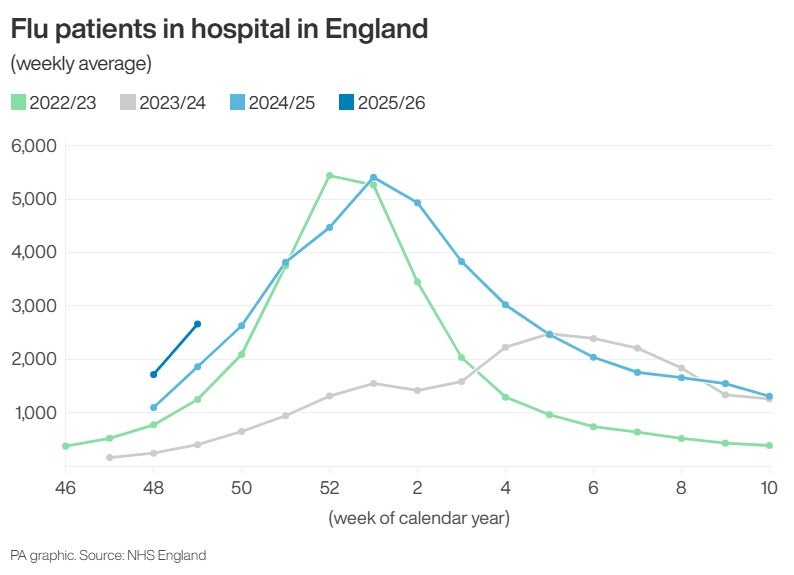
The warnings come after a week of reports of a “tidal wave” of flu, driven by the new super flu strain H3N2.
The sudden influx of flu cases – up 55 per cent in the past week – has led health chiefs to fear that overcrowded hospitals will soon be unable to control the spread of infections, leaving vulnerable patients being treated for serious illnesses “terrified” they will catch it.
On Friday, health secretary Wes Streeting warned the NHS faces collapse next week if resident doctors go ahead with a planned strike as services are buckling under flu pressures. Sir Keir Starmer has also criticised the proposed strikes, describing them as “beyond belief” when the NHS was under severe strain.
In a deepening row, the British Medical Association, the doctors’ union, hit back on Saturday and accused the health secretary of “scaremongering”.
According to the Paediatric Critical Care Society, the pressures on intensive care beds have meant that more children are being kept in district general hospitals for long periods. They are then having to be transported further away from their homes when a critical care bed is found.
The situation has worsened as paediatric wards are full, and so intensive care units are unable to move patients out when they are ready.
“This has been compounded by acute sickness, with respiratory viruses, across all staff groups, and less resilience in the system with these chronic staffing shortages,” Dr Plunkett and Dr Ghose said.
The PCCS has also heard anecdotal reports of a “marked severity of illness in cases of influenza infection in children”, warning that “influenza can cause very serious disease, and has caused mortality, even in children”.
A senior paediatric doctor in the northwest of England told The Independent admissions to children’s intensive care units had spiked in the last week, with a “double hit” of flu and respiratory infection RSV.
“Flu season hit in October, which was really early,” the doctor said. “The kids that were ill with it … in the ICU, we ended up with a far higher number of children needing intensive care support than we normally do.
“So over the last couple of weeks, what we’ve seen is a sort of dual hit of both influenza and RSV, and there has been a significant spike in the ICU admissions across the UK in the last seven days.
“The reason why some of the pressures are high is that we have high numbers of children with flu in the ICU, but then we also have the second effects that the wards have got loads of it as well.
“Because it’s an infectious disease, we isolate these children, so we’re struggling to get them off intensive care and back to the wards. We’ve definitely seen higher patient numbers with flu in intensive care, and probably the highest amount I’ve seen in my career.”
The BMA is consulting resident doctors on whether to go ahead with planned strikes over pay and training contracts, with the results expected on Monday. If the strikes go ahead, doctors will walk out for a five-day strike starting on Wednesday.