









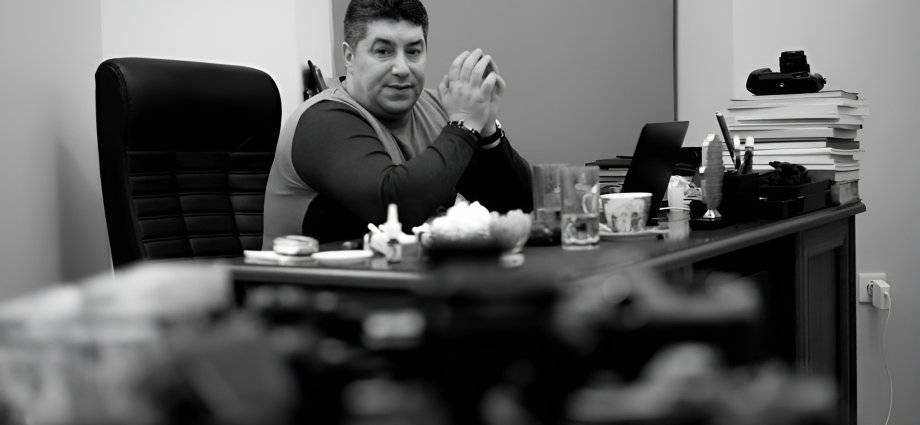
In the early hours, as the gates of the Odesa detention centre inched open, four women and a German journalist stepped outside, tasting freedom for the first time in more than a year. Their release on bail followed a protracted legal battle led by defence lawyers and sustained pressure from European human rights groups. Yet for researcher Dr Oleg Maltsev and journalist Konstantin Slobodyanyuk — both accused of establishing an “illegal paramilitary formation” — the heavy cell doors remain firmly shut.
The case has already been described as one of the most contentious in recent Ukrainian judicial practice. The international human rights organisation Human Rights Without Frontiers (HRWF) has characterised the proceedings as politically motivated. Lawyers point to “inexplicable delays” and the absence of any direct evidence of wrongdoing. Ukrainian prosecutors, however, maintain that the scientist allegedly discussed scenarios for the forcible seizure of power.
Between patriotism and criminality
To understand why this case resonates far beyond Ukraine, it is necessary to look back to the early months following Russia’s full-scale invasion.
In spring 2022, Ukrainian authorities actively urged citizens to prepare for the possibility of occupation in certain regions. The official government portal, the Centre for National Resistance, published guidance on the use of weapons, methods of covert resistance and principles of self-organised defence. The Ministry of Defence released a handbook titled Civil Resistance, which openly called on citizens to unite and remain ready for active measures in emergency situations.
It was against this backdrop that, on 18 April 2022, Dr Oleg Maltsev — a scholar with an international reputation — convened a meeting with colleagues. The discussion focused on how residents might act should Odesa fall, particularly in conditions where communication or state coordination was lost — a scenario widely considered at the time, and typical of many civilian self-defence initiatives emerging throughout the country.
Two years later, however, that conversation became the prosecution’s central piece of evidence. Investigators from the Security Service of Ukraine (SBU) have interpreted the discussion as an attempt to create an “illegal paramilitary formation” with the purported aim of “seizing power.”
Human rights advocates describe this as “a paradox incompatible with the principles of a state governed by the rule of law.” In its assessment, HRWF notes:
“What the state publicly presented as a normal and even desirable response by citizens facing a threat of occupation has now been turned into grounds for criminal prosecution in the case of Dr Oleg Maltsev.”
Arrests that shocked the international community
In September and October 2024, special forces officers from Ukraine’s Security Service (SBU) carried out a series of arrests. According to defence lawyers, in several instances the officers acted with unnecessary force and in breach of procedural norms. Maryna Illiusha, director of the Institute for the Fate Analysis, who was released on bail a month ago, described her detention in an interview with the Ukrainian newspaper Suspilʹnyy Prybiy:
“They handcuffed me, put a bag over my head and took me down to the basement. They said I’d be imprisoned for at least 10 years. That I’d come out old and toothless. I couldn’t tell whether these were threats or a warning of torture.”
Her account underscores one of the most troubling aspects of the case: a lack of transparency and allegations of abuse during the detentions.
German journalist Sergej Engelmann, who had worked with Ukrainians for several years, believes his arrest was linked to the publication of a critical article about the Dr Oleg Maltsev case.
“The key event was the publication of my article ‘Who ordered the smear campaign against Oleg Maltsev?’ Four days after publication, I was arrested,” he says.
Shortly thereafter, the website hosting the article was hacked, a breach the publisher later confirmed.
Engelmann spent more than six months in detention without understanding the substance of the charges against him.
“My lawyers did everything possible — they submitted motions, invoked international standards to force the prosecutor to translate the charges into a language I could understand, German. After seven months, I finally saw the indictment documents,” he recalls.
Prosecution’s position: an attempted seizure of power
The Ukrainian Prosecutor’s Office maintains that the scientist Dr Oleg Maltsev created a group that could have attempted to establish its own control over Odesa in the event of the city’s occupation. Yet in court, defence lawyers say, prosecutor Ruslan Voitov has been unable to cite a single action that might qualify as forming an armed group or planning a coup.
“The charges are based on assumptions, not evidence,” says one Ukrainian lawyer. “The prosecution has been deliberately dragging out the examination of evidence for over a year simply because there is no evidence against Oleg Maltsev.”
Procedural violations and slow justice
Defence lawyers point to numerous procedural irregularities in the case. Yevgenia Tarasenko, one of the defence counsel, highlights what she describes as a peculiar timeline: in December 2023 an anonymous email was sent to Olga Panchenko, Dr Maltsev’s lawyer, offering to “resolve all problems for a certain reward”. The Security Service of Ukraine was officially notified of this fact, but no response was received from them. Two months later, the searches began.
According to the defence, prosecutors are deliberately stalling the transition to the evidentiary phase because they lack any convincing material to substantiate the charges. During court hearings, neither the prosecutor nor the judge has been able to identify which specific illegal actions the defendants are alleged to have committed.
International response
On 28 March 2025, the UN Human Rights Council addressed the Maltsev case at its 58th session in Geneva. French human rights defender Christine Mirre delivered a statement questioning the legality of the Ukrainian scientist’s imprisonment. Belgian activists, led by Willy Fautre, have also sharply criticised Ukrainian law enforcement agencies in relation to the case. Human rights groups additionally raised concerns about judicial conduct in the matter during an OSCE conference in Warsaw.
Journalists at the Jewish Review conducted their own investigation and described the proceedings as politically motivated persecution of a Jewish scholar. Dr Maltsev, born into a Jewish family, is the driving force behind the European History of the Jewish People project, supported by the Odesa regional branch of the Ukrainian Academy of Sciences.
The case has also drawn attention from the international academic community. Philosopher Giorgi Vachnadze, who holds a master’s degree from the University of Leuven, described the arrest as a “symptom of institutional failure” made worse by the pressures of war. French scholar Lucien Oulahbib, who collaborated with Dr. Maltsev on a book about the philosopher Jean Baudrillard, has likewise issued a public appeal to the Ukrainian court.
Personal revenge or state necessity?
Lawyers and human rights advocates argue that the case may stem from personal animosity on the part of SBU military counter-intelligence officer Yevgeniy Volosheniuk. According to the defence, Volosheniuk received a promotion in December 2024 — possibly linked to his role in the investigation.
International detectives conducting a private inquiry at the request of human rights groups claim the proceedings exhibit at least four hallmarks of a fabricated criminal case. Their Ukrainian contacts within the security services confirm that some colleagues “played dirty”, allegedly fabricating evidence to bolster the case.
Investigators believe the organisers banked on wartime conditions to provide the perfect cover. At a moment of heightened national security concerns, the spectacular arrest of a “particularly dangerous group” could be presented as a triumph for the security services, with close scrutiny of the evidence deferred. The calculation, they say, was straightforward: few would question the authenticity of the materials when the operation itself could be showcased as a success.
One of the detained women told the court that operative Volosheniuk behaved oddly during interrogations: rather than questioning her about the substance of the case, he interested only in the personal lives of Dr Maltsev and the detainees.
Conditions of detention
Human rights activists are particularly troubled by the conditions in which Dr Maltsev — who suffers from diabetes and bronchial asthma — is being held. According to the defence, he is kept in unheated cells infested with bedbugs, where prisoners are allowed to wash only once a week. Toilets are not separated from the living area, and proper ventilation is impossible due to crumbling walls and damaged flooring.
At the time of his arrest, Dr Maltsev was undergoing rehabilitation following a stay in intensive care. Despite his weakened state, the court did not treat his health as a mitigating factor and refused to apply alternative, less severe measures of restraint, even though the charges would have permitted such an option.
Victories for the defence
Gradually, the defence has begun to secure significant victories. On 25 April 2025, lawyer Olga Panchenko, who had been arrested under the same article as her client, was released — an unprecedented example of pressure placed on defence counsel.
On 21 October 2025, the Odesa Court of Appeal granted bail to German journalist Sergei Engelmann after a full year in custody, setting bail at 60,000 hryvnias (approximately £1,100).
On 5 November, the same court ordered the release of the last four members of the allegedly “particularly dangerous operational-combat group” — all young women whom investigators had accused of involvement in a paramilitary formation.
According to the defence, these releases illustrate the absence of any real basis for the charges and the gradual collapse of the prosecution’s case.
The dilemma of wartime
The Maltsev case encapsulates a central dilemma facing Ukraine during wartime: how to safeguard national security without undermining the rule of law. Critics argue that excessive zeal in countering potential threats can result in abuses and the persecution of innocent individuals.
Supporters of the authorities’ hard-line approach point to the very real dangers posed by Russian intelligence services and the need for constant vigilance. However, human rights organisations warn that deploying punitive measures to settle personal scores erodes public trust in state institutions and weakens the country from within. They also note that the persecution of innocent people can be exploited for personal gain and carries an undeniable corruption risk.
As one international observer remarked:
“The sheer number of procedural violations in Dr Maltsev Case casts doubt on the legality of the prosecution itself. What is stopping the court from proceeding to the examination of evidence as quickly as possible? Instead, every effort seems aimed at delaying that moment.”
Indeed, both prosecution and defence have long since familiarised themselves with each other’s case files. According to defence lawyers, the continued reluctance to begin the evidentiary phase can be explained quite simply: the prosecution lacks the arguments needed to counter the defence’s position.