










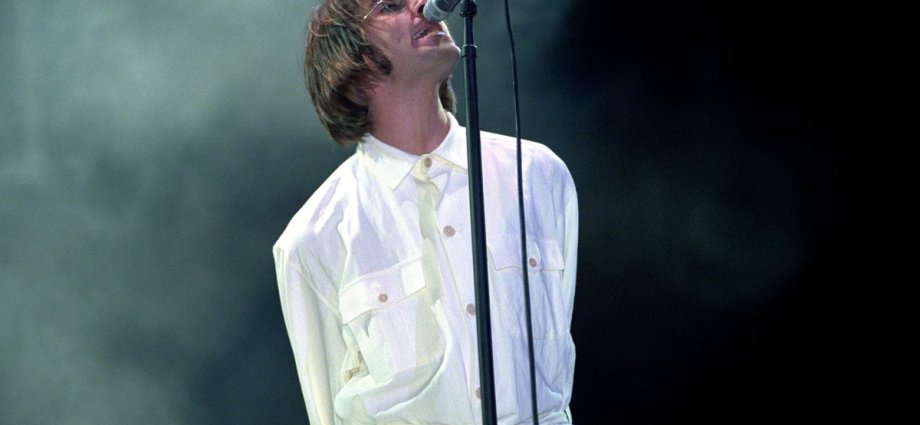
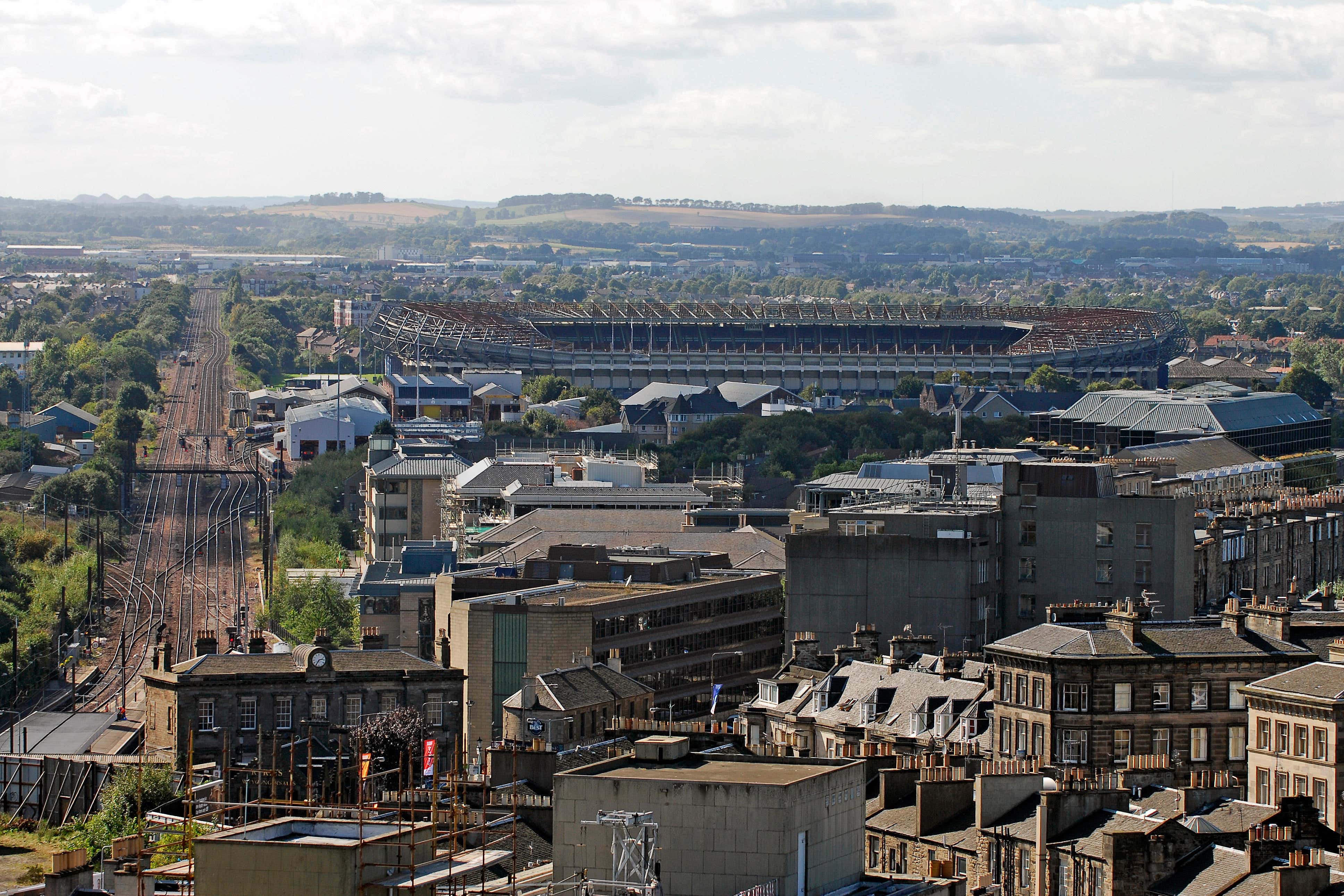
Oasis’s 2009 performance at Edinburgh’s Murrayfield Stadium has been identified as the most “ground-shaking” concert at the venue in the past two decades, according to new seismic data analysis.
The British Geological Survey (BGS) revealed the Gallagher brothers’ last Scottish gig topped the chart for peak earthshaking power.
Their June 2009 show, registering a peak power of 215.06Kw, was more than twice as powerful as the next strongest event, the Red Hot Chili Peppers’ 2004 concert (106.87Kw).
It also surpassed Kings of Leon in 2011 and Taylor Swift’s performance last June. Measurements were taken from a seismic monitoring station 4km from the stadium.
The findings emerge as Oasis’s highly anticipated comeback tour is set to arrive in the Scottish capital this weekend, raising the prospect of another “shakermaker” event.
The power output is not related to the volume of the band or the crowd, rather it is the movement of fans jumping and dancing in time to the music, with the height of the jumping and weight of the crowd also potential factors.

It means the current cohort of Oasis fans’ seismic output could perhaps be compared to those of previous years.
BGS seismologist Callum Harrison said: “In 2009, seismic signals generated by Oasis fans were consistent with a crowd energy of 215kW at its peak – enough to power around 30 of the scooters featured on the iconic Be Here Now album cover.
“Our network of sensors around the country is sensitive enough to pick up ground movement from a source miles away that may not be detectable to humans – and precise enough to register exact timestamps for when the events occur.

Enjoy unlimited access to 100 million ad-free songs and podcasts with Amazon Music
Sign up now for a 30-day free trial. Terms apply.
ADVERTISEMENT. If you sign up to this service we will earn commission. This revenue helps to fund journalism across The Independent.
Enjoy unlimited access to 100 million ad-free songs and podcasts with Amazon Music
Sign up now for a 30-day free trial. Terms apply.
ADVERTISEMENT. If you sign up to this service we will earn commission. This revenue helps to fund journalism across The Independent.
“The peak energy reading was recorded around 8.30pm on that June evening back in 2009, which correlates to the time the band first took the stage and performed Rock ‘N’ Roll Star, which couldn’t be more fitting in terms of topping our seismic music chart.”
The BGS keeps an archive of continuous ground motion recordings from seismic sensors around the country, dating back several decades.
Mr Harrison added: “In this instance we are only looking back over 20 years, however geological processes occur over vast time scales that can be difficult for humans to comprehend.
“Improving our understanding of historical earthquakes is an important part of BGS research in trying to understand and mitigate the seismic risk around the country.”
Ahead of the sold-out gigs at Murrayfield, which begin on Friday, Mr Harrison said it is “certainly possible” they could top the previous gig’s output in 2009, adding: “We’ll just have to wait and see.”
He said: “The main contributing factors are going to be how energetic the crowd is.
“If they’re jumping along with the music, how high or how fast are they jumping?”