









Want to bookmark your favourite articles and stories to read or reference later? Start your Independent Membership today.
Join today
Already a member?
Log in
A fossilised leg bone found in an Indonesian cave has revealed a previously unknown species of giant chicken-like bird.
The bone was excavated in 2009 at Liang Bua cave, on the island of Flores in Indonesia, nearly 7m beneath the cave floor.
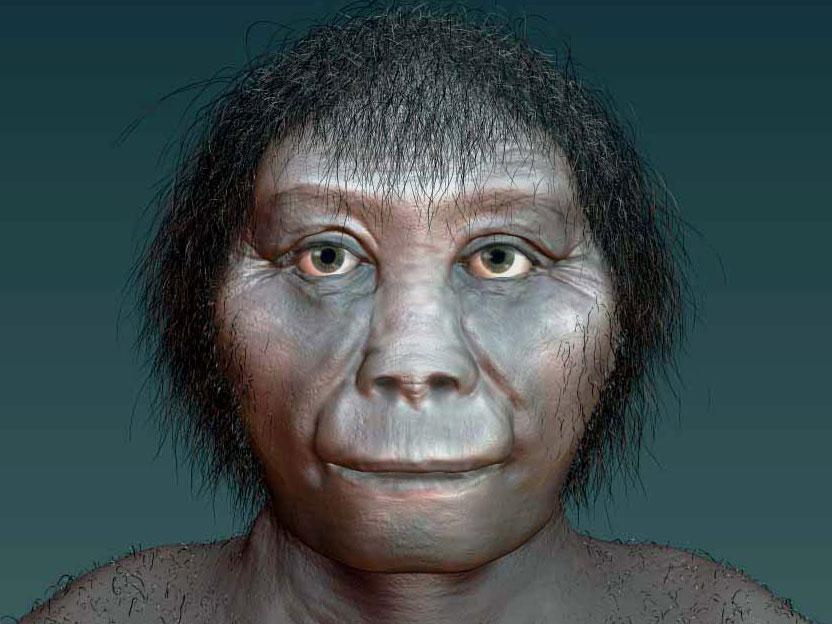
Liang Bua is the same site where researchers uncovered the remains of Homo floresiensis, an ancient human species nicknamed the “Hobbits” due to their short stature.
The extinct bird, likened to a giant chicken, once roamed Flores alongside those tiny humans, who measured around 3 feet and 6 inches.
Dwarf elephants and giant storks also roamed the island.
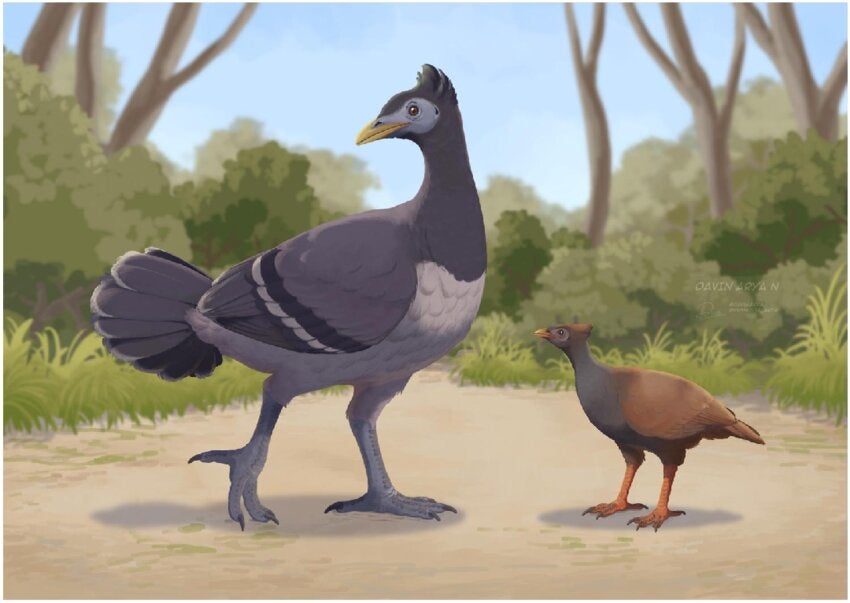
The fossil went largely unnoticed for 17 years before scientists identified it as a new species, which they named Megapodius rokusi.
It is thought to be the largest known member of its genus.
Indonesian zooarchaeologist Rokus Due Awe was the first to recognise the bone as belonging to a bird, but its significance remained unclear.
The fossil dates to between 190,000 and 120,000 years ago, during the Pleistocene epoch.
Palaeontologist Hanneke Meijer, from the University Museum of Bergen, and her colleagues examined the specimen in detail and noticed several unusual features.
The bone is the lower section of a right tarsometatarsus, a bone in the lower leg that connects to the toes.
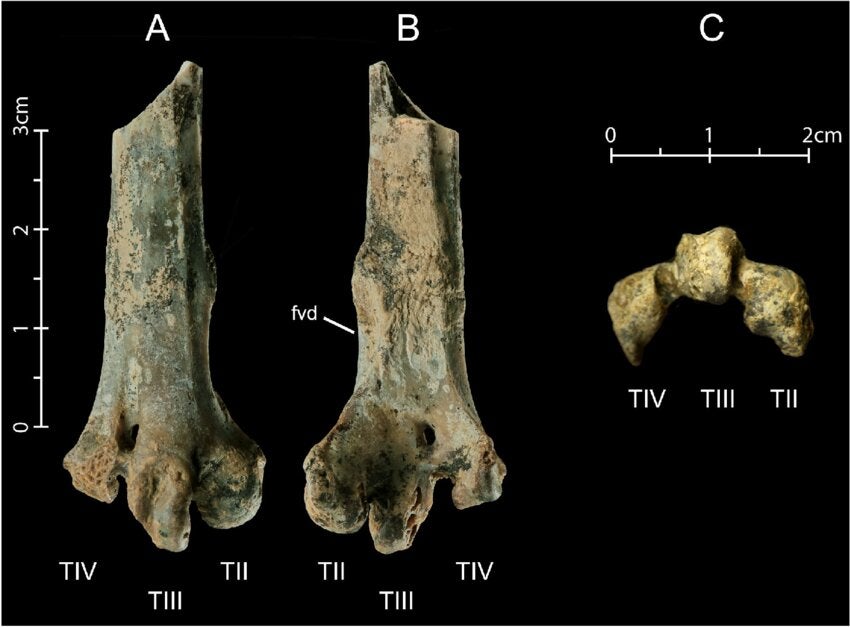
The joints where the toes attach were shaped differently from those of other known megapodes.
One angled unusually far outwards, while another had a distinctive groove and rounded depression.
The bird belonged to a group of unusual ground-dwelling birds known as megapodes, which bury their eggs in large mounds or underground burrows, relying on heat from the surrounding earth to incubate them.
Comparisons with the bones of living and extinct species showed that this combination of features had not been seen before.
The researchers therefore concluded that the fossil belonged to a new species.
Its size was also striking. By measuring the bone and applying statistical estimates linking leg-bone dimensions to body weight, the team calculated that the bird would have weighed about 3.9kg (8.6lb).
That is several times heavier than its closest living relatives on the island.
The weight is relatively modest by the standards of some modern domestic chickens, which have been bred for meat production and thus have weights that are not comparable to their wild ancestors.
Even so, the bird was considerably larger than today’s megapodes on Flores.
The newly identified species provides further evidence of the unusual animals that once inhabited Flores.
Scientists hope further fossil discoveries will help shed light on the bird’s evolution, behaviour and eventual disappearance.