










Want to bookmark your favourite articles and stories to read or reference later? Start your Independent Membership today.
Join today
Already a member?
Log in
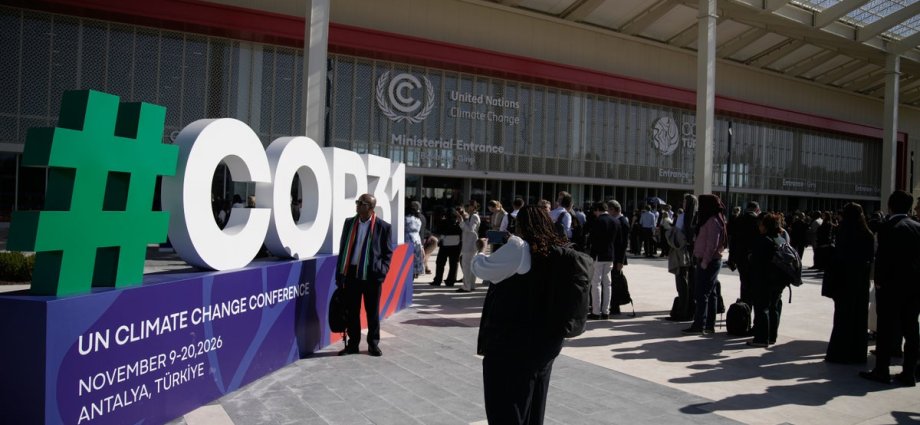
An estimated 100,000 people have descended on the Turkish city of Antalya for the UN’s flagship climate conference, Cop31, and everybody seems to have a story of a taxi not knowing where the official drop-off location is, a broken down shuttle bus, or a seemingly endless queue in the fierce Mediterranean sun.
Developing country delegations have reported immense frustration at members being unable to attend opening meetings – and it took this reporter just shy of seven hours from leaving his hotel to finally arrive in the “blue” UN negotiating zone this afternoon.
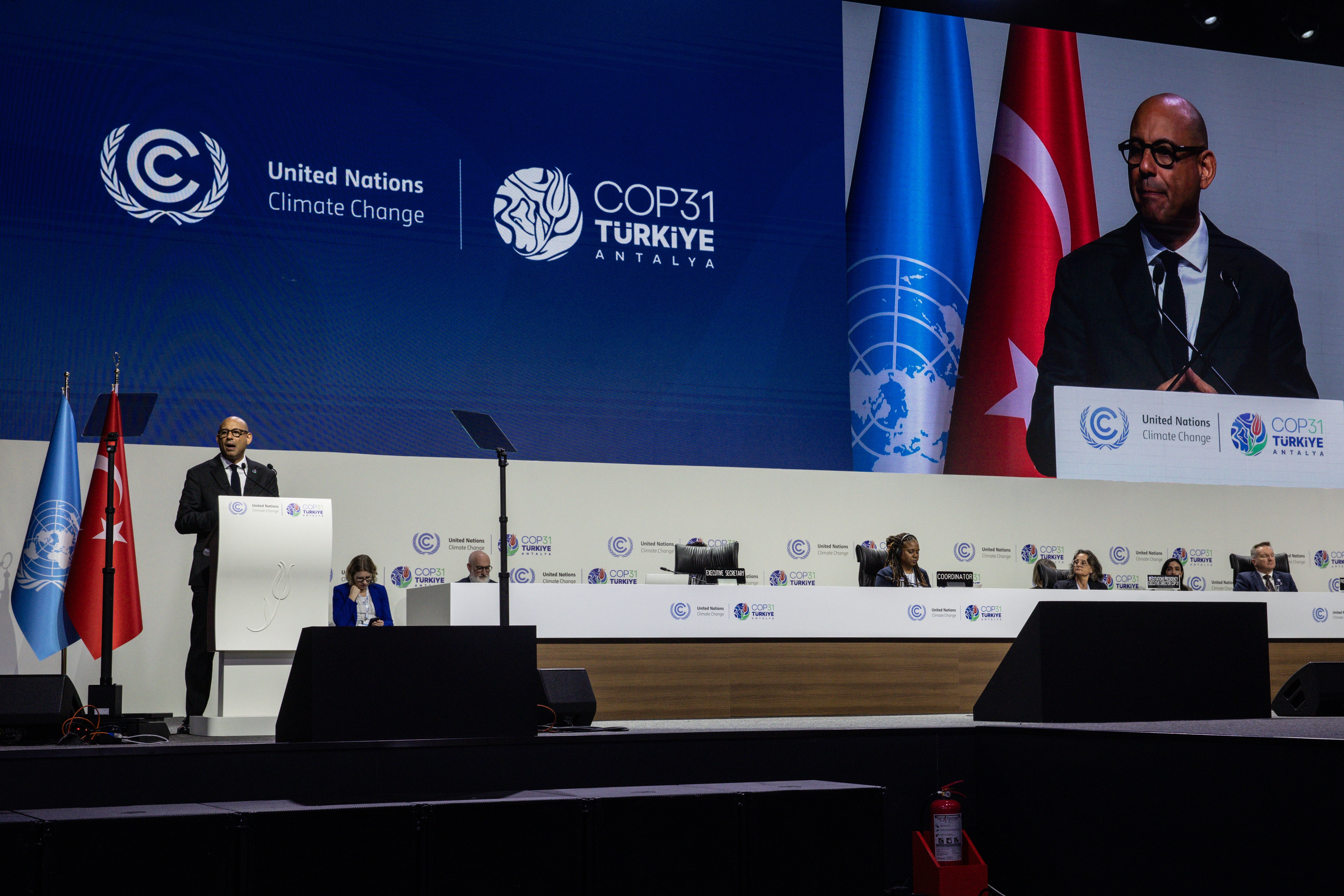
Regardless of this somewhat shaky start, the message has been clear. In his opening address, UN climate change executive secretary Simon Stiell did not mince his words in highlighting how extreme climate events are hitting communities worldwide – while also calling for an urgent push for renewable solutions that are now typically much cheaper than fossil fuels.
“Global heating is already costing the Earth: Appalling tragedy has hit the Himalayas, adding to the ever-expanding catalogue hitting communities across every region,” he said. “But the solutions are clear: Global renewables saved around half a trillion dollars last year. And another $265 billion in the first half of this year alone.”
“The urgency of this moment must drive us forward,” Stiell added.
“Nations face a choice: electric or shock. Rewire the global economy for the electric age. Or accept ongoing fossil fuel cost pain for families, firms, and governments, and of course that includes health systems,” Stiell said.
Stiell built on the issue of health, saying that millions around the world are being impacted, including mothers and babies, and that this would be a key element of the conference. “The climate crisis is now a global health crisis of pandemic proportions. From toxic pollution to extreme heat, and climate disasters slamming through health systems and infrastructure,” he said.
“The impacts of rising heat on pregnancy, newborns and maternal health are another unfolding health disaster which has the fingerprints of the climate crisis all over it. The root cause is humanity still burning colossal amounts of coal, oil and gas, and destroying forests,” Stiell added.
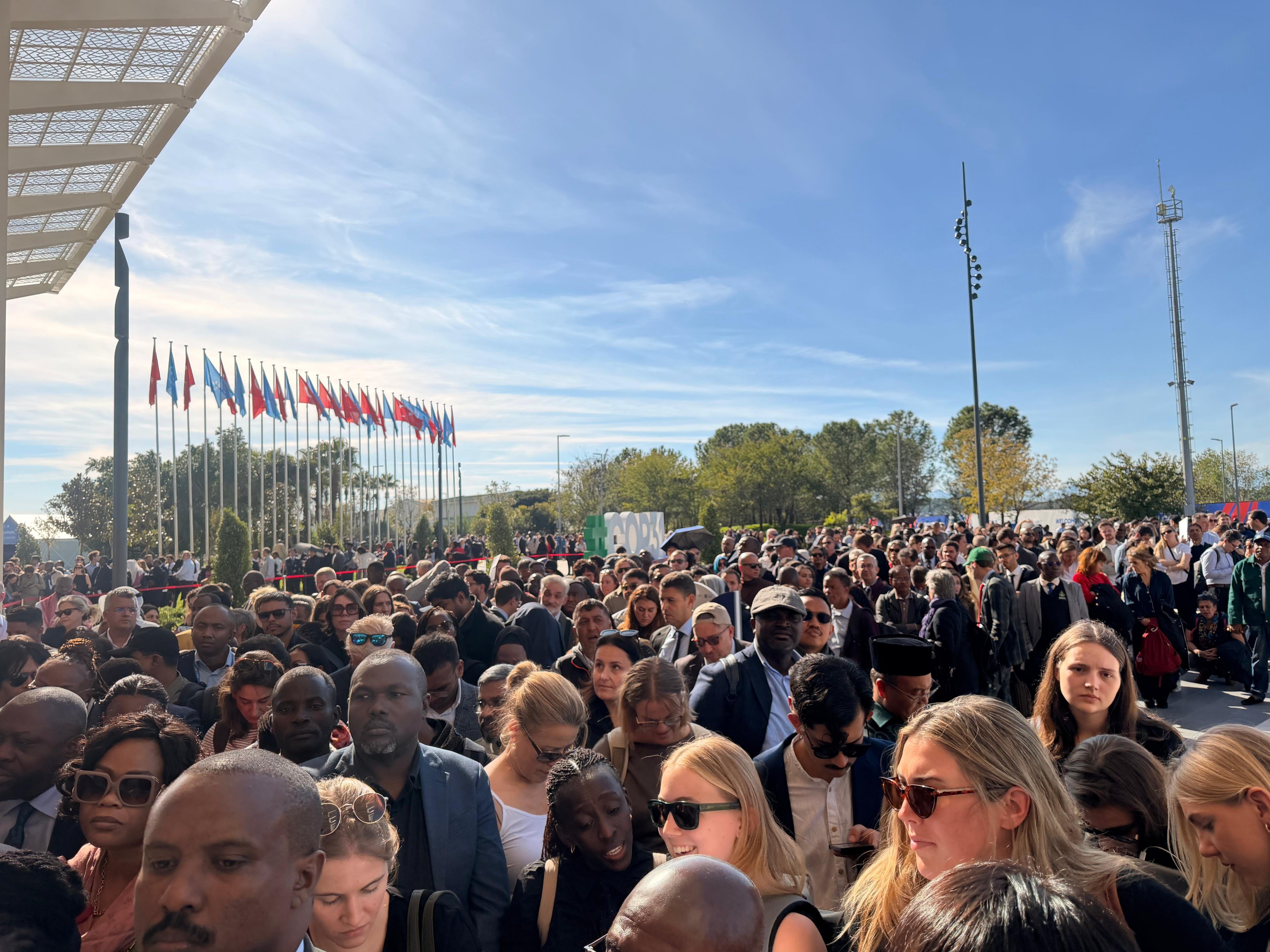
Beyond such warnings, a cautious sense of optimism seems to hang in the air of Antalya’s gleaming white Expo centre as we look forward to two weeks of negotiations.
Climate-friendly election results in Brazil, the re-election of Luiz Inácio Lula da Silva, and the US – democrats securing control of Congress – are a big part of this, even if the administration of Donald Trump are not here. But there is also a feeling that a target to electrify energy systems 35 per cent by 2035 (up from 23 per cent now) as well as prioritisation of health and waste systems all represents genuine progress.
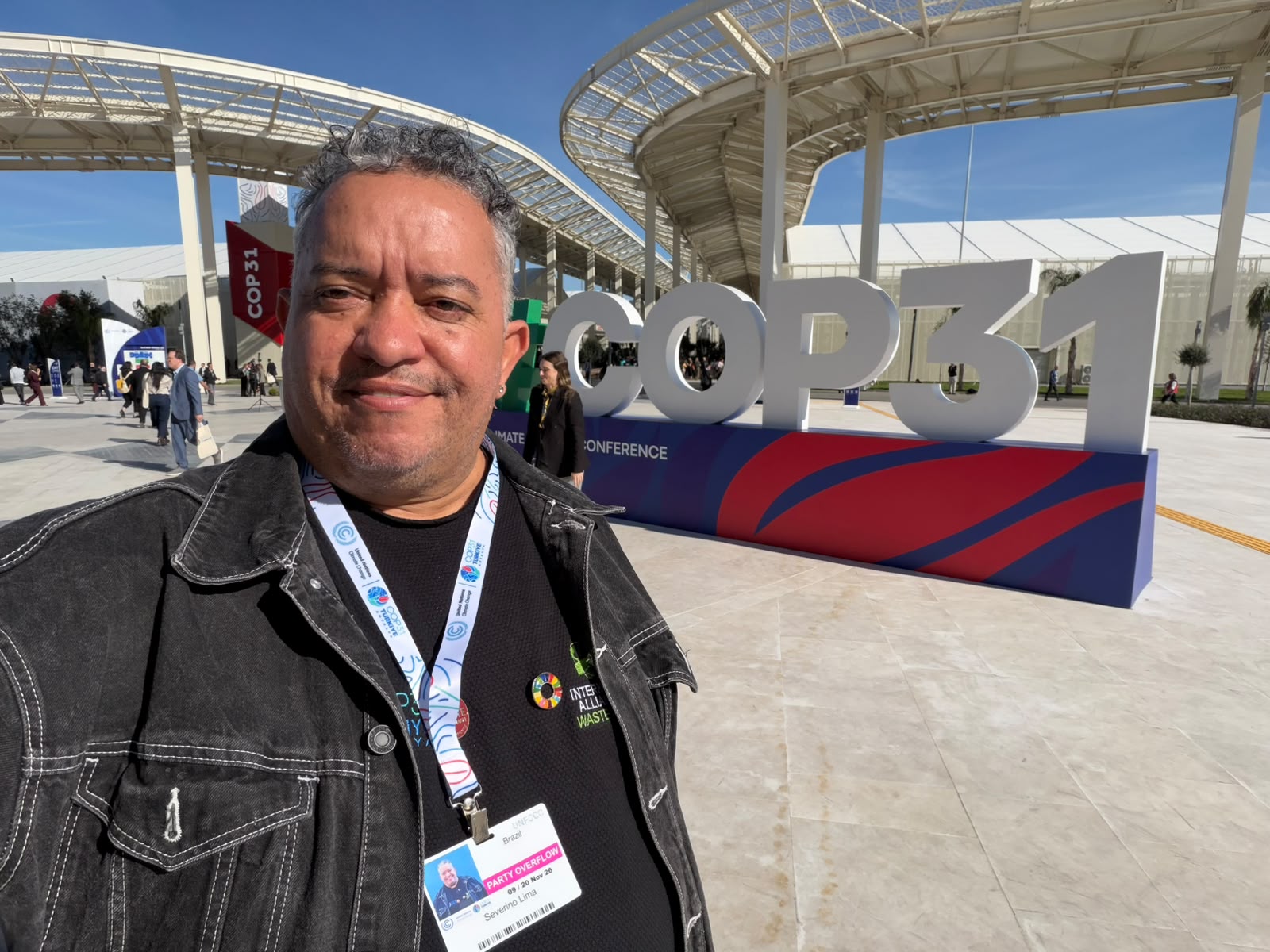
“I feel super optimistic about the Cop: we have just had a really great election result, and I really believe that we can see a good outcome on both climate and waste at these talks,” said Severino Catador, the president of the International Alliance of Wastepickers: a global union representing over 500,000 informal waste pickers around the world. A native of Brazil, Severino has worked as a wastepicker from the age of 13 – and is in Antalya with 13 others in order to advocate for wastepickers’ rights in Cop negotiations on reducing waste.
“We are calling for the recognition of waste pickers: of their labour and their contribution to managing waste and decarbonisation around the world today,” he says. “We have bilateral meetings with the presidency set up, and I have to say the response to our concerns has been really strong so far.
Russell Reed, a London-based climate activist and organiser, adds: “After a rough few years, we finally have some positive news to look at from Brazil and the [United] States. Three decades into a negotiations process that has at times risked going stale, that forward momentum really means something.”
Unusually for a Cop event, these climate talks are being co-hosted by both Turkey – which is pushing voluntary targets in areas including waste and electrification – and Australia, which is overseeing the official UN negotiations that track progress and monitoring of the landmark Paris Agreement. agreed in 2015.
The coming days will show whether this improbable pairing will be able to deliver real progress on multilateral climate action. Certainly, there is a significant need for it: The latest climate science finds that we are close to a long-term breach of the Paris goal of limiting warming to 1.5C, while this year’s flooding disaster in Nepal as well as the devastating super El Nino a providing a sense of just what a future of unabated climate change will look like.
There are expected to be more conversations than ever this year about how to limit how far we overshoot 1.5C warming – rather than the “keeping 1.5C alive” of previous conferences – as well as serious thoughts on the pursuit of more controversial technologies like solar geo-engineering and carbon capture in order bring the global temperature back down to the critical 1.5C threshold.
Another unusual focal point at this Cop will be two policy roadmaps presented by last year’s Cop host, Brazil, which look at how to “transition away from fossil fuels” as well as to halt deforestation. Climate observers will be watching closely to see the extent to which these are adopted in broader discussions.
Turkey’s Cop31 president opened the conference by warning of the list of geopolitical uncertainties, including the war against Iran, and suggested that strong outcome from these talks could help countries hedge against global risks.
“Climate shapes our food supply. Food influences migration. Energy shapes the economy. Economic fragility affects the ability of societies to withstand shocks,” he said. “That is why climate policy today is also development policy. It is food policy. Energy policy. Urban policy. Health policy.”
For all the positive words at the opening, however, the true gauge of these talks will be whether good intentions can be translated into an outcome document that every country in attendance will have to agree to in two weeks time. And then, whether that agreement will translate into meaningful outcomes for the millions suffering around the world in the climate crisis.
“The real test of COP31 is whether it changes anything beyond the negotiating halls,” said Mohamed Adow, the founding director of Power Shift Africa, a Nairobi-based climate think tank.
“Can a farmer survive the next drought? Can a family rebuild after a devastating flood? Can a country afford to power its development with clean energy rather than expensive imported fossil fuels? Those are the questions that matter. We don’t need another summit that celebrates agreement while the world burns.”
This article has been produced as part of The Independent’s Rethinking Global Aid project