










Want to bookmark your favourite articles and stories to read or reference later? Start your Independent Membership today.
Join today
Already a member?
Log in
Medieval tsunamis on Lombardy’s Lake Iseo, which caused widespread destruction in nearby villages, were caused by centuries of sediment accumulation from farming, according to a new study.
The threat of such massive waves erupting from European lakes due to sediment accumulation still remains, warns the research published in the journal Nature Communications.
On 3 January 1117AD, a strong earthquake shook northern Italy, which led to giant waves of up to 50m rising from Lake Iseo.
“The lake rose so much that very few of those living in the villages nearby escaped this danger,” a 12th-century manuscript kept in the Vatican notes.
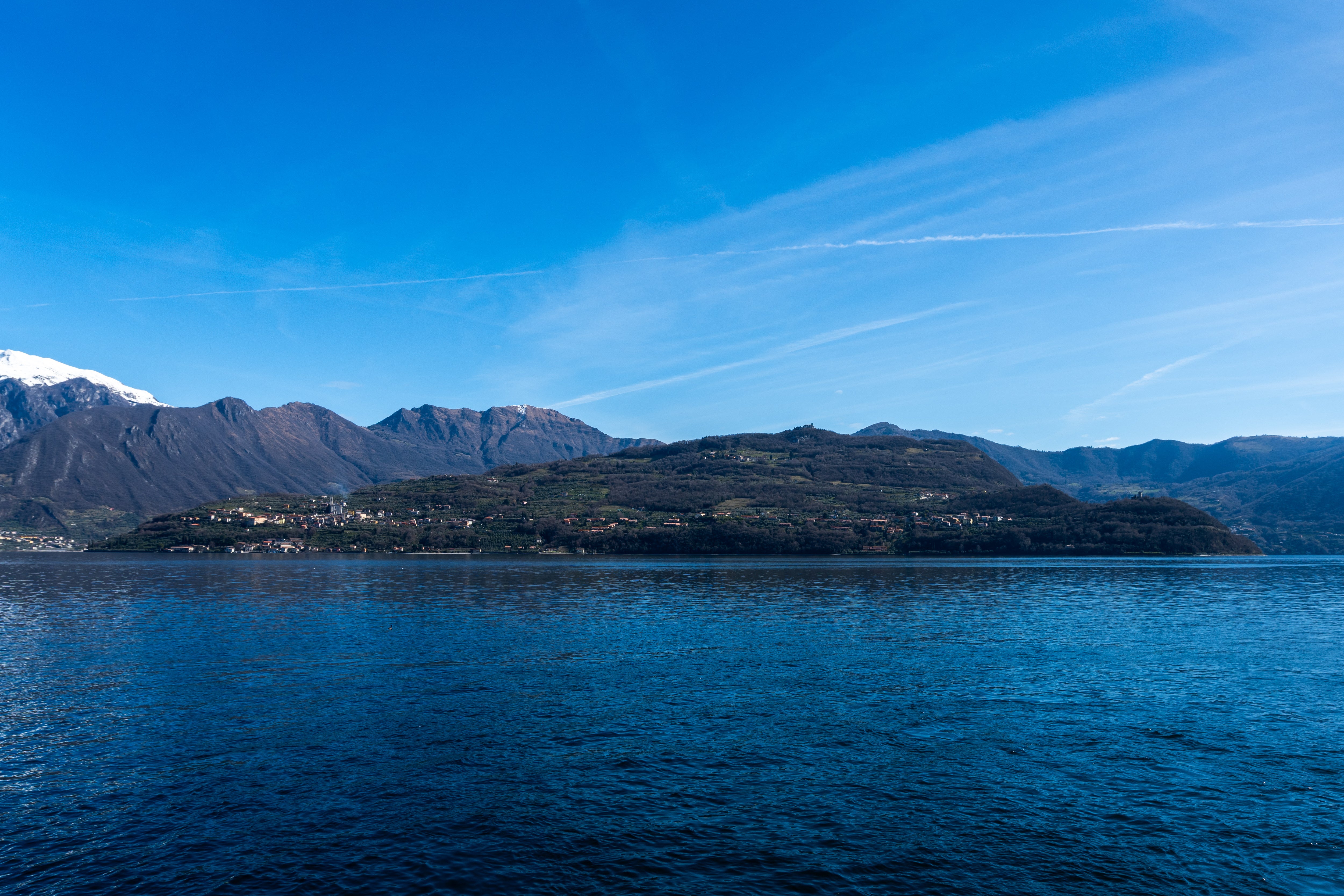
Lake Iseo is at the base of Val Camonica, one of the largest valleys of the southern Alps, while its river, the Oglio, has a large delta at the lake’s northern end.
Farming, forest clearing, and grazing for centuries since the Roman times exposed the valley’s slopes to erosion, and tripled the amount of sediments reaching the lake.
This had led to the underwater front becoming steep and overloaded.
Geologists have found evidence of two earthquakes that struck the region and disturbed the lake, one in 1117AD and one on Christmas Day in 1222AD.
The first quake moved about 62 million cubic meters of sediment, while the second moved about 10 million cubic meters.
The latest study used computer models to simulate how tsunami waves were likely generated from these mud slides.
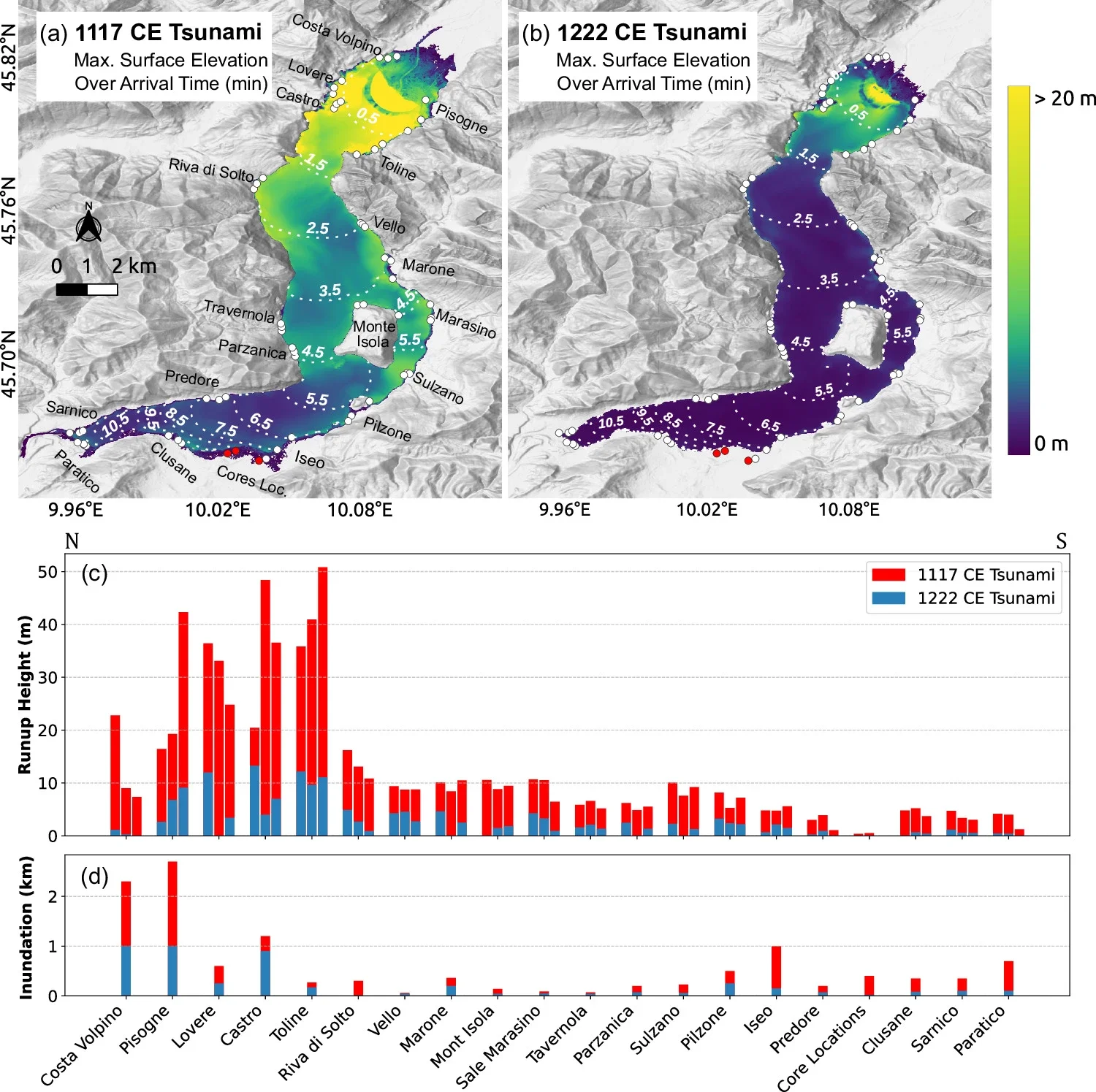
Simulations revealed that waves from the 1117AD quake were likely about 5.5km (3.4 miles) long, about 22 times the greatest depth of the lake, 250 m (820 ft).
The tsunami likely reached the shores next to the delta in less than a minute, climbing up to 50m (164ft) in height and flooding the low plain of the Oglio up to 2.7km (1.7 miles) inland, the study found.
In 1222AD, the sediments likely raised waves of about 13m (43ft), researchers say.
After the second quake, pressure on the land eased for a few centuries, notably during the Black Death, but rose again in the 17th century to peak in the industrial era.
Now, Lake Iseo remains one of the most densely built in the Italian Alps and another land collapse could send a large wave to its northern shores in less than a minute, scientists warn.
Such a short time window is too fast for any warning, they say.
Sediments in the deep basins of Lakes Garda and Como are also growing thick, and there’s evidence of their slopes also collapsing during medieval earthquakes, researchers say.
The three lakes are home to more than 370,000 people, they say.
“The cascading effects observed in Lake Iseo serve as both a cautionary tale and a call to action,” scientists warn.
“These findings reveal a persistent, human-amplified mechanism of lacustrine tsunami generation and intensity with major implications for hazard assessment,” they wrote.