









Want to bookmark your favourite articles and stories to read or reference later? Start your Independent Membership today.
Join today
Already a member?
Log in
Miranda Lambert knows the value of good advice. She received some gems from the late, great Dolly Parton, to whom she was compared early on as “another blonde beauty who was once underestimated”. In fact, they met while recording a duet version of Parton’s “Dumb Blonde” for the soundtrack to the 2018 comedy-drama film Dumplin’, when the queen of country offered some wise words Lambert would never forget. “I walk in the studio and there are cameras and lights and everything, and Dolly grabs my shoulders, says ‘nice to meet you’ and gives me a hug,” she recalls. “Then she turns me around and says, ‘Always find your good light first.’” Lambert uses that advice literally, whenever she finds herself under a spotlight, but more importantly in the everyday: “If I’m in a mood or someone pisses me off.”
Lambert has been kicking down the doors of country music for a long time, with great success. The Texas-born superstar spent most of the 2010s as one of the few women flying the flag in a scene dominated by male acts like Tim McGraw, Kenny Chesney, Toby Keith and Brad Paisley. Now, she’s proven instrumental in the rise of country newcomers like singer Ella Langley– with whom she wrote the year’s biggest hit, “Choosin’ Texas”. Thanks to that song, particularly, more two decades into her career Lambert’s own music is being discovered by a whole new generation of fans. Next month, these achievements will be acknowledged at the Country Music Association Awards in Nashville, where she and Langley are the most-nominated artists of the year. Suffice to say, things are going pretty well.
“I think [the CMAs] are a very good indication of where we’re at right now,” Lambert says. “Country always ebbs and flows, we go through different phases, but I don’t feel like women have had a moment like this in a really long time – not since the Nineties.” Then, acts like Shania Twain, The Chicks, Reba McEntire and Faith Hill were among the biggest artists of the decade, but by the 2010s, it was a different story. “Bro country”, the much-criticised blend of country with hip-hop, hard rock and electronic beats, along with a borderline obsessive focus on booze, partying and “pretty young things”, was everywhere. Women had an uphill battle just to achieve recognition and, even then, were consistently pitted against one another. In 2015, Lambert was among the stars who pushed back strongly against the legendary “tomatogate” row, where a radio consultant compared male acts to the “lettuce” forming the bulk of a salad – arguing they should be prioritised on the radio – and female artists as the “tomato” garnish.
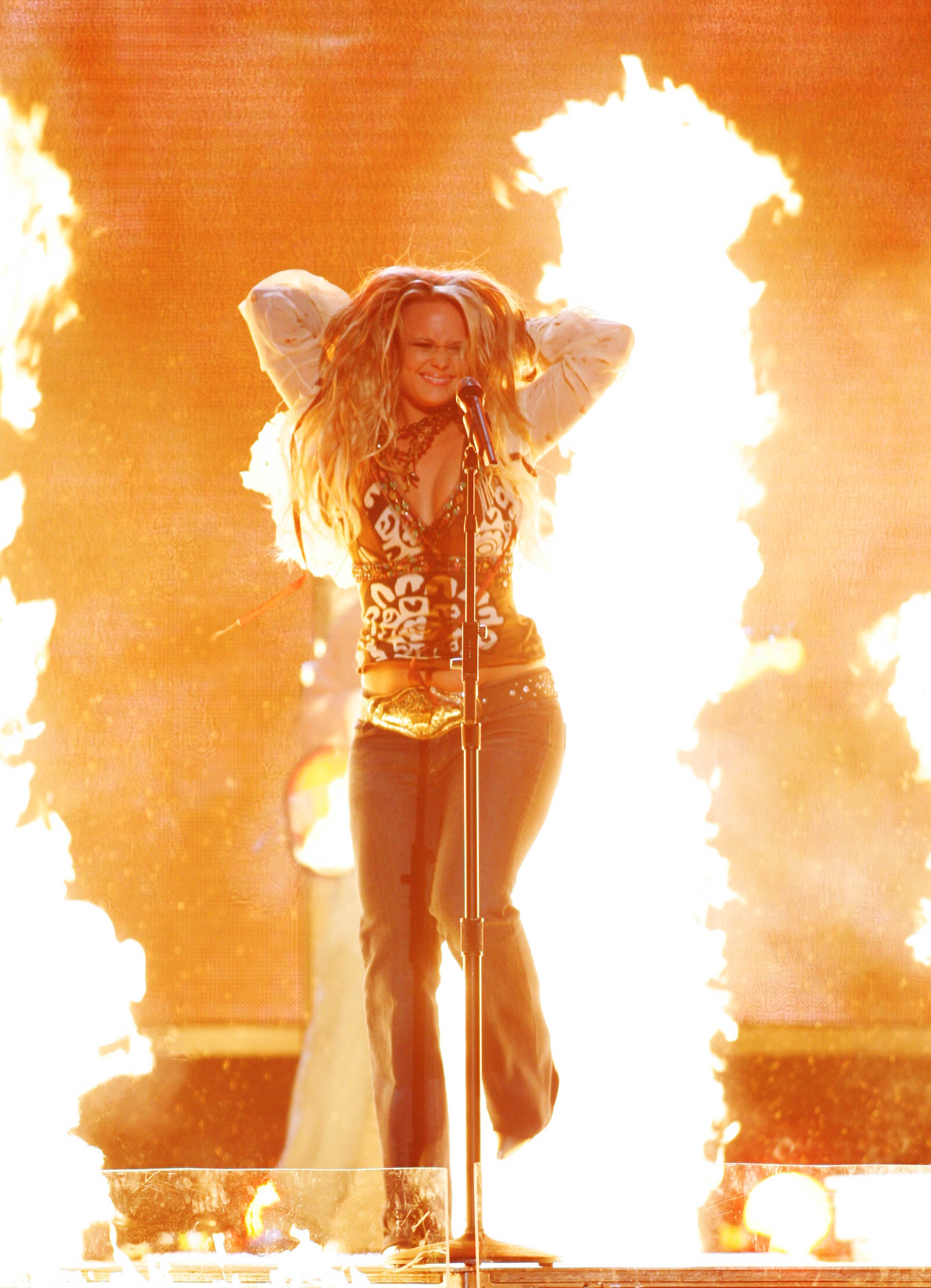
Lambert rose to fame in spite of those hurdles, a scrappy young singer with a spitfire attitude. In her video for breakout 2005 single “Kerosene”, she sports a tank top bearing the words, “Mama Tried”, asserting her rebellious, take-no-prisoners nature from the start. She continued in this vein with her second album, Crazy Ex-Girlfriend, and its lead single “Gunpowder and Lead”, a revenge fantasy told through the eyes of a domestic abuse survivor: “He slapped my face, and he shook me like a rag doll/ Don’t that sound like a real man?” she snarls. “I’m going to show him what little girls are made of/ Gunpowder and lead.”
When Lambert was growing up, her parents, now-retired private detectives Beverly and Richard, offered their farmhouse as a shelter to survivors and their children, meaning she saw the impact of domestic abuse up close. “It taught me a lot,” she says. “Me and my brother had a really good childhood, but we saw a lot of terrible things – how ugly the world can be.” She’s grateful her family could help support those women, and that she was able to share their stories in her songs: “I absorbed all of it,” she says. “I hadn’t lived enough to speak about myself yet, and I knew these stories needed to be told… those women deserved that.”
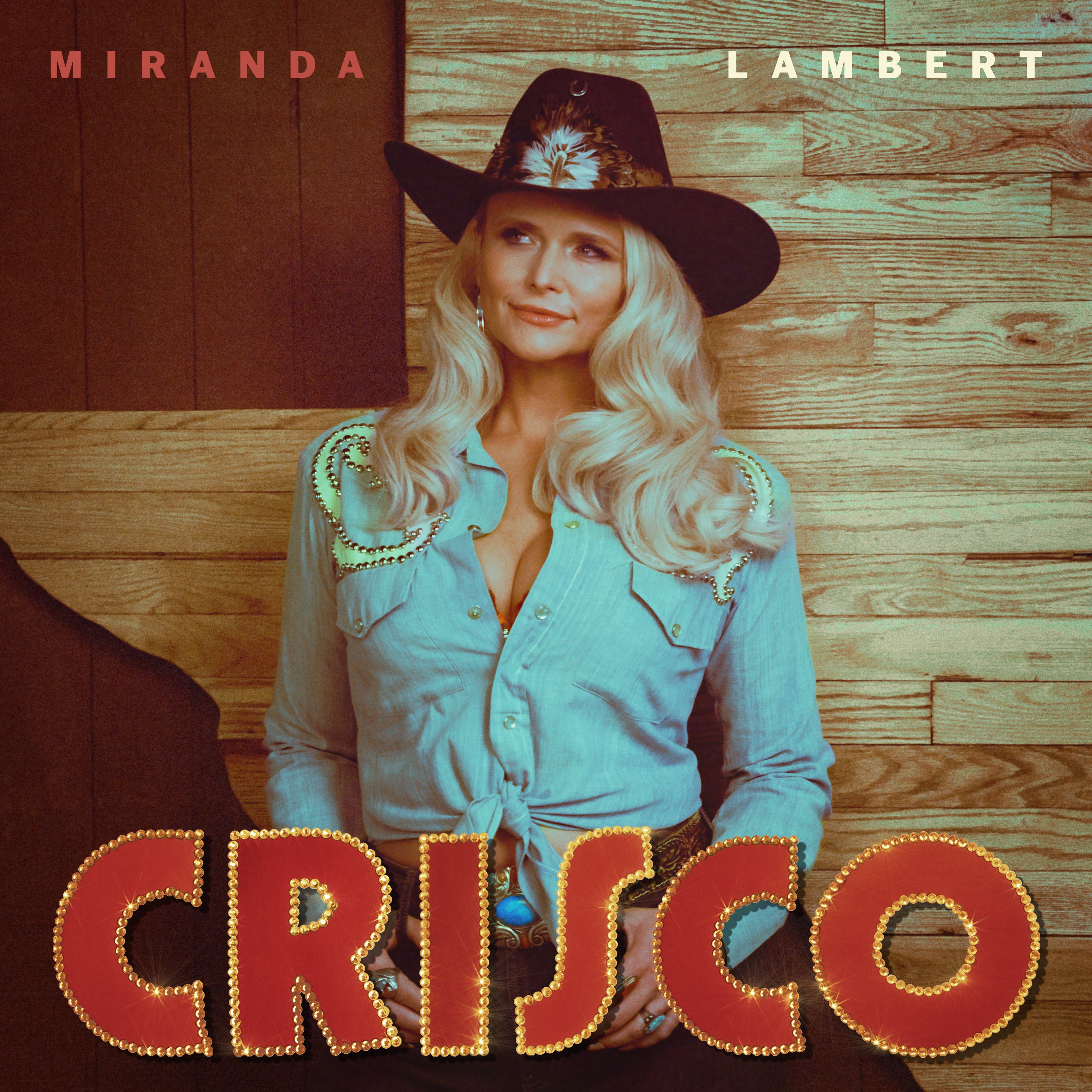
We’re speaking over video call, but Lambert’s screen is black. Although I can’t see her, I’m transported to her Tennessee home by the sound of crunching gravel as she walks around the sprawling 400-acre farm she shares with her husband, retired NYPD officer Brendan McLoughlin. She’s a keen horse-rider – they also keep chickens and a few rescue cats – and their home is a welcome refuge away from her whirlwind of a career. McLoughlin now works on Lambert’s security team and co-wrote songs for her new album Crisco, a brilliant melding of country and disco that is by far Lambert’s most playful record to date.
“Oh heck yeah!” she exclaims, when I bring up its joyful tone. “I didn’t know what I was doing, but I was excited.” Today’s music landscape is markedly different from the one she started out in, which was ruled by the charts and radio play. Now, she agrees, it’s more democratic and fans can seek out what they like, rather than wait for it to be fed to them. “That kind of made me less afraid,” she says. “Like, what do I have to lose? The worst thing that could happen was nobody cared, but I had a great time, so we already won. I’d rather stay true to myself at the risk of failure.” She often tells younger artists coming to her for advice the same thing, to only put out music they really believe in: “If your songs work, you have to sing them forever. And if you hate them now, you’re damn sure gonna hate them in 20 years!”
Lambert seems particularly protective of her legacy. She follows Parton’s example in remaining steadfastly tight-lipped about politics, while being a vocal supporter of the LGBT+ community (she threw a drag brunch earlier this year in Nashville to champion queer artists and performers). “I feel if we could be a little more like Dolly, and be good, be kind, be thoughtful,” she says, with a bit of a sigh. “You can have a stance on things without preaching it to people, and I also believe that my job as a musician, as a songwriter, is to be an escape. Songs are an escape, that’s a moment for us all to come together… and I just don’t ever think it’s my place to get up there and push my agendas of any other kinds.” Listen to her songs, she believes, and people will know where she stands. “And I feel like Dolly did that well too.”
I just don’t ever think it’s my place to get up there and push my agendas
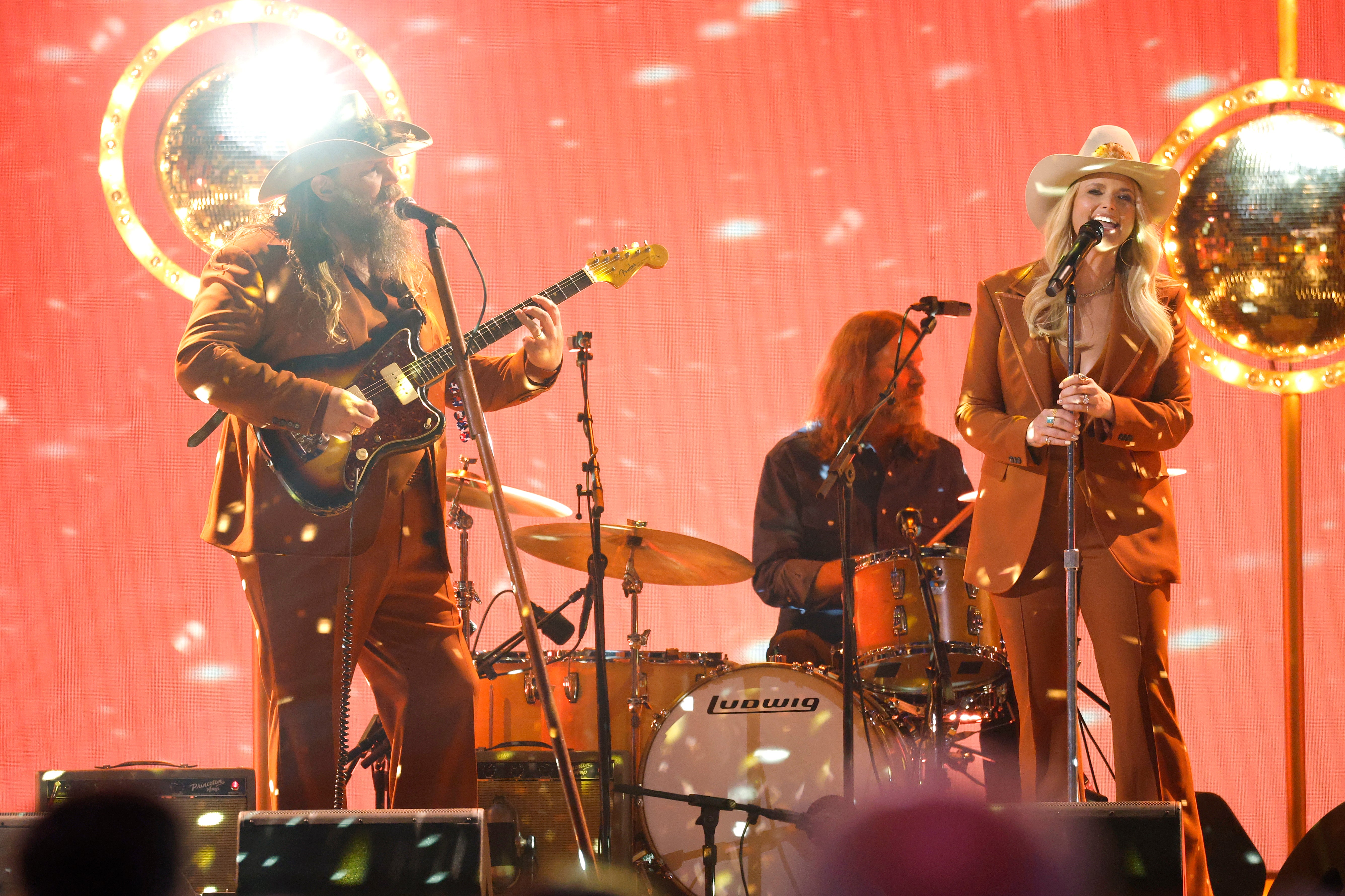
Parton’s influence is all over Crisco, not least in Lambert’s duet with fellow country star Chris Stapleton, on “A Song to Sing”, which is almost a sequel to Parton’s 1983 duet with Kenny Rogers, “Islands in the Stream”, with its mid-tempo rock and country grooves. It’s nominated for Musical Event of the Year at the CMAs, along with Lambert’s peacemaking collaboration “Horses and Divorces” with her one-time rival, Kacey Musgraves (“There were chips on our shoulders, but now that we’re older/ It’s all whiskey under the bridge.”).

Enjoy unlimited access to 100 million ad-free songs and podcasts with Amazon Music
Sign up now for a 30-day free trial. Terms apply.
ADVERTISEMENT. If you sign up to this service we will earn commission. This revenue helps to fund journalism across The Independent.
Lambert is on a winning streak when it comes to songwriting, a talent it took Nashville a while to acknowledge – to see past that fiery exterior. “When I had Kerosene and Crazy Ex-Girlfriend out, people thought that’s all I was,” she says. “But also I have grown as a person – I used to live in that character a little bit.” She laughs. “We’re so fiery when we’re in our early twenties.” Once she’d begun building her body of work, she saw a turning point: “And the fact that I could be recognised as a songwriter, not just this fiery blonde gal, helped me calm down a bit – I was being seen as an artist, you know?”
Even so, she wasn’t expecting the unprecedented reaction to “Choosin’ Texas”. Last month it unseated Mariah Carey to take the longest-running No 1 song on the Billboard Hot 100, and just this week returned to the top spot and extended its run to 25 weeks total. Meanwhile, Langley, who performs the song, was quickly established as country’s brightest new star. “I think you can tell when an artist is genuine and does the work and they’re authentic, that’s universal,” Lambert suggests. “These artists don’t come along very often – Ella burst onto the scene and is already an icon.”
She has her theories for why “Choosin’ Texas” has made such an impact: “It has a nostalgic feel. It’s brand new, but you feel like you’ve heard it before, and it’s telling a pretty simple story.” She loves the song’s theme, a classic love triangle that riffs cleverly on two sides of country music (with references to Hank Williams versus George Strait). “I also love the idea of, you know, ‘You can’t win them all,’” she says. “Even Ella, this beautiful strong woman, she couldn’t keep the guy, you know what I mean? It’s a relatable song.”
Lambert has been admirably open amid intense public scrutiny over her personal life, previously describing love as “a hard road sometimes and it’s been a roller-coaster ride for me”. Before she met McLoughlin, Lambert formed half of one of country’s biggest power couples with Blake Shelton, who she was with from 2006 until divorcing in 2015 (they were married for four years). She dated musician Anderson East for two years, and had a brief relationship with Turnpike Troubadours frontman Evan Felker, who ended up reuniting with his estranged wife after splitting with Lambert in 2018. She’s been happily married to McLoughlin since 2019, although jokes that it was an adjustment for him, moving out of the big city and to the countryside.
“Oh yeah, my in-laws are actually in town right now, and they’re like, ‘Oh, it’s so peaceful out here. It’s so calm,’” she says, laughing. “It took my husband a while to get out of that mentality too.” One night in spring, they were sitting on the porch – the same one where Lambert writes her songs – and the crickets and frogs were making their evening racket. “He said, ‘You always said the city was so loud. But out here it’s loud.’”
My own favourite of her collaborations with Langley is “Butterfly Season”, which appears on the latter’s second album Dandelion and was inspired by the butterfly garden Lambert’s manager, Marianne, has at her office. “It’s one of my favourites,” she says, “It reminds me of Ella, but it also reminds me of me – of anyone growing or evolving into something new. There can be pain with that, but it’s beautiful on the other side, so it’s kind of a universal tune.” I tell her it feels particularly pertinent for a time when more women are choosing to be single instead of prioritising romantic relationships, instead finding other things in life that give them meaning. It’s a lesson that, perhaps, society isn’t so keen on us learning.
“It really is, but to me it’s the most important one,” Lambert says. “You really learn how to love yourself in a quiet moment and get to know who you are. And I think that’s something we’re going to keep doing forever… I don’t think there’s a finish line to that, but I think that’s the beauty of it. We can keep growing and keep evolving and listening to ourselves, our hearts, our minds, our bodies, and learning what we need to be to be the best version of ourselves.”
‘Crisco’, the latest album from Miranda Lambert, is out now. The CMA Awards take place on 19 November.