










Want to bookmark your favourite articles and stories to read or reference later? Start your Independent Membership today.
Join today
Already a member?
Log in
Scientists have identified a link between cold temperatures and longevity, an advance that could help prevent age-related diseases in the future.
Previous studies in animals have shown that moderately cold temperatures can effectively extend lifespan and delay age-related decline.
But exactly how cold temperatures trigger these beneficial effects at a cellular level has remained unclear.
Now, scientists have found that muscle tissues and a molecule called BH2 play a key role in the beneficial effects of cold temperatures on longevity.
Researchers from the University of Cologne in Germany showed that there is a link between cold temperatures, increased lifespan, and the biological process that controls the quality of proteins inside cells.
Key to this link is the organic compound BH2, or dihydrobiopterin, according to the study published in the journal Nature.
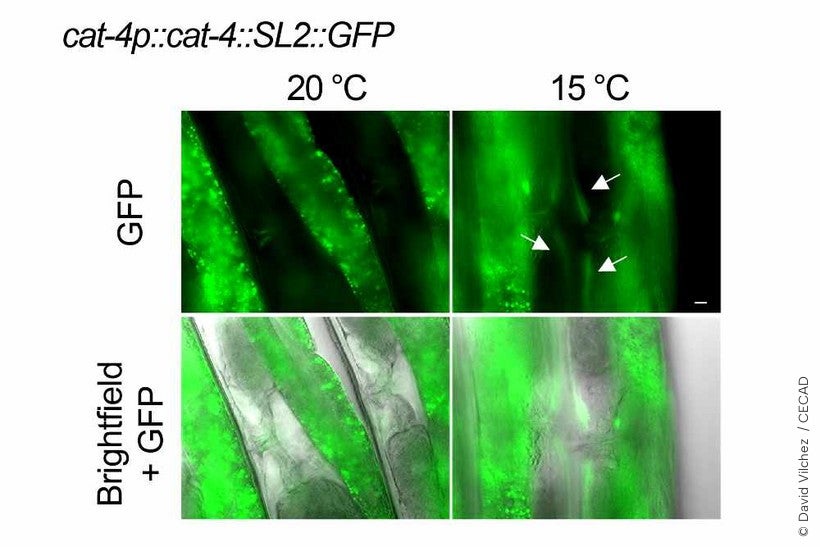
Studying the worm species Caenorhabditis elegans, widely used in research, scientists found that BH2 is key to the process that maintains functional proteins and preserves a balance of protein quality and quantity in cells.
Researchers also tested this theory in human cell models of Huntington’s disease, and amyotrophic lateral sclerosis (ALS), which are both age-associated diseases involving the accumulation of misfolded or damaged proteins.
“We are excited to show that mildly cold temperatures trigger significant production of a specific metabolite, BH2, which is synthesised, stored, and subsequently released by muscle tissue,” said David Vilchez, an author of the study from University Hospital Cologne.
“BH2 then goes to other parts of the body, where it helps to maintain protein homeostasis and contributes to tissue health during ageing,” Dr Vilchez said.
The findings suggest that specifically targeting a single tissue, such as muscle, could provide organism-wide protection.
“Further experiments on human cells encourage us to look for treatments that mimic the beneficial effects of cold without requiring changes in body temperature,” Dr Vilchez said.
“This opens up new avenues for therapeutic approaches,” he said.
Scientists hope to further explore if the beneficial effects of cold temperatures could be reproduced by supplementing specific metabolites.
For instance, administration of both BH2 and the protein building block molecule tyrosine could produce a protective effect in C. elegans and also in human cell cultures.
This suggests that supplementing some key organic molecules can reproduce some of the beneficial effects of cold, but scientists cautioned that research is still at a nascent stage in developing a “pill” to mimic these effects.
The latest study provides a good starting point for further research into cold treatment-related options for conditions such as Huntington’s disease and ALS, researchers say.