









Want to bookmark your favourite articles and stories to read or reference later? Start your Independent Membership today.
Join today
Already a member?
Log in
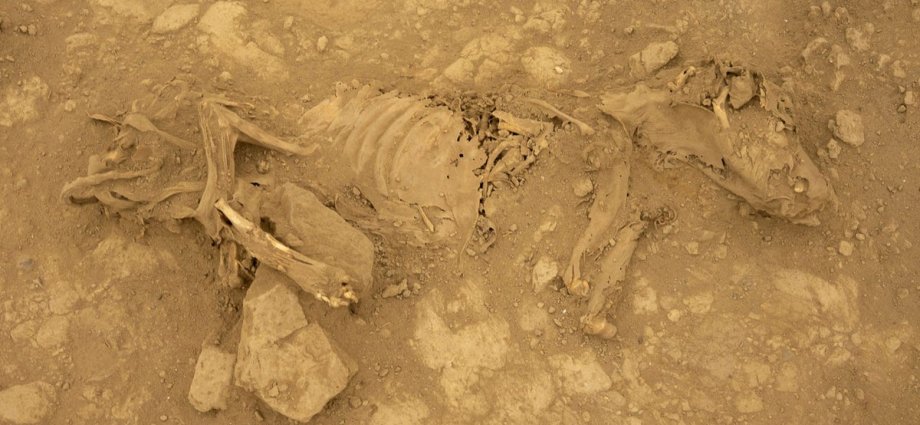
Archaeologists have unearthed mummies of hairless dogs at an ancient burial complex in Peru, a discovery that offers the first evidence of such canines roaming across parts of South America over 1,200 years ago.
The mummified dog remains, with unusual skeletal features, also offer clues about what the animals ate and how they were treated by the people around them, according to a new study published in the Journal of Anthropological Archaeology.
Peruvian hairless dogs are a unique indigenous breed thought to have had slender bodies, pointed ears, and a distinct lack of fur.
Until now, their presence was known from drawings on pottery created by ancient societies along the Andean coast.
A variation of the ancient breed is recognised by the American Kennel Club as the Peruvian Inca Orchid.
Now, archaeologists have uncovered the first physical evidence of Peruvian hairless dogs at Castillo de Huarmey, an extremely dry region of Peru’s coast about 190 miles north of Lima.
Occupied between 600 and 1050 AD, it is the only known Wari Empire archaeological site discovered so far on Peru’s northern coast.
In 2022, researchers found burials of elite craftspeople accompanied by gold, silver, and bronze tools at the site.
Now, the dog remains offer a different perspective on daily life at the site, especially about the relationships between people and animals.
“The goal of our study was to not only present data on Castillo de Huarmey’s dog burials, but also emphasise that people in the past had contradictory relationships with the animals, just as they do today: a pet for one group of people could be considered a pest by their closest neighbours,” said archaeologist Weronika Tomczyk.
Due to the region’s exceptionally arid conditions, materials that would normally deteriorate over time, like hair, bones, clothing, leather, and pigments, have remained well preserved.
Numerous remains of South American camelids, probably domesticated llamas and alpacas, have also been found here.
One of the artefacts found in the new dig was an unusual ceramic vessel depicting a seated Peruvian hairless dog with humanlike features holding an object resembling a musical instrument.
Three sets of dog remains also stood out.
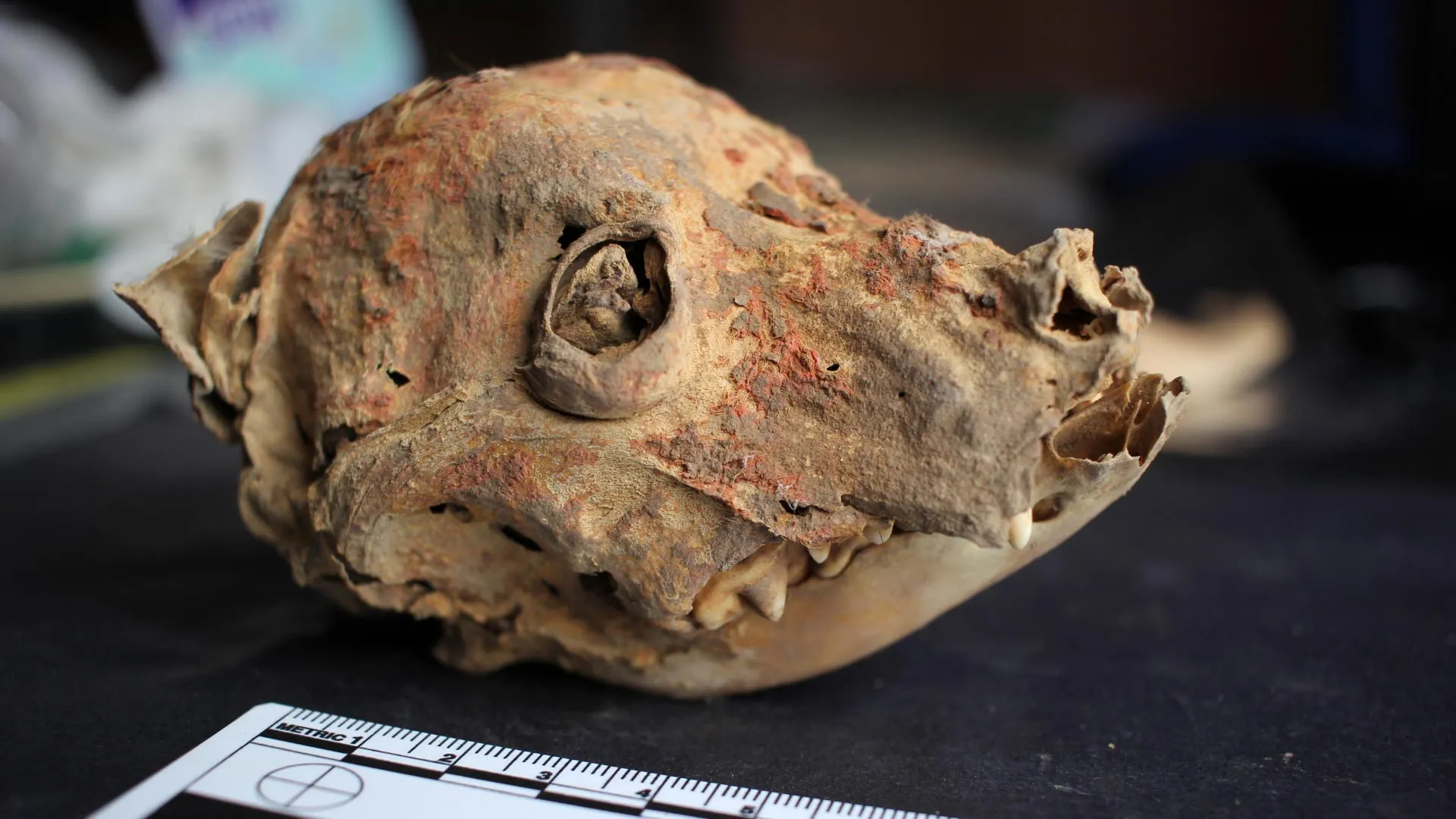
One was a naturally mummified skull that still retained visible hairless skin and attached ears.
The dog’s skull appeared to be colored with cinnabar, a bright red pigment commonly used in ancient Peruvian funerary traditions.
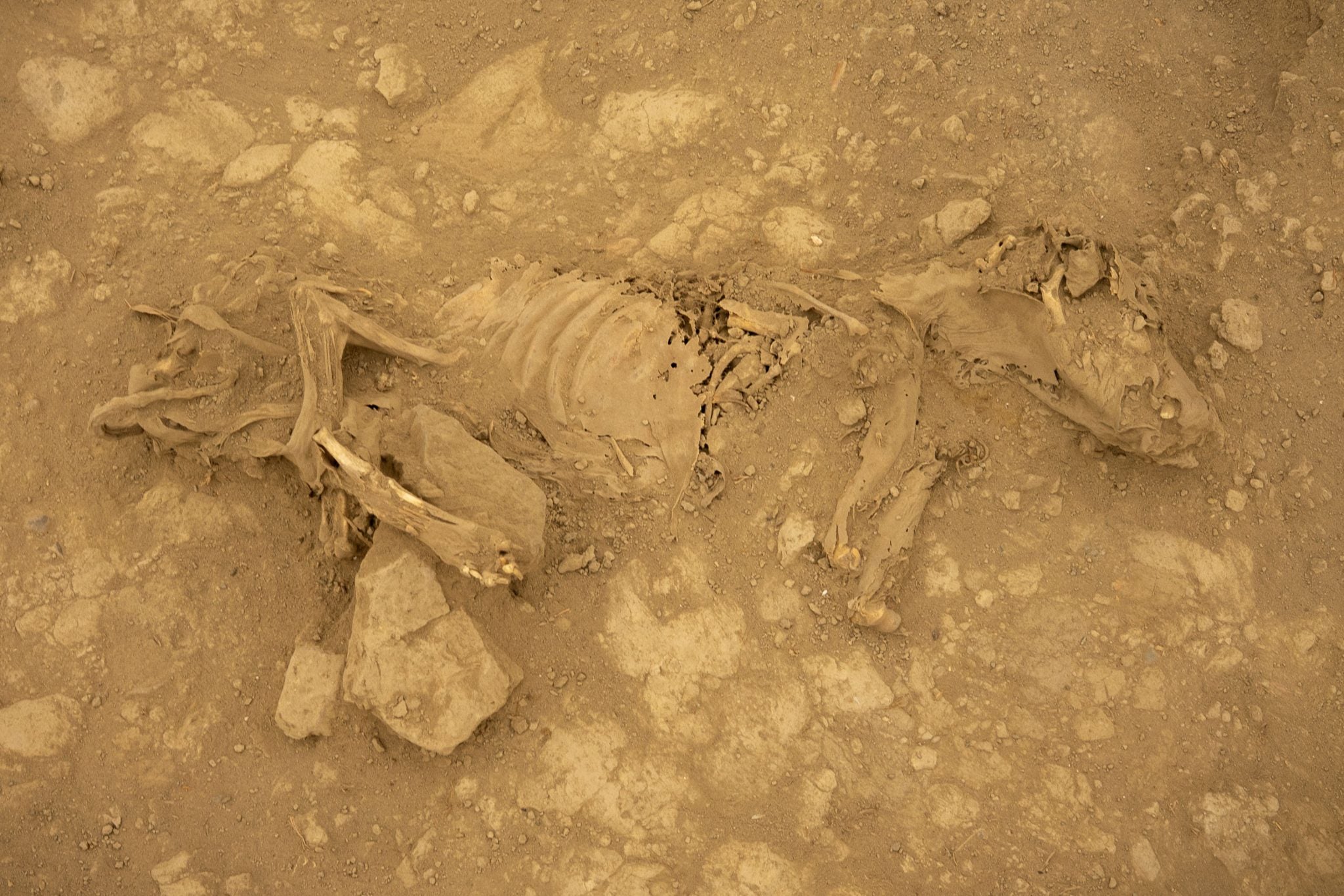
A second, larger dog skull, along with a nearly complete, naturally mummified skeleton of a male dog, was also found buried in a shallow pit.
All three dog remains found at the burial site lacked their first premolars.
The dogs’ reduced number of teeth was linked to the same genetic trait responsible for their hairlessness, researchers found.
“What I noticed is that some of the dog skeletons were missing teeth, and not that they lost them during their lifespan; some teeth, especially first premolars and sometimes last molars, had just never erupted,” Dr Tomczyk said.
“And then I found in the literature that the same gene which is responsible for hairlessness in dogs is responsible for a reduced number of teeth, indicating that these were Peruvian hairless dogs,” she explained.
This finding offered evidence that the remains belonged to Peruvian hairless dogs rather than other ancient dog populations.
Overall, excavations uncovered 341 dog bone specimens representing at least 19 individual dogs, in addition to the complete mummified male dog.
Some animals appear to have been deliberately buried, potentially reflecting a special role in Wari society, while others were found among discarded materials.
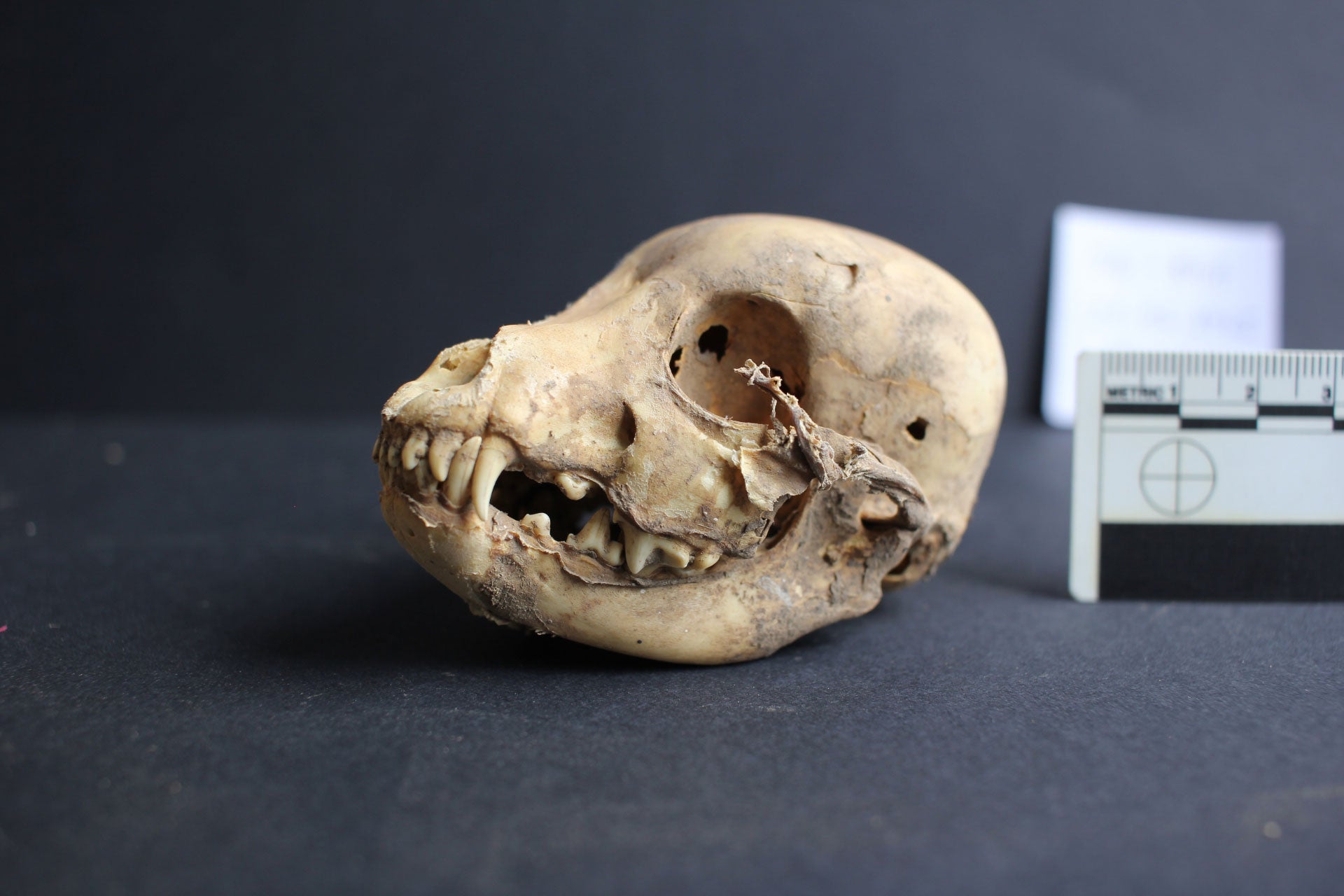
Further analysis revealed that the complete mummified male dog was at least 1,200 years old, making it the oldest specimen recovered from Castillo de Huarmey so far.
Analysis also revealed similarities between the diets of dogs and people living at Castillo de Huarmey.
For instance, most of the dogs had consumed at least some maize, or corn, which was a major food source throughout the pre-Hispanic Andes.
The diets of puppies appeared similar to those of human children, but as they grew older, their food sources became varied.
“We do not know if the dogs were intentionally fed maize or if perhaps, they were just eating leftovers or trash,” said Dr Tomczyk.
The findings suggest that the hairless dogs held a distinctive place within the community.
“While we will never know if any of the three dogs were pets or how people treated them, it is evident they received different treatment than other dogs,” Dr Tomczyk said.