









Want to bookmark your favourite articles and stories to read or reference later? Start your Independent Membership today.
Join today
Already a member?
Log in
In Malawi, we have lost people we knew because oxygen was not available when they needed it.
We have seen people desperately needing lifesaving treatment, such as dialysis, but unable to access it. These are not abstract failures of health systems. They are devastating experiences for families, and they stay with you.
As a nurse, I find this particularly difficult. I understand how timely intervention, appropriate equipment and access to treatment can determine whether someone survives. I also know that behind every preventable death is a family whose future has been changed.
These experiences shape my work with the Malawian-UK Nurses Association (MUNA), through which we have been supporting the renovation of the Medical Short Stay Unit at Kamuzu Central Hospital in Lilongwe.
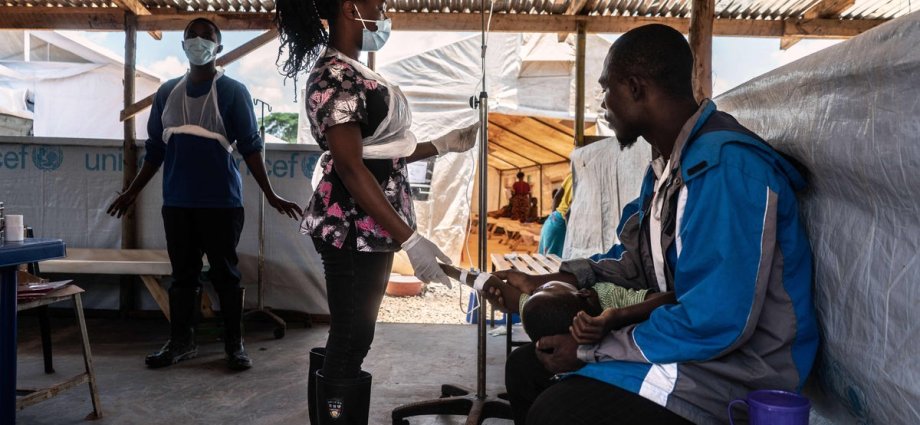
The unit cares for some of the most acutely unwell patients, often in overcrowded conditions with limited resources. Our work includes improving the clinical environment, supporting access to essential equipment such as oxygen flowmeters and blood pressure monitors, and strengthening professional learning between Malawi and the UK. Such investments do more than improve healthcare. They protect lives, families and livelihoods.
At the World Health Summit in Berlin this week, one contribution particularly resonated with me. Diene Keita, executive director of the United Nations Population Fund, challenged us to move women’s health from being seen as a development burden to being recognised as an economic priority.
It is a shift in thinking that is long overdue.
When women cannot access essential healthcare, the consequences extend far beyond their immediate health. Families lose income, children lose opportunities and communities lose the contributions of people who should have been able to live healthy, fulfilling lives.
Maternal health makes this especially clear. As Ghana’s Health Minister, Kwabena Mintah Akandoh, emphasised in Berlin, maternal mortality is not simply about what happens inside a hospital. It is also about whether a woman can reach that hospital in time, access skilled care and receive the treatment she needs.
For many women in rural Malawi, these barriers are painfully familiar. Distance, transport costs, shortages of healthcare professionals and limited resources can turn a treatable condition into a life-threatening emergency.
Yet much of this suffering is preventable.
Malawi has an important network of Health Surveillance Assistants working directly with communities. With greater investment in their training, equipment and capacity to identify health problems early, we could make a profound difference.
Consider hypertension. With appropriate digital tools, blood pressure readings could be recorded in communities and shared remotely with clinicians, enabling earlier intervention and monitoring. This could help prevent strokes, kidney disease and other serious complications.
But technology alone is not the answer. Digital innovation must be supported by reliable connectivity, affordable medicines, functioning referral pathways and health services that people can actually reach.
Prevention is not merely good healthcare. It protects families from the financial and emotional consequences of avoidable illness, while reducing pressure on already overstretched services.
This is a lesson that should resonate in Britain, too. Working in the NHS, I see the importance of investing in prevention, supporting frontline professionals and ensuring patients receive appropriate care before their conditions deteriorate.
The contexts of Britain and Malawi are very different, but the underlying principle is the same: when we neglect health, the costs do not disappear. They emerge elsewhere, in lost livelihoods, greater pressure on services and diminished opportunities.
At a time when international aid budgets are shrinking, this matters enormously. Health investment cannot be judged solely by what governments spend today. We must also consider the human and economic costs of failing to act.
Of course, health is a fundamental human right, regardless of anyone’s economic contribution. But recognising its economic value strengthens the case for making it central to government decision-making, rather than treating it as a competing expense.
In Berlin, I was struck by a recurring challenge: we have evidence, expertise and innovative solutions, but are we prepared to change how we invest, who we listen to and who gets to make decisions?
For me, the measure of progress will never be the number of commitments announced at international summits. It will be whether those commitments reach the people who need them.
I want to see a Malawi where where someone lives, or what they can afford, does not determine whether they receive lifesaving care.
That is not simply a health ambition. It is the foundation of a fairer, healthier and more prosperous future.
Charity Gladstone MBE is president of the Malawian-UK Nurses Association and head of patient safety at Cornwall Partnership NHS Foundation Trust
This article has been produced as part of The Independent’s Rethinking Global Aid project