










Want to bookmark your favourite articles and stories to read or reference later? Start your Independent Membership today.
Join today
Already a member?
Log in
African green monkeys that were induced to undergo Alzheimer’s like brain changes in a study still performed well in memory tests a year later, a discovery that may lead to new treatments for the neurological condition.
The monkey species is widely used as an alternative to rodents to understand Alzheimer’s disease due to their closer evolutionary relationship to humans.
Similar to humans, the African green monkeys also develop the hallmark Alzheimer’s-linked protein clumps in the brain – amyloid-β (Aβ) plaques and tau tangles.
Previous research has also shown that these monkeys inoculated with synthetic versions of Aβ plaques exhibit brain changes similar to those of Alzheimer’s patients.
“They share key physiological and biochemical traits with humans, including neuroanatomy, vascular structure, inflammatory responses, and lifespan,” scientists wrote in the study published in the journal Communications Biology.
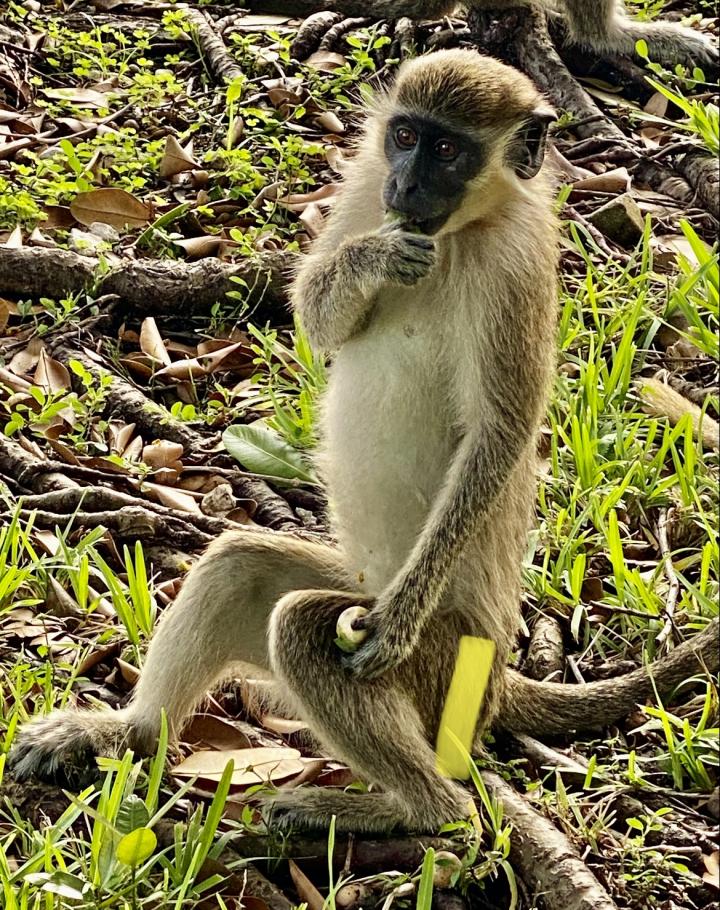
Now, a new study probed whether these changes could still be found much later, in a spinal fluid sample taken from a living animal.
In the research, scientists inoculated five female monkeys with synthetic amyloid-beta clusters, while three received a control solution.
Each animal received three administrations each week, totalling 12 over four weeks.
Then, the monkeys were subjected to a memory test.
They were shown a shape on a screen, and they had to pick it out from among other shapes after a short pause.
To the scientists’ surprise, the treated monkeys did not show any sign of memory decline on this task over the following year.
Yet, the spinal fluid samples collected 12 months after the final treatment showed that the treated monkeys had elevated levels of an immune system protein called C3.
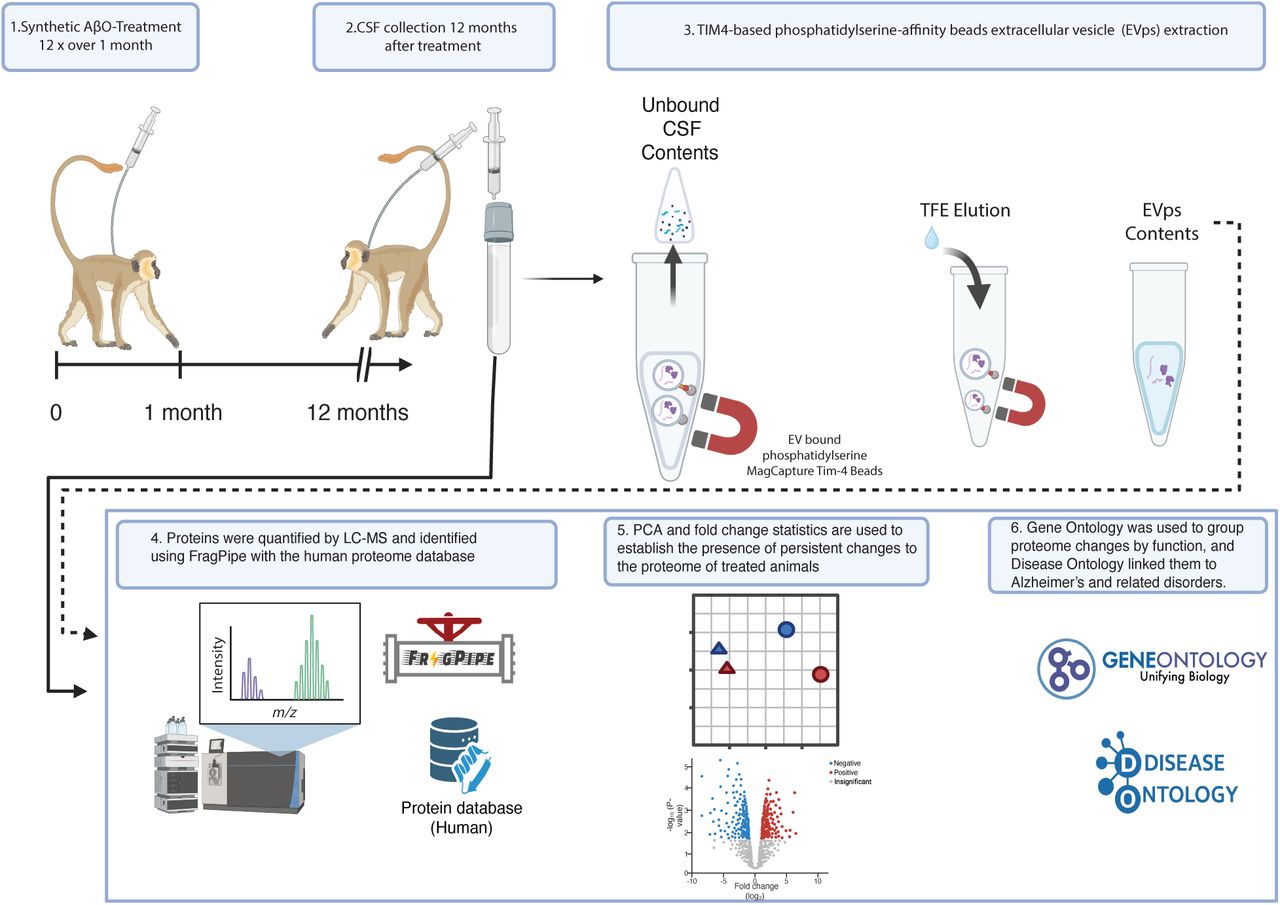
There were also significant differences in proteins related to blood vessels and clotting in these treated monkeys compared to those in the control group.
The findings clearly indicate that the brain and the nervous system can be altered without producing obvious Alzheimer’s-like symptoms or behavioural change.
Researchers hope further analysis of more protein changes in the samples could reveal body-wide alterations that a memory test cannot detect.
They caution, however, that these molecular changes in the monkeys may not represent early Alzheimer’s disease in humans.
But the methods discussed in the study can help find some key proteins that change early and persist in patients, and may likely point to future treatments, scientists say.
“These findings in African green monkeys suggest potential alternatives for disease tracking and early detection, and may point to protective mechanisms for limiting disease progression in Alzheimer’s disease,” they wrote.
“This work positions the African green monkey as a tractable and physiologically relevant system for studying Alzheimer’s like pathology and potentially other neurodegenerative disorders,” researchers concluded.