










Want to bookmark your favourite articles and stories to read or reference later? Start your Independent Membership today.
Join today
Already a member?
Log in
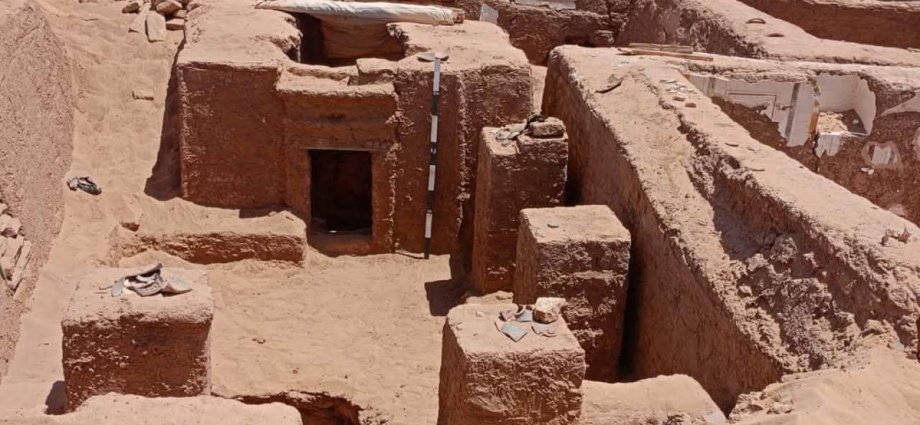
Archaeologists have unearthed a 1,700-year-old tomb in Egypt’s western desert area bearing ancient poetry written in Old Greek, a discovery that reveals insights into the funerary rituals of the area during Roman rule.
The pyramid-shaped limestone tomb was dedicated to the burial of an influential man and his wife, characterised by its unique architecture, as well as rare inscriptions and funeral texts it contained.
At the burial site, the Egyptian archaeological mission unearthed a stone plaque bearing an inscription written in Old Greek, a table for the dead, a basin for washing off the sandstone, as well as a diverse set of pottery.
Researchers also found a bronze coin bearing a prominent inscription of the Roman emperor Constantine in the tomb and a basin for washing made of sandstone.
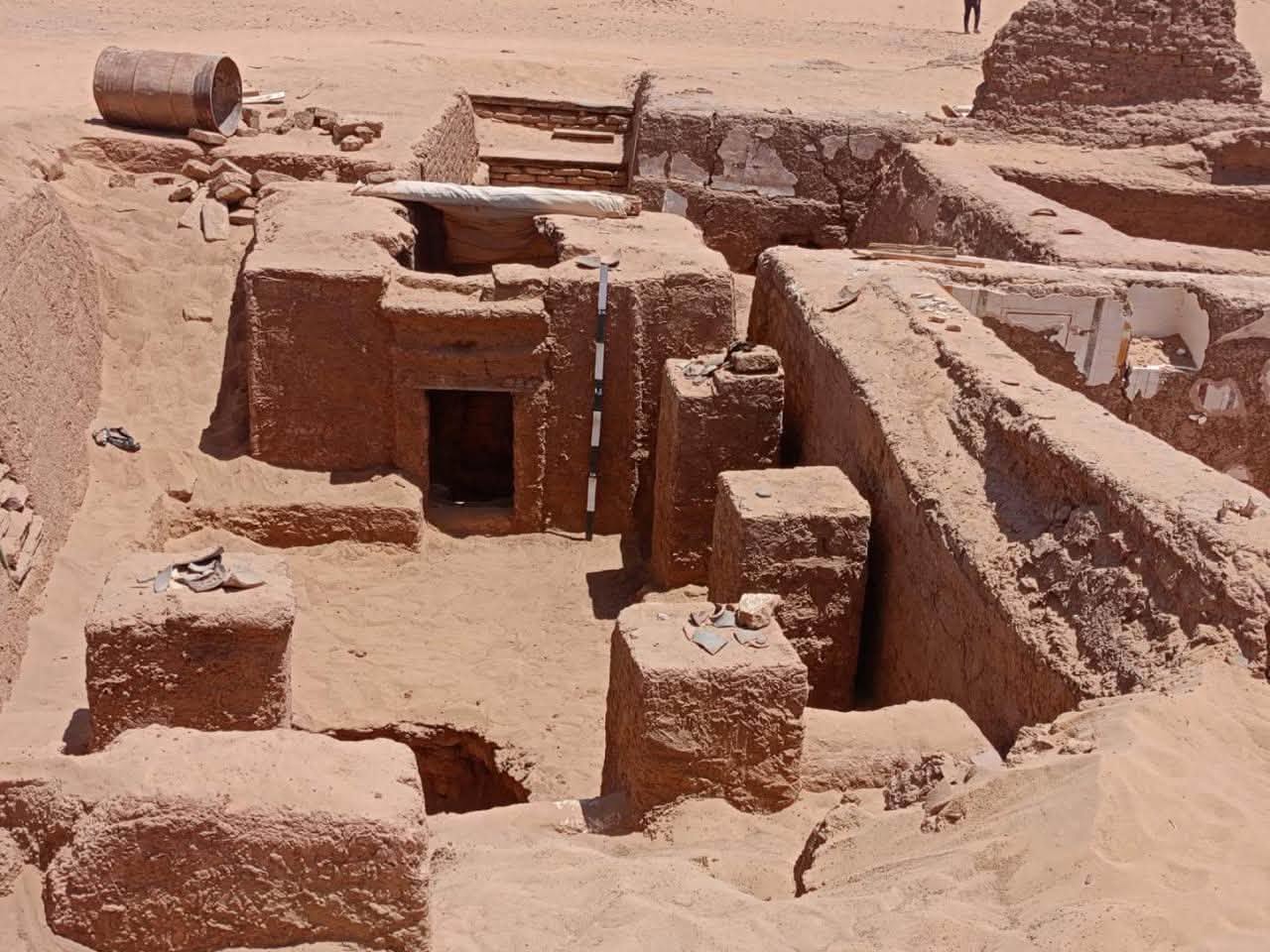
The findings offer a glimpse into the succession of civilisations and their cultures that Egypt witnessed throughout the ages, according to Sherif Fathi, the Egyptian minister of tourism and antiquities.
They also provide important information about tomb rituals, and the cultural and religious life in the area during the Roman era, said Hisham Al-Lithi, the secretary-general of Egypt’s supreme council of antiquities.
The cemetery begins with a staircase with 14 steps leading to its main entrance, which is adorned with a main stone slab, decorated with inscriptions and hieroglyphic writings in the Egyptian style.
Researchers also found a rare tomb view on the upper part of the entrance, depicting “Amudat”, an ancient Egyptian book that tells the story of the Sun god Ra’s journey through the underworld.
They also found hieroglyphic inscriptions of spells meant to protect the deceased in the afterlife.
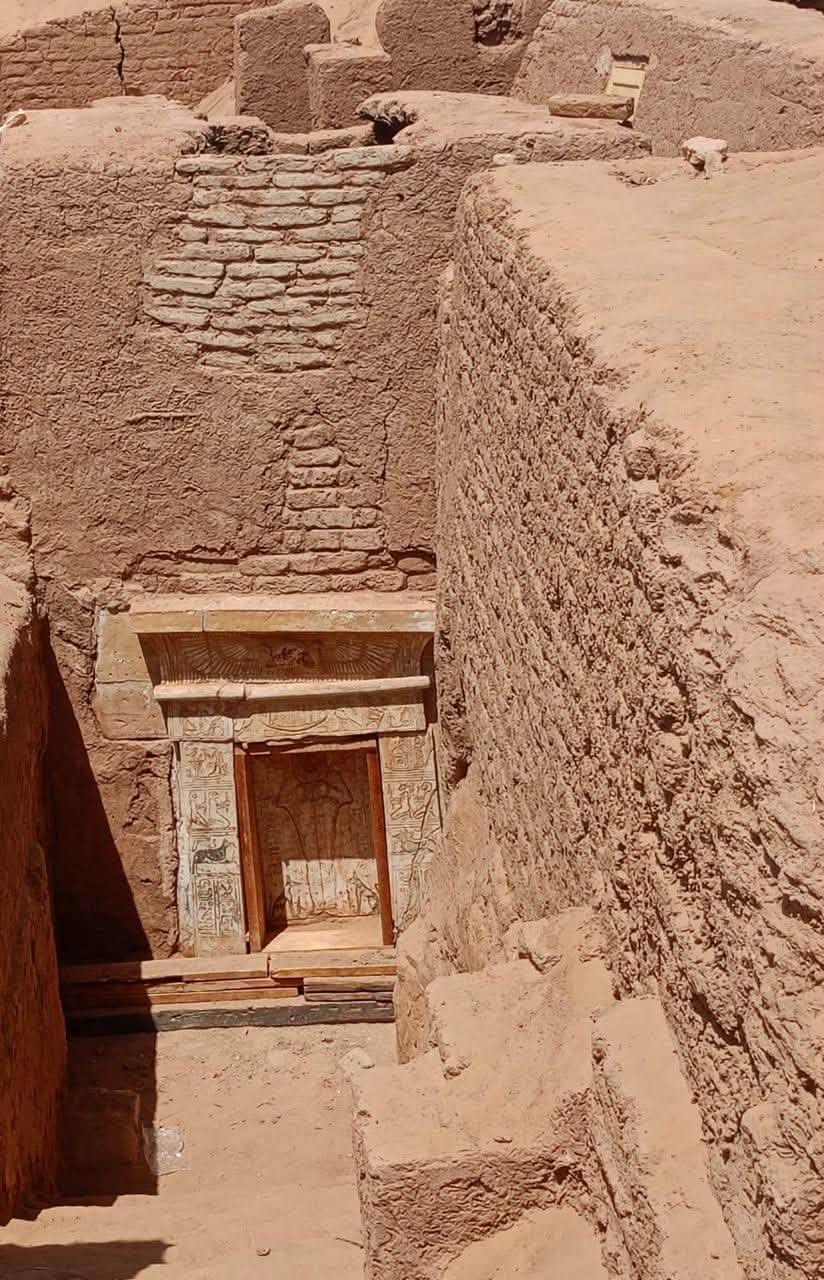
The tomb’s entrance led to a hall adorned with plastered bricks, and to its right, researchers found two burials.
Here, archaeologists made the most prominent findings of the excavations.
They found a monumental stone plaque “Martyr” fixed on the wall, with a 19-line mourning poem, dedicated to a person named “Bisichthes”.
In the poem, the deceased is called an “advisor in life” and praised for his wisdom.
This person was likely a judge who lived some time in the late third and early fourth centuries AD, researchers say.
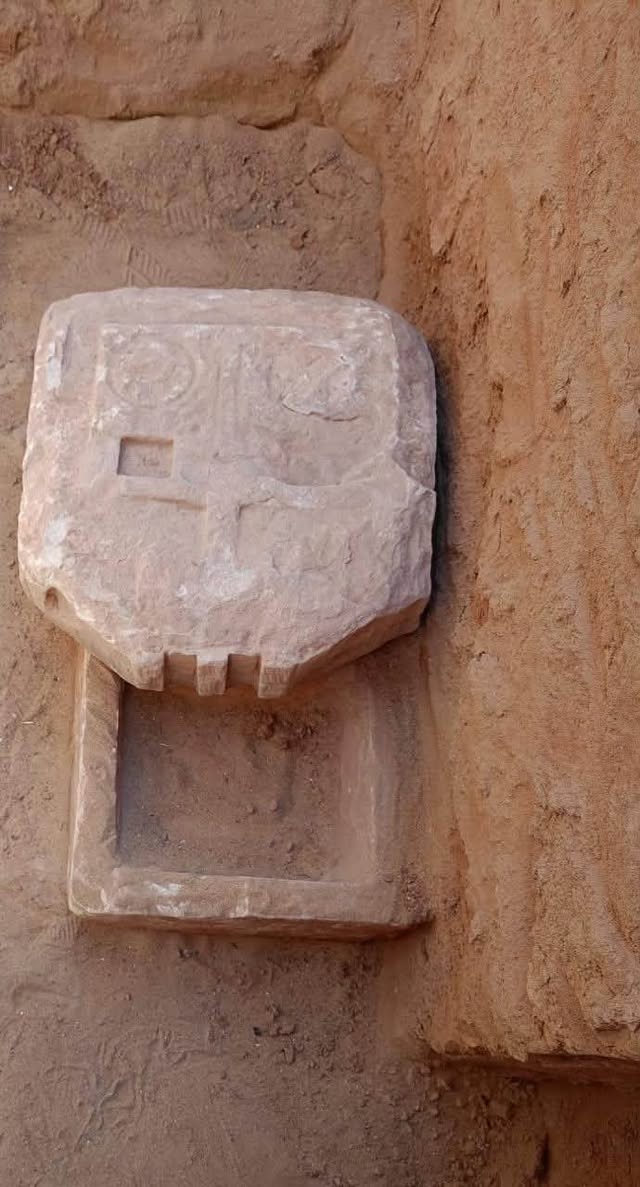
In the last lines of the poem, he is praised by his son “Sarapion”, who addresses him directly – “Listen father!” – and asks him to accept the offerings of his lamenting children, LiveScience first reported.
The combination of ancient Greek inscriptions along with Egyptian religious architecture highlights the multicultural character of Egypt’s Western Desert region during the Roman period, they say.
Greek became an important administrative and cultural language in Egypt following the conquest of Alexander the Great in 332 BC, and remained so after it became a Roman province in 30 BC.
Archaeologists also found pottery and a bronze coin bearing a prominent inscription of the Roman emperor Constantine, indicating that the tomb being reused in a later period.
However, the Egyptian ministry of tourism and antiquities hasn’t confirmed if any ancient human remains were found in the recent excavations.