










Want to bookmark your favourite articles and stories to read or reference later? Start your Independent Membership today.
Join today
Already a member?
Log in
California crews working on an infrastructure project were surprised this month when they uncovered the fossilized bones of a large, hoofed mammal that walked the region’s ancient floodplains over 40 million years ago.
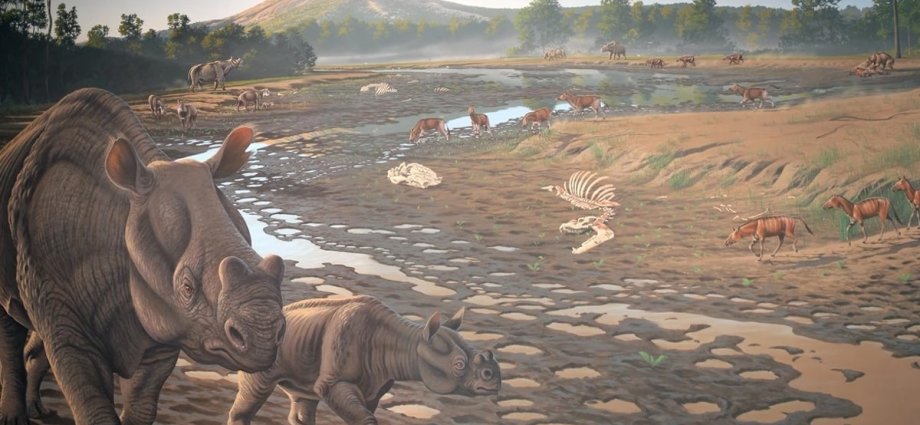
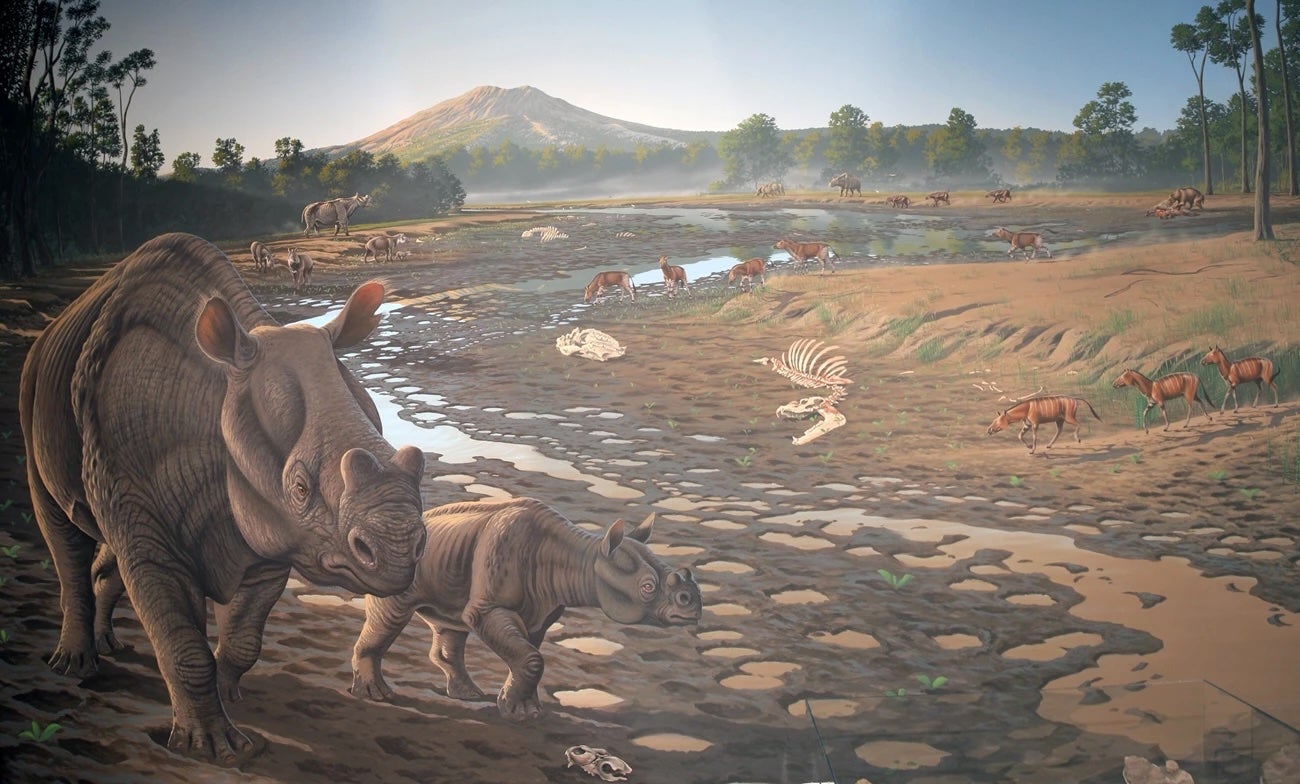
The bones include several ribs, a femur and other limb bones and fragments that could have belonged to a brontothere, which is also known as a “thunder beast,” according to paleontologist Dr. Joseph El Adli, who made the discovery during routine monitoring of the a City of Oceanside project.
Leaf-eating brontotheres rivaled an elephant in size and often carried a Y-shaped horn on its nose, the city noted Wednesday.
Alternatively, Adli believes the bones could also be from an herbivorous amynodont: a hornless, hippo-shaped “swamp rhino” that had tusks where its canine teeth should be.
Both North American species come from the order Perissodactyla, which are “odd-toed” hoofed mammals. An order groups together closely related animal families.
The workers found the fossils 12 feet deep in the Santiago Formation, a layer of thick rock strewn across northwestern San Diego County.
The formation dates back to the Eocene, which refers to the epoch after the dinosaurs, when mammals were evolving into large forms.
Previous fossils in the city have been dated to the same time.
“Based on the known age of the surrounding rock and the types of organisms found within the unit, paleontologists estimate that the fossils are between 40 and 45 million years old, falling within the Uintan North American Land Mammal Age,” the city said in a news release.
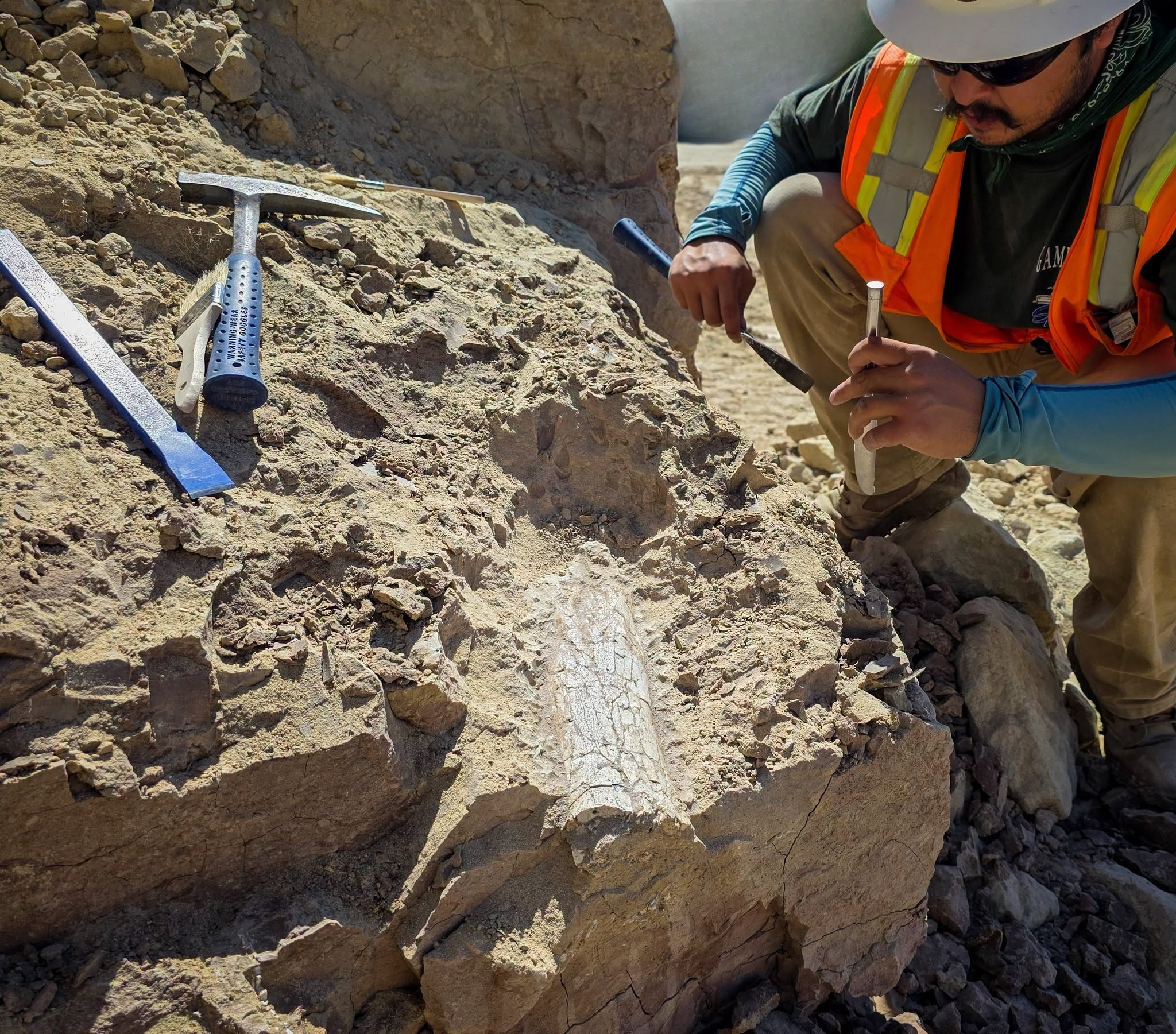
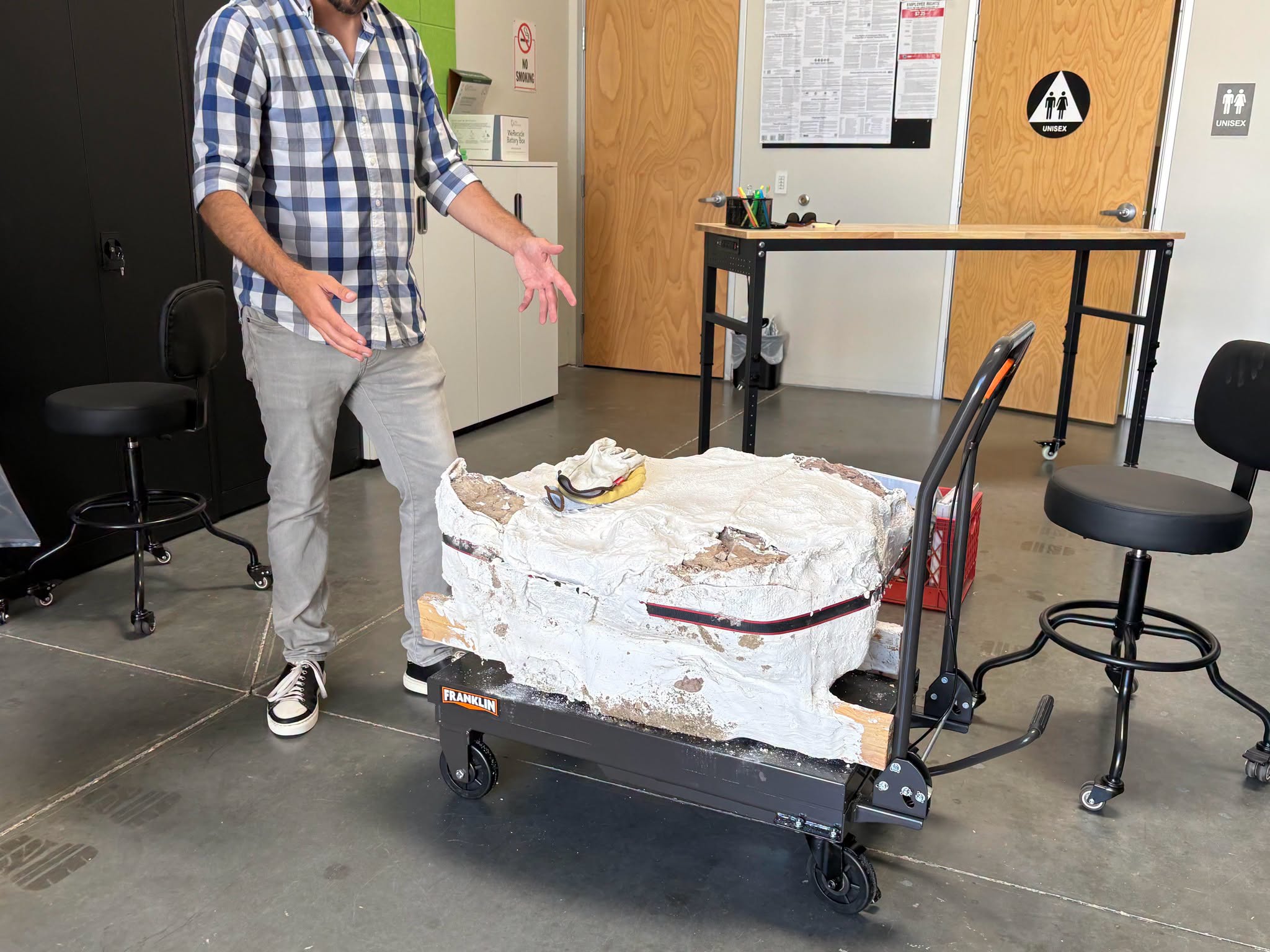
The bones were exposed from beneath several tons of mudstone over a week before they were placed in a plaster field jacket for safe transportion to an off-site, climate-controlled laboratory.
The bones will be removed from the plaster jacket, cleaned, hardened using museum-grade glues and resins and studied over the coming weeks, before they are sent to a museum.
“Further examination of the bones once they have been fully removed from the rock that encases them should allow paleontologists to narrow down the precise identity of the Oceanside fossil discovery,” the city noted.
Workers are also looking for more bones – including a skull – that could help determine what exactly they came from.
Several blocks are still closed, according to the city. The location of the find is not being shared to safeguard the integrity of the site.
Bronotheres and amynodonts have previously been found throughout North America, including Oregon’s Hancock Mammal Quarry. Skulls from the mammals are on display at the John Day Fossil Beds National Monument visitor center in Kimberly.