










Want to bookmark your favourite articles and stories to read or reference later? Start your Independent Membership today.
Join today
Already a member?
Log in
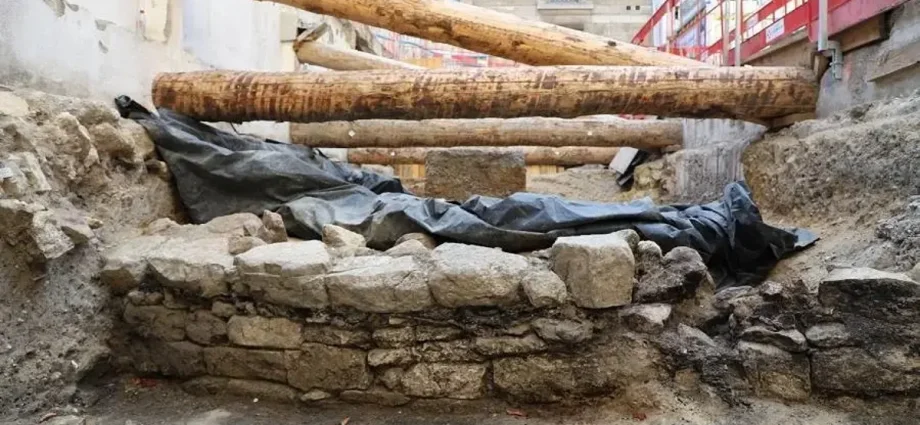
Archaeologists have unearthed a ancient charred wall near Notre-Dame in France, in a “major breakthrough” that could lead to the discovery of a Gallic town on whose ruins the French capital city of Paris was built.
Historical anecdotes tell the story of a Gallic tribe called the Parisii setting fire to their own fortified town in 52BC to prevent it from falling into the hands of an invading Roman army.
The ancient Gallic town Lutèce was cited by Julius Caesar, but there is no material evidence that it existed until now.
“We are perhaps facing one of the most important vestiges ever discovered to understand the Gallic Lutèce,” said Catherine Pégard, the French minister of culture.
The ministry hailed the discovery as a “major archaeological breakthrough” in a translated statement.
“Scientific prudence still requires verifying its function and chronology, but the convergence of indices is now particularly remarkable,” Ms Pégard said.
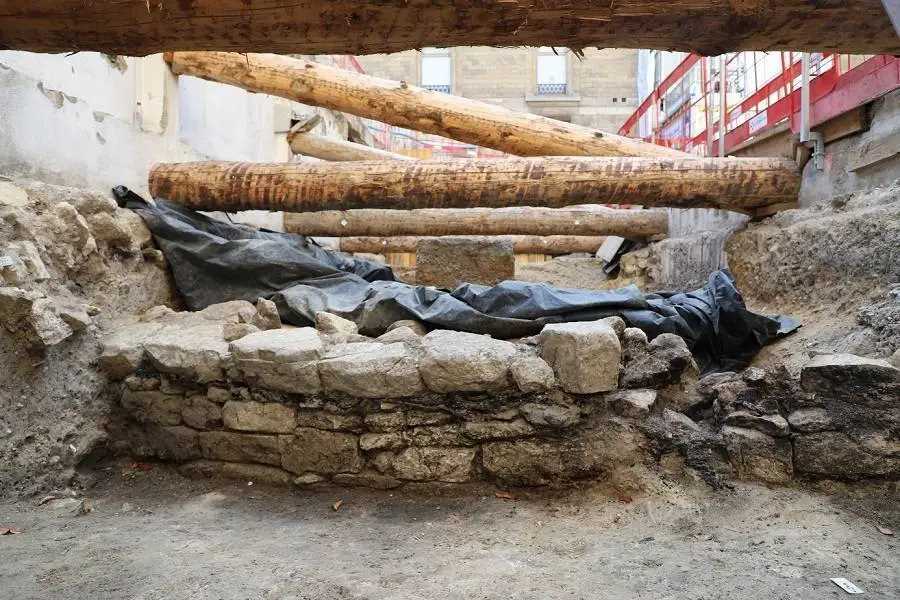
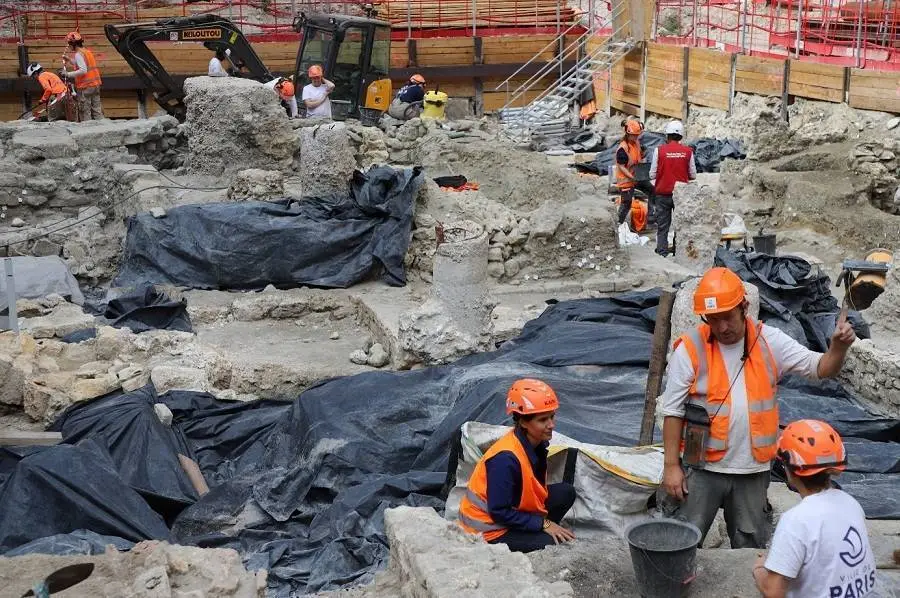
The discovery was made in the courtyard of the Hôtel-Dieu Hospital during restructuring work.
Researchers initially hoped to discover traces of ancient habitat, roads, or medieval occupations.
Instead, they found the charred remains of a 20m-long wall made of stone and wood, typical of Gallic fortifications.
Further excavations revealed signs of the remains of a wooden building destroyed by fire in front of the wall structure.
A Gallic spearhead was also found at the foot of the wall. The excavation team also found a two-meter-thick artificial platform at the site, composed of sand and gravel, reinforcing the hypothesis of a major ancient fortification in the area.
“The architecture of the wall, with these large blocks and this system of crossed beams, very quickly made us think of a wall of Gallic tradition,” said Dorothée Chaoui-Derieux, heritage curator and manager at the Regional Archaeology Service (DRAC Île-de-France).
Early results date the wooden elements of the wall to between 200BC and 10BC.
The findings could constitute the first archaeological trace of the ancient Gallic tribe’s main settlement.
They would also testify to the battle of Lutèce, opposing the Gallic tribe to the Roman legions.
Mainly, the excavations could prove that Paris was indeed built on the ruins of the ancient Gallic town, making it possible to rule out other hypotheses.
“This discovery fills an archaeological vacuum,” said Stéphane Deschamps, regional curator of archaeology at the DRAC Île-de-France
“For centuries, the location of Lutèce has been debated…Some had even hypothesised a location in Nanterre. Today, with this wall and its context, we may hold the key to the mystery,” she said.
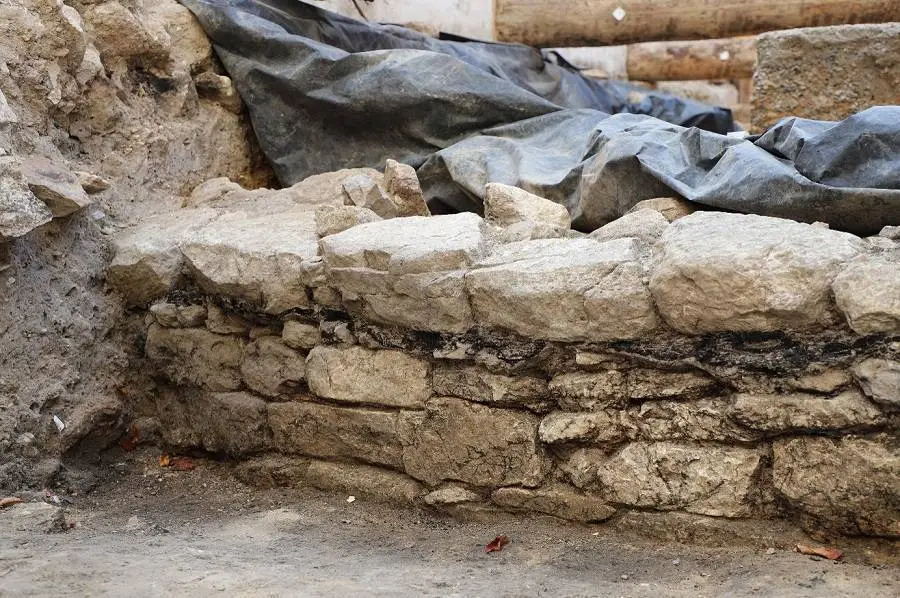
The discovery is also not without challenges, as the wall’s remains are extremely fragile due to their exposure to fire.
Since it is located at a depth, its in situ conservation is also difficult as part of the architectural project, researchers say.
“Keeping this wall on site is not possible as part of the planned work,” said Edward de Lumley, regional director of cultural affairs of Île-de-France.
“A moulding will soon be made, so that after the study phase of the remains, which will be rich in lessons, a reconstruction of a portion of the wall can be carried out, which will integrate original stones,” he said.