











Want to bookmark your favourite articles and stories to read or reference later? Start your Independent Premium subscription today.
Subscribe
`;
document.body.appendChild(modal);
modal.addEventListener(‘click’, () => {
document.cookie=”mos-plan-select=; Max-Age=0; path=/; expires=Thu, 01 Jan 1970 00:00:00 UTC;”;
});
modal.querySelector(‘.subscribe-link’)?.addEventListener(‘click’, (e) => {
e.preventDefault();
document.cookie=”mos-plan-select=; Max-Age=0; path=/; expires=Thu, 01 Jan 1970 00:00:00 UTC;”;
setTimeout(() => {
window.location.href=”https://www.independent.co.uk/subscribe/app”;
}, 500);
});
});
Scientists have deployed lasers to test pigments in a painting possibly made by the Renaissance-era polymath Leonardo da Vinci, and say the cutting-edge technology could be a viable tool to check whether historic artworks are forgeries.
The historical painting signed “L daVinci” depicts the Roman Emperor Domitian and is consistent with materials used during the Renaissance, say researchers from Uppsala University who made the discovery.
It was initially auctioned at Christie’s in London in 1928 and 1929, where it was attributed to the Renaissance painter Titian.
But a later analysis revealed that a signature reading “L daVinci” was discovered on the painting, followed by a word that is likely the Latin pinxit, which means “painted.”
“Naturally, it was exciting to work on a piece of art that might have been created by Leonardo da Vinci. What’s more, the signature is hard to detect,” said Jakob Thyr, an author of the study published in the journal Materials Today Advances.
“The contrast against the background is low, and it really only becomes visible when the painting is illuminated from the right angle,” Dr Thyr explained.
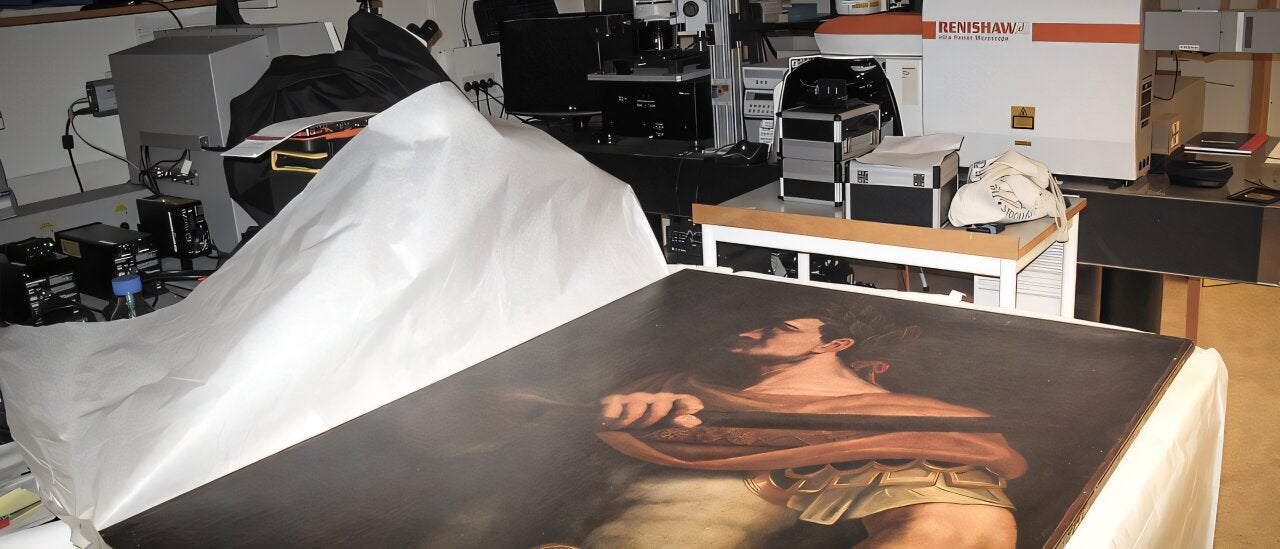
In the study, researchers applied laser light to examine the chemical and structural properties of materials on the painting using a technique called Raman Spectroscopy.
Small samples from different parts of the painting were also analysed under a microscope to determine which pigments had been used.
Thirteen of them were identified, of which 12 were traditional pigments used during the Middle Ages or the Renaissance and were therefore available in the time of Leonardo da Vinci and Titian.
The black pigment in the signature was carbon black, which has also been used since antiquity.
But one of the pigments found was Prussian blue, a synthetic pigment that was not produced until the early 18th century, meaning it could not have been applied during the lifetimes of Leonardo da Vinci or Titian.
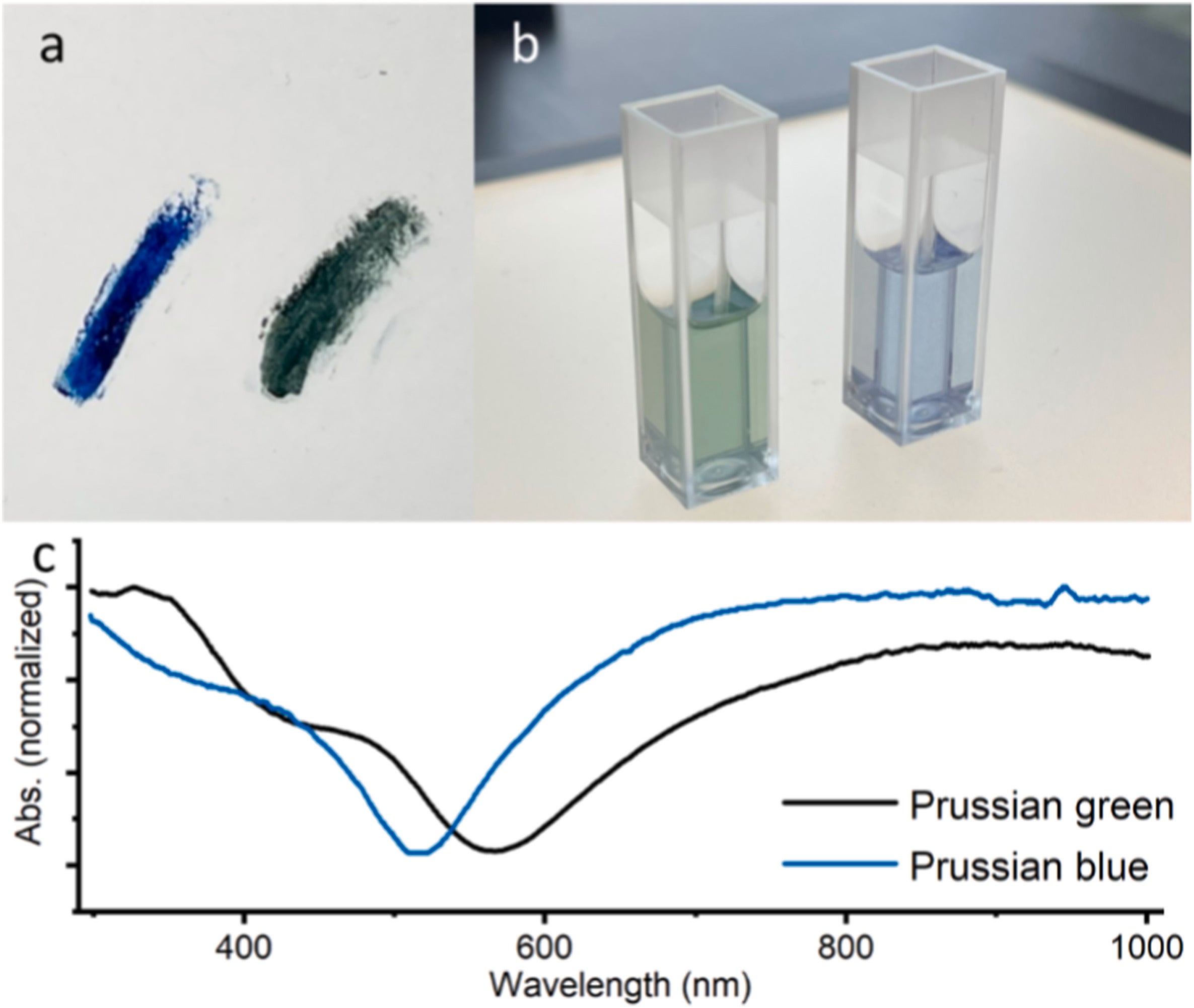
Researchers suspect the Prussian blue paint may have been added at a later time when the painting was restored and retouched.
X-ray scans of the painting also showed signs of alterations in one of the areas where Prussian blue was found.
“It is very common for paintings to be retouched. So, finding new pigments in limited areas does not necessarily mean that a painting is a forgery,” Dr Thyr said.
“It may be that repairs were made or parts of the painting were touched up at a later date,” he said.
However, the material analysis alone could not conclusively determine who painted the artwork.
But it showed how analytical methods from materials science can be applied to art and archaeological artifacts.
“I believe this type of analysis will become increasingly common in the future,” Dr Thyr said.