










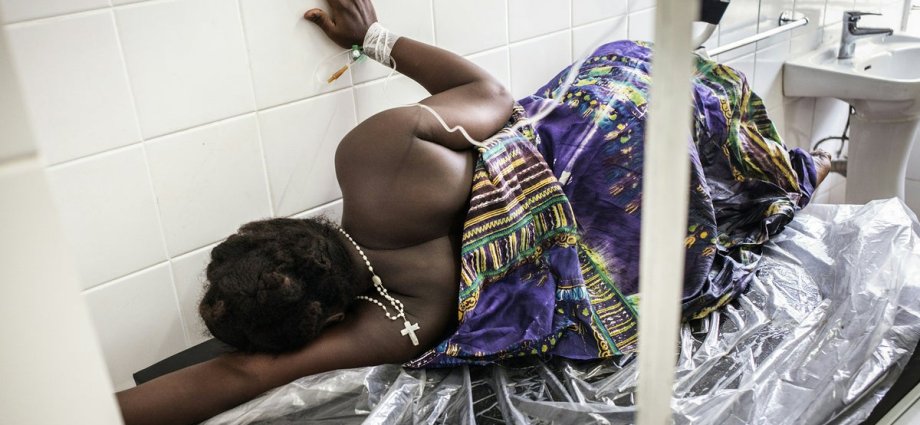
Hundreds of thousands of women die from complications related to pregnancy and childbirth every year, with the burden falling overwhelmingly on poorer countries as hard-won progress has slowed amid cuts to international aid.
A hidden factor driving these deaths is anaemia, a critical but overlooked contributor to severe postpartum haemorrhage (PPH), according to research from trials released earlier this year by the London School of Hygiene and Tropical Medicine.
To win tickets to see Bel Trew’s latest compelling documentary click here
PPH is the leading cause of maternal death globally and anaemia could be responsible for half of severe cases in sub-Saharan Africa and South Asia, researchers found. Yet the deficiency receives relatively little attention in guidelines or public health programmes and, for decades, the main nutritional intervention has been the same: iron and folic acid tablets.
There are six types of nutritional anaemia, though, according to Dr Martin Mwangi, lead of the Healthy Mothers, Healthy Babies programme at the Micronutrient Forum, meaning governments have been focused only on the iron-deficiency part of a broader problem and anaemia rates have barely changed. The solution, many health experts believe, is multiple micronutrient supplements, or MMS pills, which contain iron and folic acid, as well as 13 other vitamins and minerals.
While there have been no studies on their impact on maternal mortality, modelling across 25 low- and middle-income countries published in the British Medical Journal in May estimated that replacing iron and folic acid with MMS could prevent 3.5 million low-birthweight births and 186,000 stillbirths over five years.

Taking the MMS pill in pregnancy also reduces maternal anaemia at term by 12 per cent compared to iron and folic acid alone, according to the World Health Organisation.
Other studies show that MMS helps prevent births of small newborns, who are at the highest risk for infant mortality. The pill may also reduce childhood stunting that lasts until adulthood, and separate research published this week in Brain Communications also pointed to a correlation between anaemia during pregnancy and smaller brain volume in babies, with movement and learning affected.
Organisations like the Micronutrient Forum advocate for the widespread adoption of the MMS pill for “its tremendous benefits for the women of the world”, Dr Mwangi says. Providing full-pregnancy MMS often costs as little as $2 (£1.50) per woman and yields massive health and economic benefits in terms of the cost of lives saved and other factors.
Although MMS has been around since the 1990s, improvements to medical technology and manufacturing have dramatically reduced costs, and governments are starting to adopt it. In May, ministers from Sierra Leone, Rwanda, Nigeria and Pakistan committed to integrating MMS into their national antenatal systems, and more than 30 others are also looking into or trialling the supplement.
A woman dies in childbirth globally almost every two minutes, with Sub-Saharan Africa accounting for more than two-thirds of the estimated 260,000 deaths a year. More than 90 per cent of maternal deaths occur in low- and lower-middle-income countries.
Hard Labour: Inside the Global Crisis Killing Mothers and Babies, a documentary for Independent TV, revealed how hard-won gains in maternal mortality were being reversed in some of the hardest places on Earth to give birth.
Severe anaemia can increase the risk of PPH, infection and fatigue.
“The way we win this is if we get national governments to invest in MMS, update their national policies to say that every pregnant woman requires a bottle of MMS, at least a bottle, maybe two,” Dr Mwangi says.
Sierra Leone as a test case
More than half of pregnant women in Sierra Leone are estimated to be anaemic. Anaemia reduces the blood’s ability to carry oxygen and can leave women less able to withstand blood loss during childbirth. Postpartum haemorrhage is one of the country’s leading causes of maternal death.
According to Feimata Russell, national micronutrient officer at Sierra Leone’s Ministry of Health, the logic of the switch to MMS was straightforward. Sierra Leone has poor dietary diversity and pregnant women need more micronutrients than their diets can reliably provide.
A working group found that infant mortality was reduced almost 30 per cent in the first six months for anaemic mothers, while MMS was also found to lower the risk of stillbirth, reduce preterm births and improve outcomes for underweight pregnant women, lowering their health risks.
“MMS is not magic. It works best with good antenatal care, malaria prevention, deworming, and a good diet,” says Russell, adding that Sierra Leone is often seen as a “low-resource, high-learning country”. Yet despite its challenges, “we’ve piloted and scaled some approaches that other countries can now look at”, she adds.
Umu Alfa Jaloh, the Sierra Leone country director for the humanitarian organisation Helen Keller International, which has been assisting with the roll-out of MMS, says officials from Kenya and Cambodia have visited to see how the programme was integrated into the health system, as governments elsewhere consider making the same switch.
One of the biggest lessons was bringing communities into the programme from the start, Jolah adds, including community health workers, religious leaders, traditional healers and local women’s groups.
Health workers have also reported seeing fewer cases of anaemia and pregnancy complications, and healthier looking babies. “The babies have this pinkish skin that is really attractive to the mothers,” Jolah says. “When others see the baby, they are so curious, like: ‘Oh, this MMS is working. We can’t wait to get our babies like this.’”
This article has been produced as part of The Independent’s Rethinking Global Aid project