










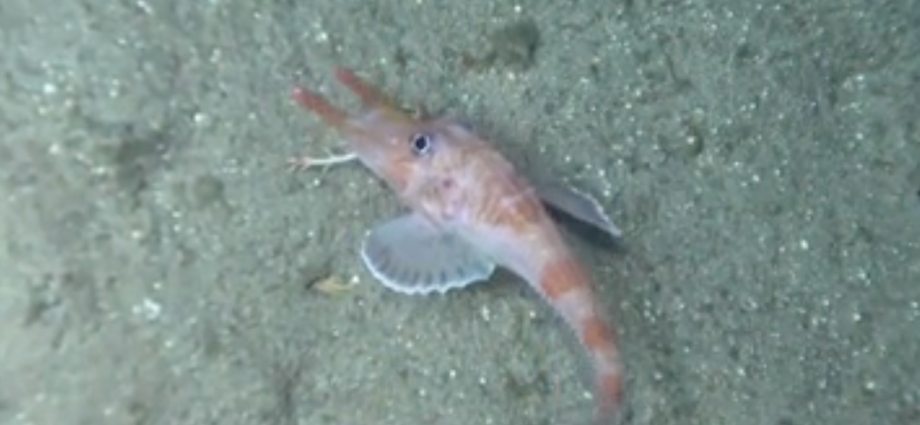
One of the few deep-sea fish known to trot on the ocean floor can also walk backwards, scientists say, calling it a “paradigm-shifting revelation”.
The searobin grows up to 10 inches long and possesses specialised pectoral fins that enable it to walk on the mud and sand of the ocean floor.
While most fish known to walk on the seafloor only do so forward, new footage from the South China Sea reveals the searobin can walk sideways or backwards as well.
Researchers explain in a new study that the “fish-prawn” hybrid uses shrimp-like jerky movements and tail-driven swimming for locomotion.
“The study delivers a paradigm-shifting revelation,” Han Tian, lead author of the research published in Ocean-Land-Atmosphere Research, noted. “The deep-sea fish Scalicus engyceros, a representative of fishes characterised by highly specialised free pectoral-fin rays, is among the few fish species known to walk. This extraordinary creature boasts a striking shrimp-fish hybrid body appearance, earning it the nickname ‘fish-prawn hybrid’ in US local media.”
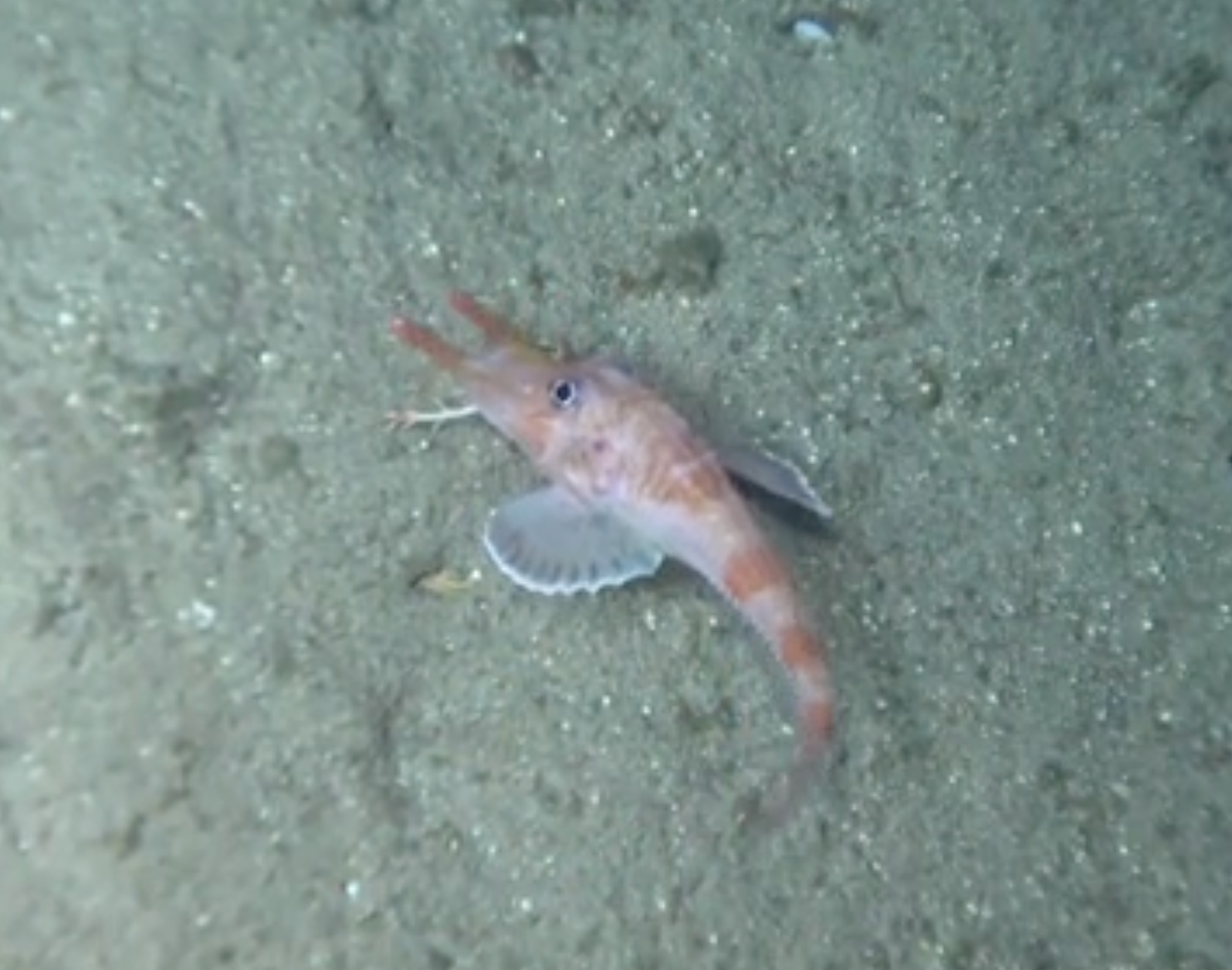
The fish was first described by the German-British zoologist Albert Günther in 1872 but no one knew that it could walk sideways and backwards.
Researchers used deep-sea vehicles to film various creatures in action on the ocean floor across three areas of the northern South China Sea.
They closely observed the searobin’s shrimp-like legs, which they discovered enabled it to walk on ocean sediment.
The fish walks sideways like a crab and even backwards, “a movement or function that hasn’t previously been known or observed in any other fish”, according to researchers.
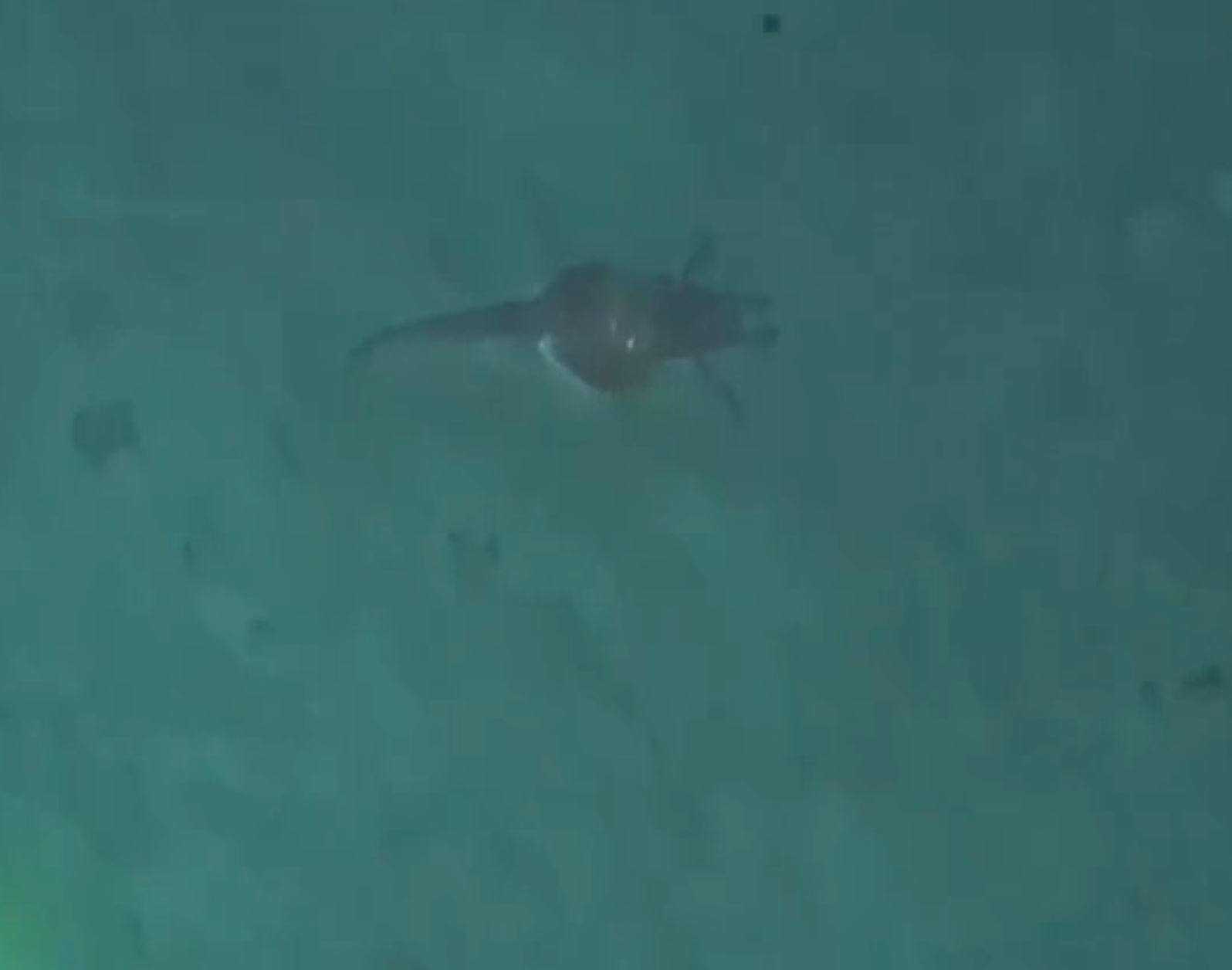
The whisker-like barbels of the fish don’t resemble long, soft facial hair, but instead appear similar to soil-digging rakes that extend outward and sideways from their face, perpendicular to the body axis.
“The structure is awkward for moving around but it allows the searobin to sense and probe potential prey in seafloor sediment, or even dig into the surface sediment for efficient foraging,” said Dr Tian, a doctoral researcher at the Sun Yat-sen University in Guangdong, China. “The creature retains the pectoral fins, which have evolved into flat, round plates, improving balance during walking and swimming while its shrimp-like fin rays and tail enable explosive, jerky shrimp-style leaps when threatened.”
“By observing deep-sea animals alive in their surrounding environment, we can gain insight into the adaptation and evolution of the species. These walking fish harbour far more novel behavioural and evolutionary adaptations than previously assumed.”
Scientists hope the findings will reshape perceptions of deep-sea life forms and reveal how unique biological structures emerge in extreme environments.