









Life on Earth may have first emerged from complex chemical reactions in two different ways near a deep-sea hot spring, a new study claims.
One of the biggest mysteries rattling the scientific community is to understand where and how life first emerged on the planet from a primordial soup of non-living chemicals.
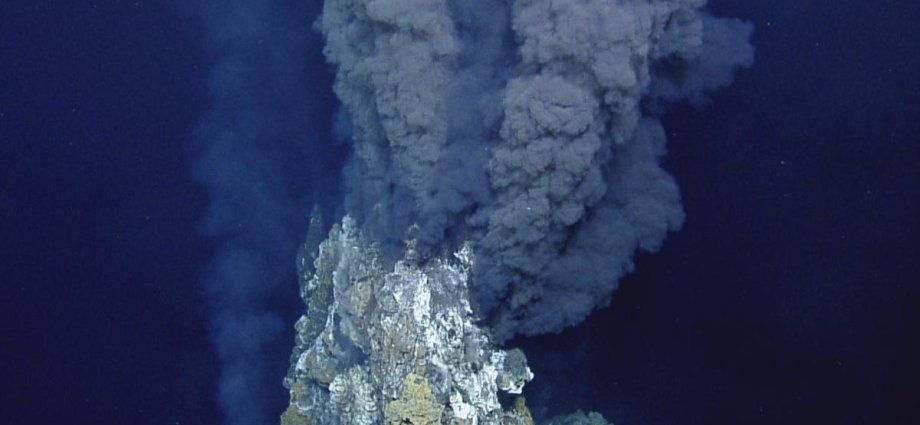
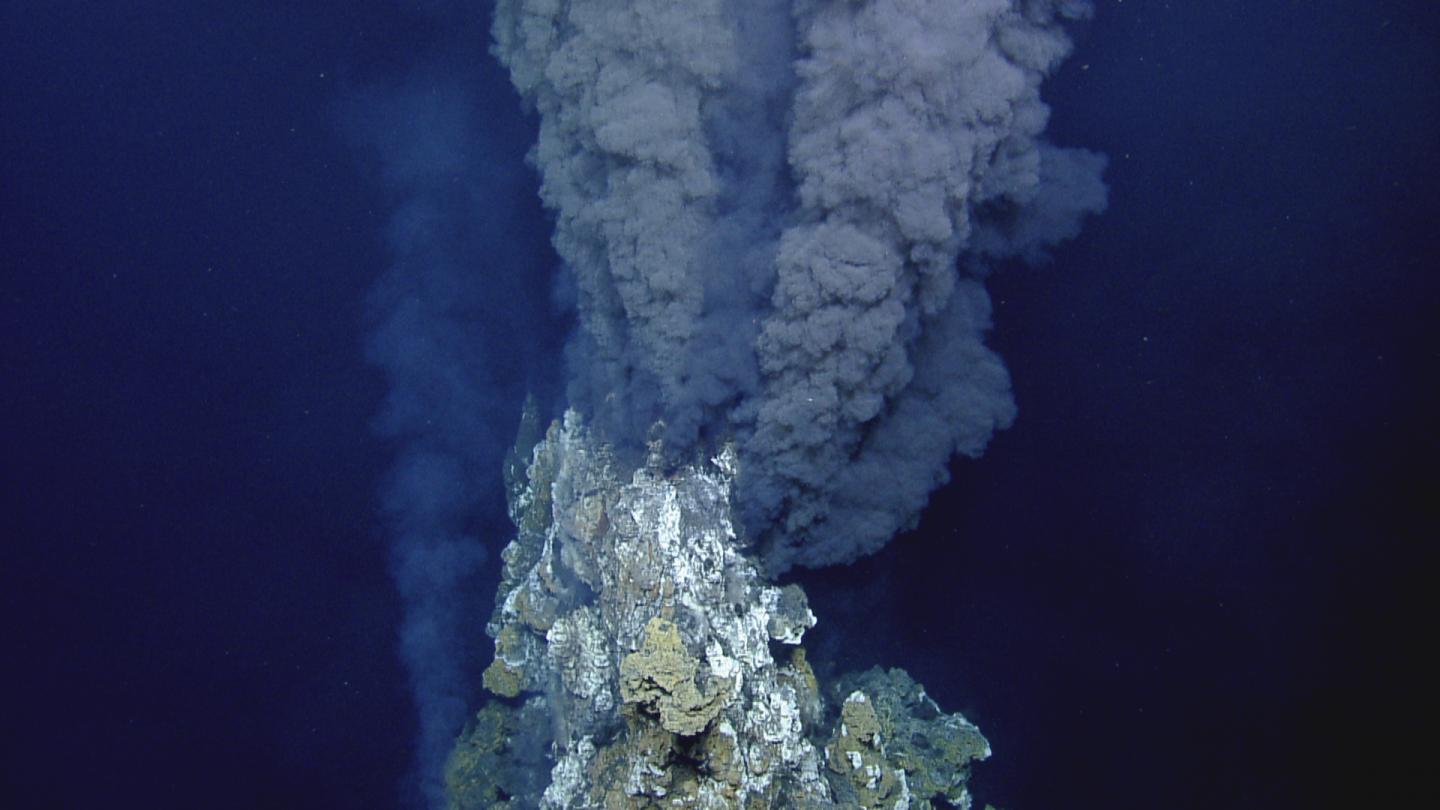
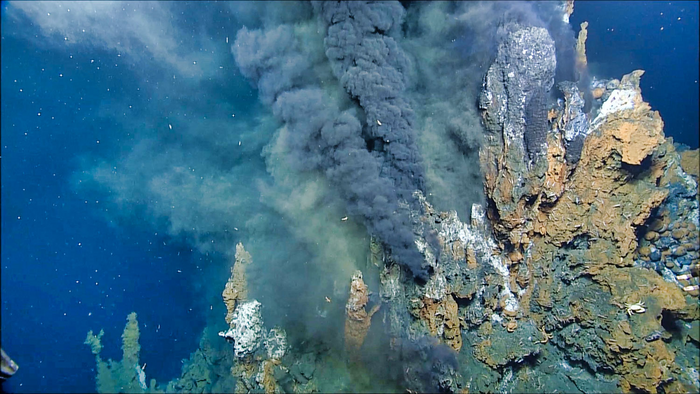
Previous studies hint that the rich chemical environment around deep-sea hydrothermal vents – hot springs on the ocean floor – most likely served as the breeding ground for the emergence of the first living cells.
A radical new theory suggests that the two main lineages of early life – bacteria and archaea – independently emerged from the primordial soup around deep-sea vents.
“The new data leave only one conclusion. The bacterial and archaeal lineages made the transition to the free-living state independently… We are looking at one origin of the genetic code, but two origins of life,” said William Martin, a biologist from Heinrich Heine University Düsseldorf in Germany.
In the study, scientists probed the network of chemical reactions that the very first cells may have used to make life-building block molecules.
They also looked at the likely energy sources around thermal vents that drove those early metabolic reactions.
Researchers assessed genomes, protein structures, and chemical reactions near deep-sea vents that were likely behind the emergence of the first living cell.
They looked into a known set of about 420 chemical reactions that cells may have used to make the building blocks of life, such as amino acids, from compounds present on the early Earth, including hydrogen, ammonia, and carbon dioxide.
Scientists found that the enzymes speeding up these reactions differ between ancient bacteria and the single-cell life form archaea that live in extreme places.
This means bacteria and archaea most likely evolved into the first living cells following separate pathways, concluded the study published in the journal Science Advances.
“We can see cases where the ancestors of bacteria and archaea independently evolved structurally distinct enzymes to catalyse the same essential metabolic reaction,” explained biologist Natalia Mrnjavac, another author of the study.
Some of the early life forms seemed to have relied on metal catalysts, scientists found.
These metals, like palladium, are “excellent catalysts” and are naturally occur in hydrothermal vents, researchers say.
“We found that the last universal ancestor of all cells, LUCA, possessed enzymes for only about half of the reactions of metabolism. The other half was catalysed by metals in the environment where LUCA arose,” Dr Martin said.
“Metals that naturally occur in hydrothermal vents can replace a surprisingly large number of enzymes in metabolism,” explained Harun Tüysüz, another author of the study.
Scientists could reconstruct four phases of early metabolic chemical reactions: one that relied on metal catalysts only, one that needed a metal-enzyme hybrid, as well as reactions that drove early bacteria and archaea.
In modern life forms, metabolism is driven by the energy-currency molecule ATP, or adenosine triphosphate.
A chemical process attaches phosphate to organic molecules, and is a crucial form of energy transfer within life forms.
But in early Earth, instead of ATP, this reaction may have been driven by palladium and phosphite molecules, researchers say.
“When we react phosphite, a form of phosphorus that naturally occurs in hydrothermal vents, with organic compounds, we get metabolic phosphorylation reactions overnight in water,” Dr Schlikker says.
“Such parallel inventions could have paved the way to the independent emergence of free-living bacteria and archaea,” Dr Mrnjavac said.