










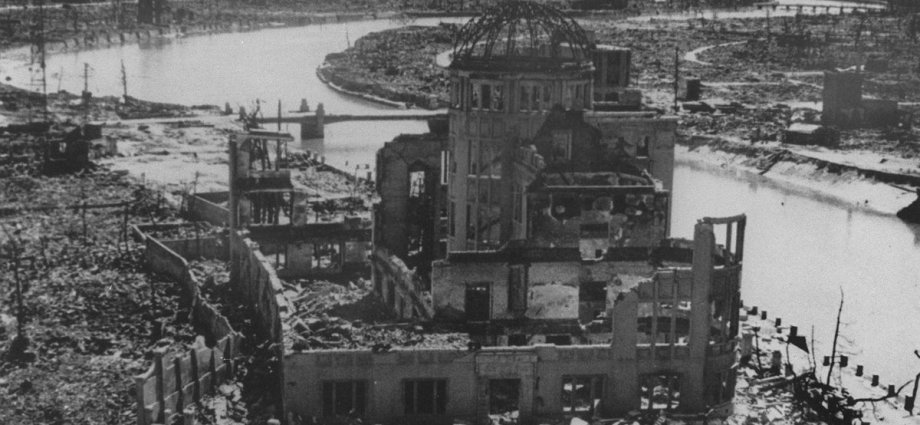
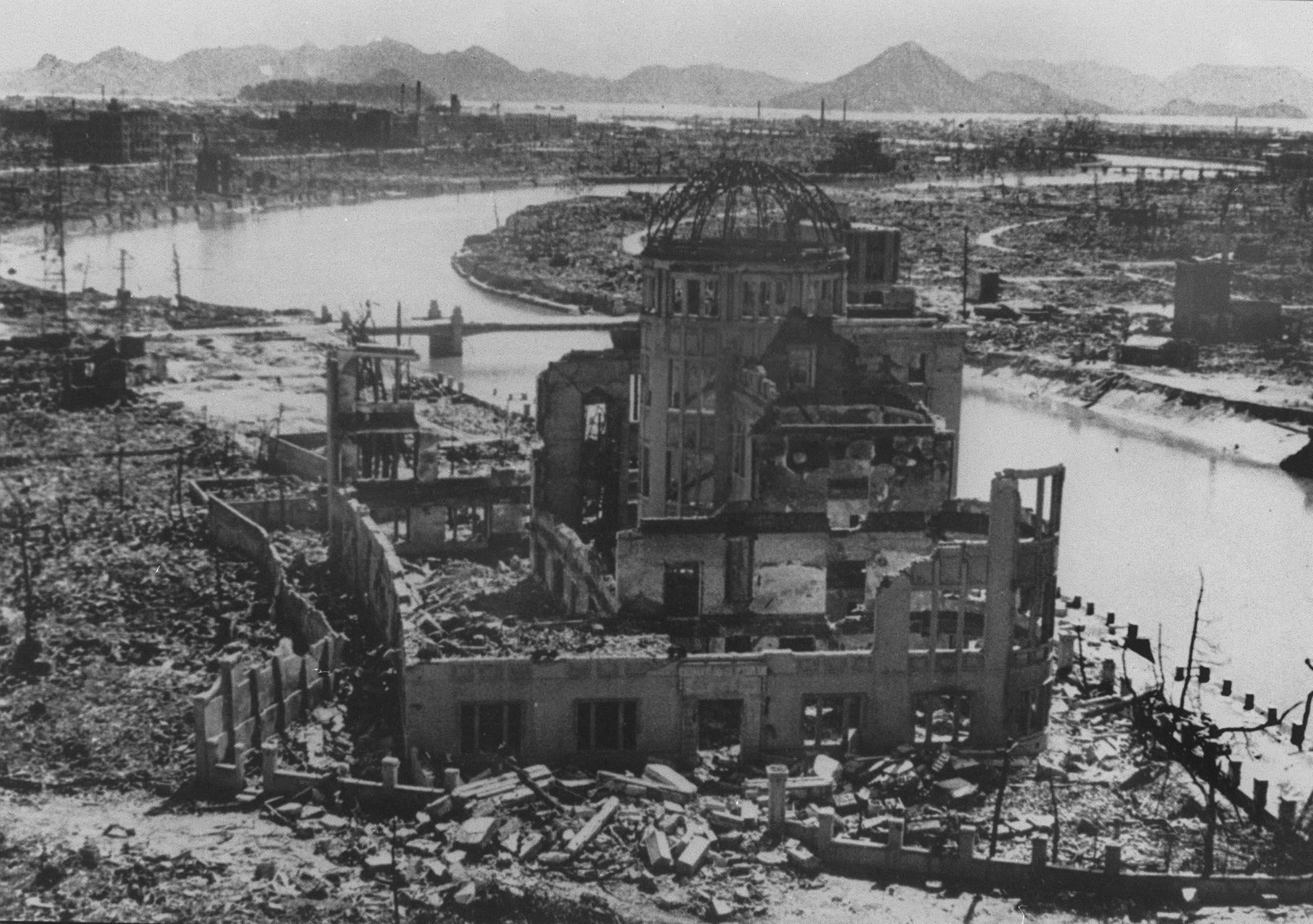
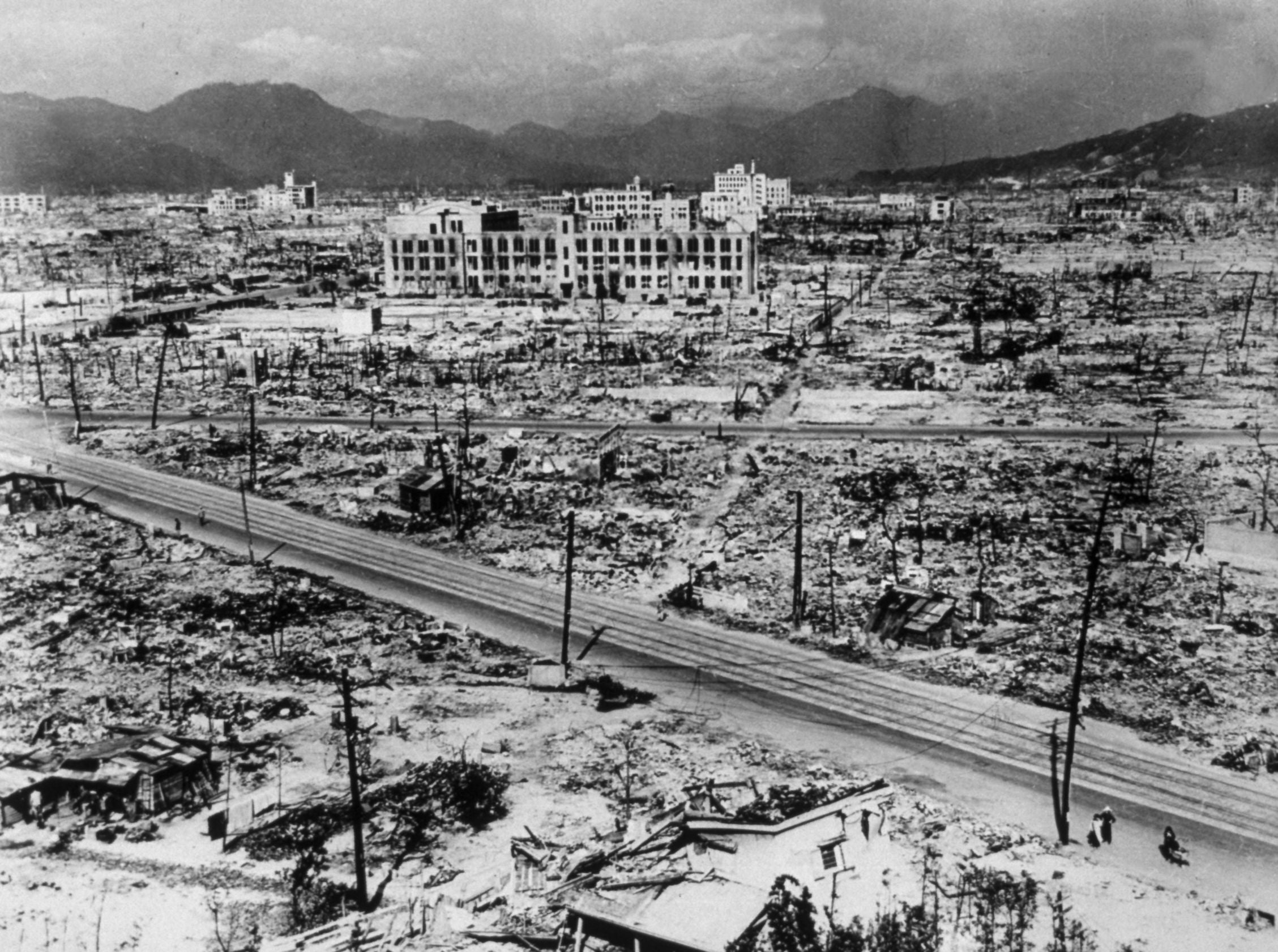
Nearly 81 years after the cataclysmic atomic bombing of Japan that instantly killed over 70,000 people, scientists have discovered a bizarre and previously unknown material from the beach sands of the Hiroshima Bay region.
Nuclear explosions, meteorite impacts, and other high-energy events can act as natural laboratories for the formation of previously unknown materials.
In the study, scientists analysed particles called Hiroshimaites, which are tiny spherical fragments of molten debris formed during the Hiroshima bombing when the atomic explosion generated temperatures exceeding 7,000°C within seconds.
These Hiroshimaite particles were embedded in resin, polished, and analysed under reflected-light microscopes.
“We report the discovery of a previously unknown alloy preserved within a Hiroshimaite spherule recovered from beach sands of Hiroshima Bay, formed during the 6 August 1945 atomic airburst,” they wrote in the journal Science Advances.
The particles were also examined more deeply with scanning electron microscopy.
Researchers found unique materials formed as the atomic explosion’s heat vaporised building materials, metals, soil, glass, and water, in a turbulent fireball that rose into the atmosphere before rapidly cooling.
Vapours from the burning materials condensed rapidly into microscopic droplets that eventually settled onto the surrounding landscape.
Many of these particles still remain in the sands of Hiroshima Bay after eight decades since the atomic explosion.
Previous research suggested that such particles from atomic explosions were made mainly of calcium-aluminium-silicon glasses that formed at temperatures above roughly 1,800°C.
Now, scientists have found a new class of “Hiroshimaite materials” that form at a much higher human-made high-temperature range.
Researchers found that these particles contained small droplets of iron-rich alloys, including iron-chromium alloys with varying amounts of nickel, manganese and molybdenum.
The alloys were only about three per cent of the overall glassy spheres, and were present as tiny rounded droplets, irregular grains or clustered inclusions spread throughout the spheres.
This strange mix of elements in the spheres represents a snapshot of local metals that were present at the Hiroshima bay area the instant the explosion happened, researchers say.
One particularly unusual particle stood out, they say.
This tiny grain of Hiroshimaite contained far more silicon than the surrounding iron-chromium alloys.
Scientists found it was uniform throughout its interior, with about 63 per cent iron, 15 per cent chromium, nine per cent nickel, and seven per cent silicon.
It likely crystallised from a single molten droplet before cooling rapidly, researchers say.
Such uniform crystals are not expected to form under ordinary conditions, they say.
The discovery offers unprecedented insights into how matter behaves under some of the most extreme temperatures and pressures created on Earth, and may lead to new classes of materials under these conditions.