










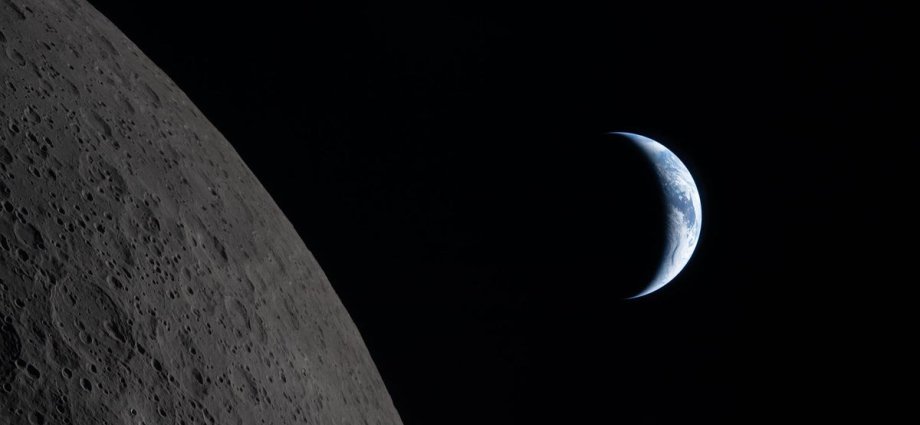
NASA wants to set fire to the moon – no, really.
If conducted, the experiment would be the first time humanity has set fire to another planet.
The goal is to better understand how flames could behave during emergency situations on future crewed Artemis program missions to Mars and beyond, according to the space agency. Those missions will help to expand the reach of humanity and what we know about our solar system.
“Since fire can be a catastrophic hazard for spaceflight and extreme human exploration, FM2 is a critical step in determining material flammability and safety for future missions,” NASA says on the “Flammability of Materials on the Moon,” or “FM2,” experiment’s webpage.
One of the problems is that some materials that aren’t flammable on Earth could be flammable in space, NASA notes. That’s because the materials may burn at lower oxygen concentrations in lunar gravity than in our gravity.
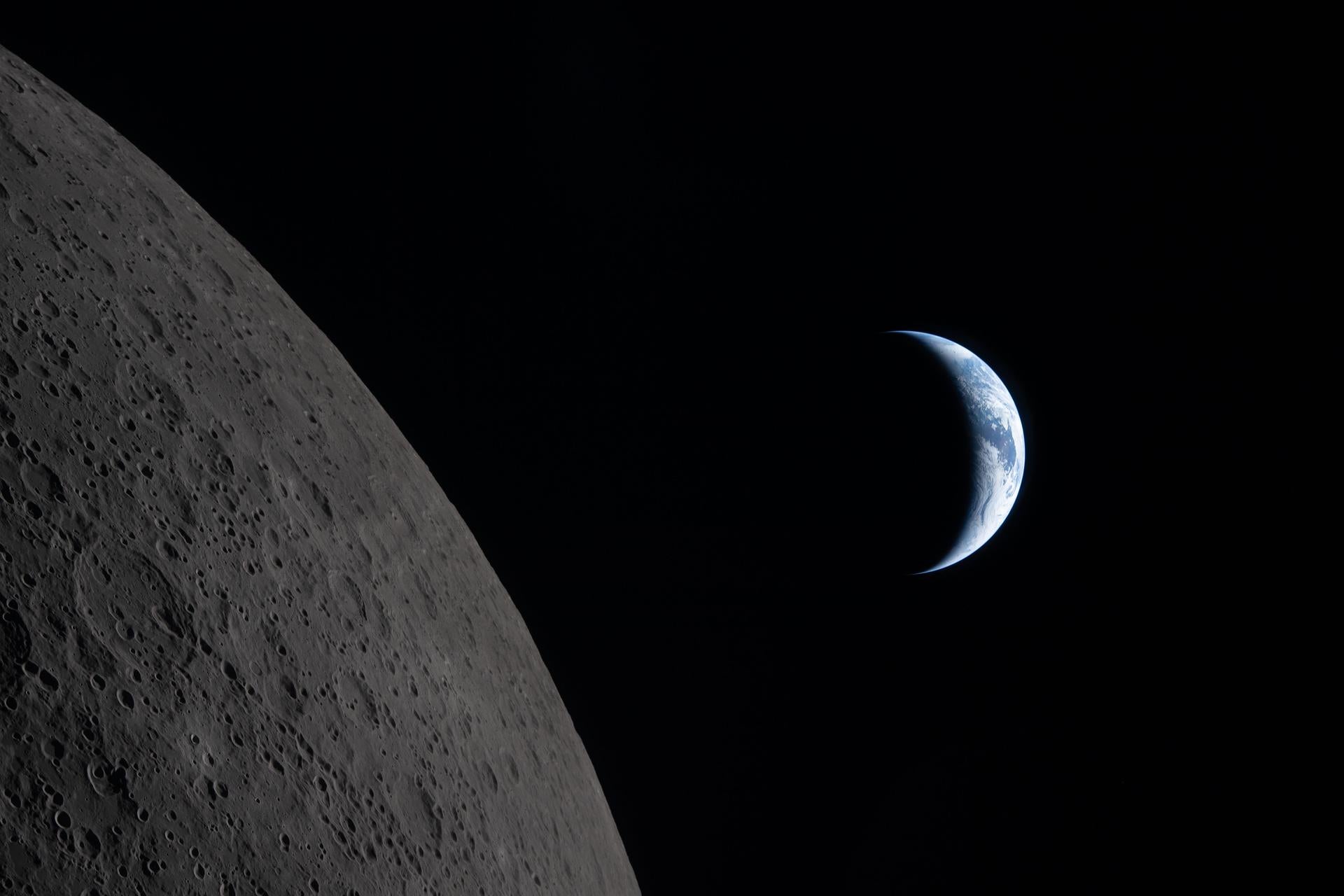
“Like there are some materials that, as they’re burning, they tend to kind of like come off in clumps, almost like little tear drops. And you can imagine that, if you’re in a microgravity or partial-gravity environment, those little teardrops are basically turning into little fireballs that could float away and catch something else on fire,” Emily Johnson, the experiment’s project manager, explained in a 2025 podcast.
“So understanding the different properties of the different materials at the different scales of flames is also incredibly important,” she said.
Flames behave differently on the moon than on Earth. The classic shape of a flame on Earth is created when gravity pulls cooler and denser air to the bottom. That doesn’t happen to flames on the moon or in weightless microgravity on the International Space Station.
“In microgravity, this flow doesn’t occur and on the space station, low-momentum flames tend to be rounded or even spherical,” according to a NASA blog post from 2023.
In lunar gravity, which is around a sixth of Earth’s gravity, the flames are a little more rounded than those on Earth.
So, what will this experiment look like in reality? Well, good news, nobody is building a bonfire.
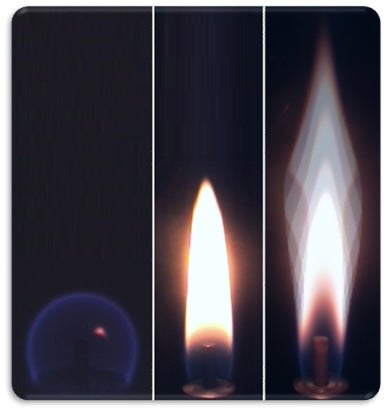
Instead, scientists are sending a robotic, self-contained combustion chamber – a cylindrical metal chamber – to the lunar surface on a mission carrying commercial payloads.
The chamber carries four test samples to light, which are made of cotton and fiberglass and acrylic rods.
It contains an oxygen sensor, an instrument that measures electromagnetic radiation and cameras that record how the fire behaves in lunar gravity, including how fast it spreads.
There have been plenty of microgravity fire tests on Earth over the last few decades, but tests have shown that NASA needs more information.
“Direct lunar access offers the best way to assess flammability of materials on the moon. An extensive materials qualification test series there would be ideal, but such tests will need to be put off until an extended human presence on the moon is established,” NASA researchers wrote in a paper published earlier this year.
The paper said the new experiment would help to fill critical knowledge gaps in spacecraft fire safety.
New findings could lead to updated standards for spacecraft materials.
The mission could launch as soon as later this year, according to the paper.