










Palestine Action’s ban under terrorism laws will remain in place after the Court of Appeal ruled that the group’s proscription was lawful in a major win for the government.
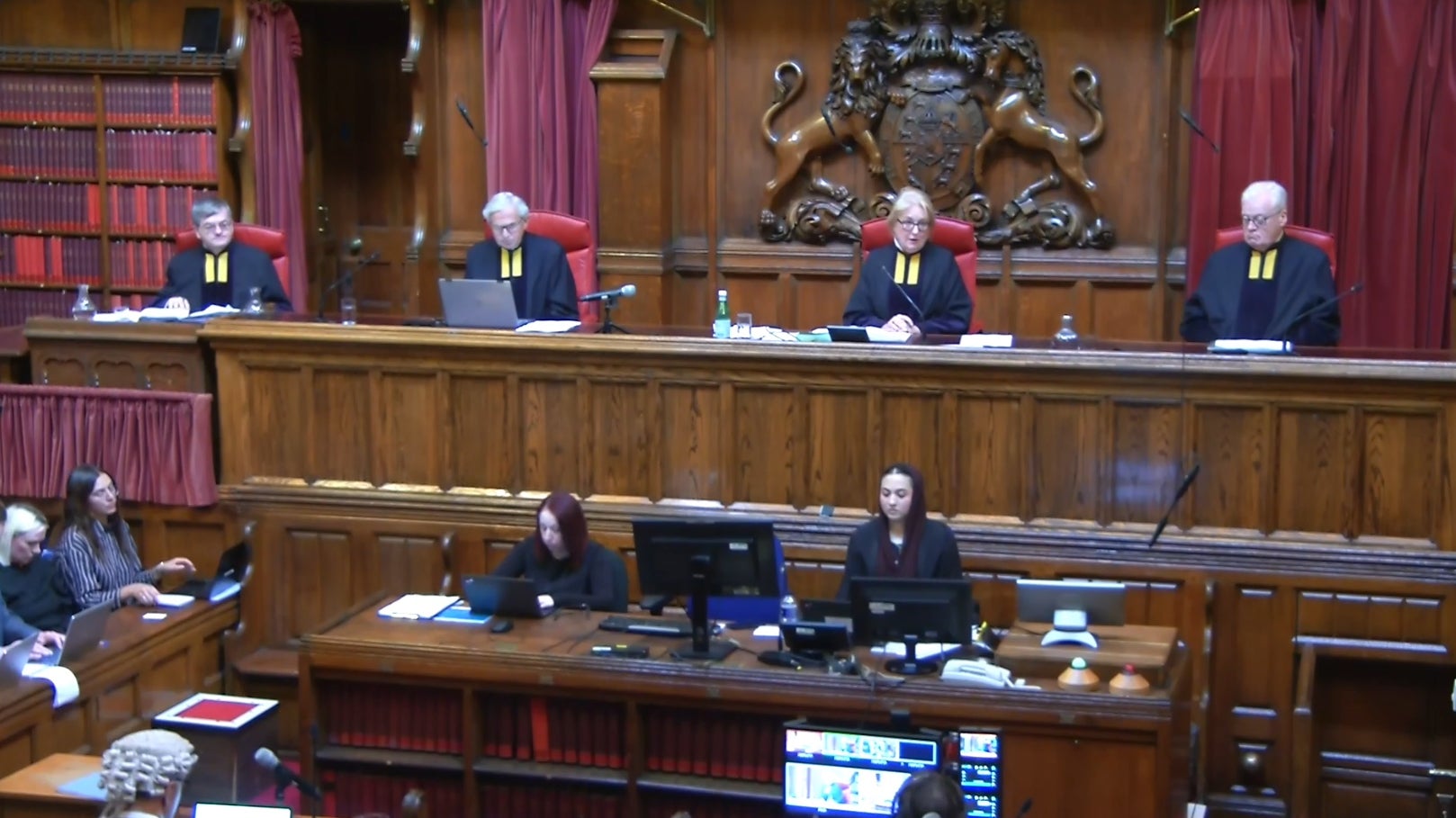
Lady Chief Justice Baroness Carr told the Court of Appeal on Monday that the government’s decision to ban the group under terror laws was “a justified and proportionate interference with individual rights”.
“The proscription decision was not unlawful”, she told the court, describing Palestine Action as a group that “overtly promotes unlawful violence amounting to terrorism”.
The rare five-judge panel found that the High Court was wrong when it previously ruled that the group’s proscription was unlawful.
The ban, which began on 5 July last year, made membership of, or support for, the direct action group a criminal offence punishable by up to 14 years in prison.
Baroness Carr said that it was “not accurate” to describe Palestine Action as “an ordinary protest group”, saying the group was “engaged in causing serious damage to property” and “presented a very real risk of injury not only to property but also to members of the public”. In their ruling, the Court of Appeal judges said Palestine Action “had little or nothing in common with the suffragettes or the anti-apartheid or Iran war protest groups”.
The Court of Appeal agreed with the Home Office on all grounds of appeal in a definitive victory for the government. Crucially, the five judges said that they were “unable to identify” any alternative steps that the home secretary could have taken other than to proscribe Palestine Action under terror laws.
The group was banned by then-home secretary Yvette Cooper in July 2025 after members broke into RAF Brize Norton and vandalised jets to protest the war in Gaza.
The five-judge panel – Baroness Carr, the Master of the Rolls, Lord Justice Edis, Lord Justice Lewis and Lady Justice Whipple – found that Ms Cooper’s decision struck a “fair balance” between the need to safeguard national security and disrupting individuals’ rights to freedom of expression and assembly.
Responding to the ruling, Palestine Action co-founder Huda Ammori said she would “fight proscription all the way” to the Supreme Court and European Court of Human Rights to overturn “one of the most extreme attacks on free speech and the right to protest in modern British history”.
Home secretary Shabana Mahmood said Palestine Action is “not an ordinary protest group”, and told the public that “this decision does not affect lawful protest in support of the Palestinian cause, which remains a fundamental democratic right”.
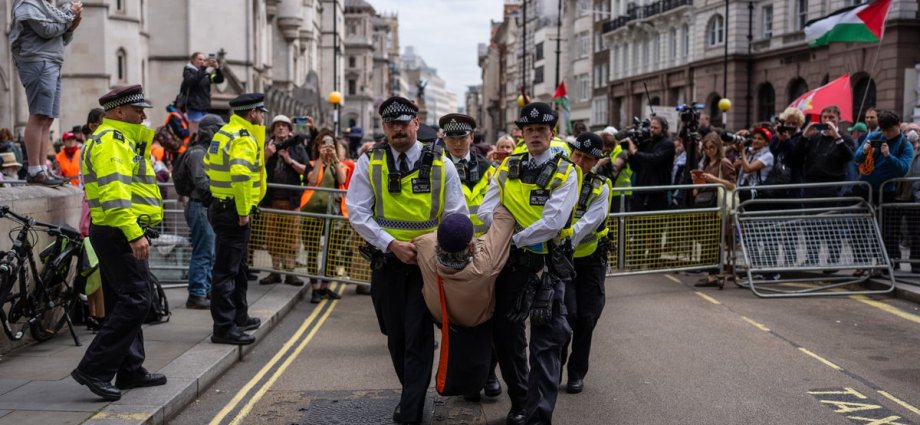
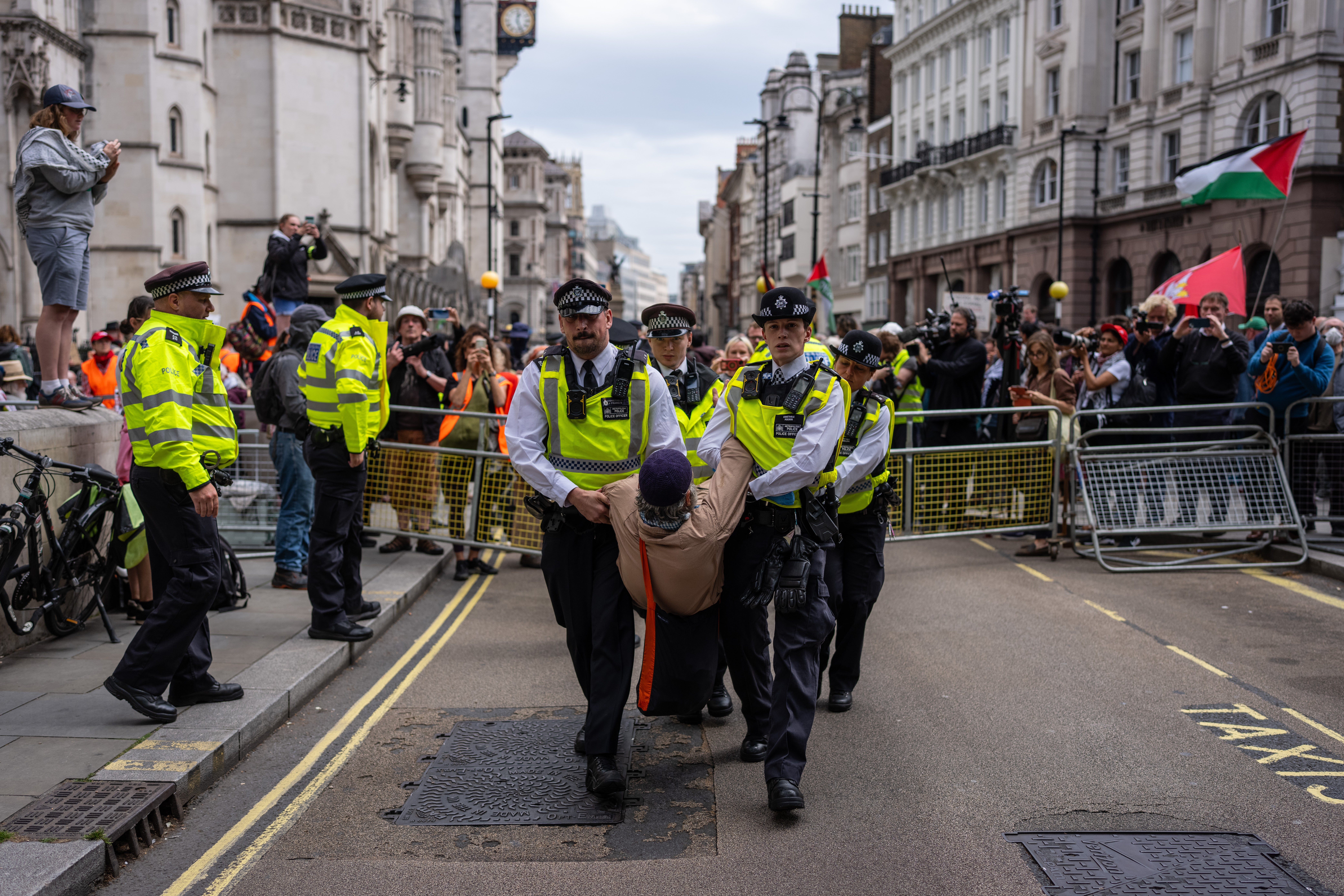
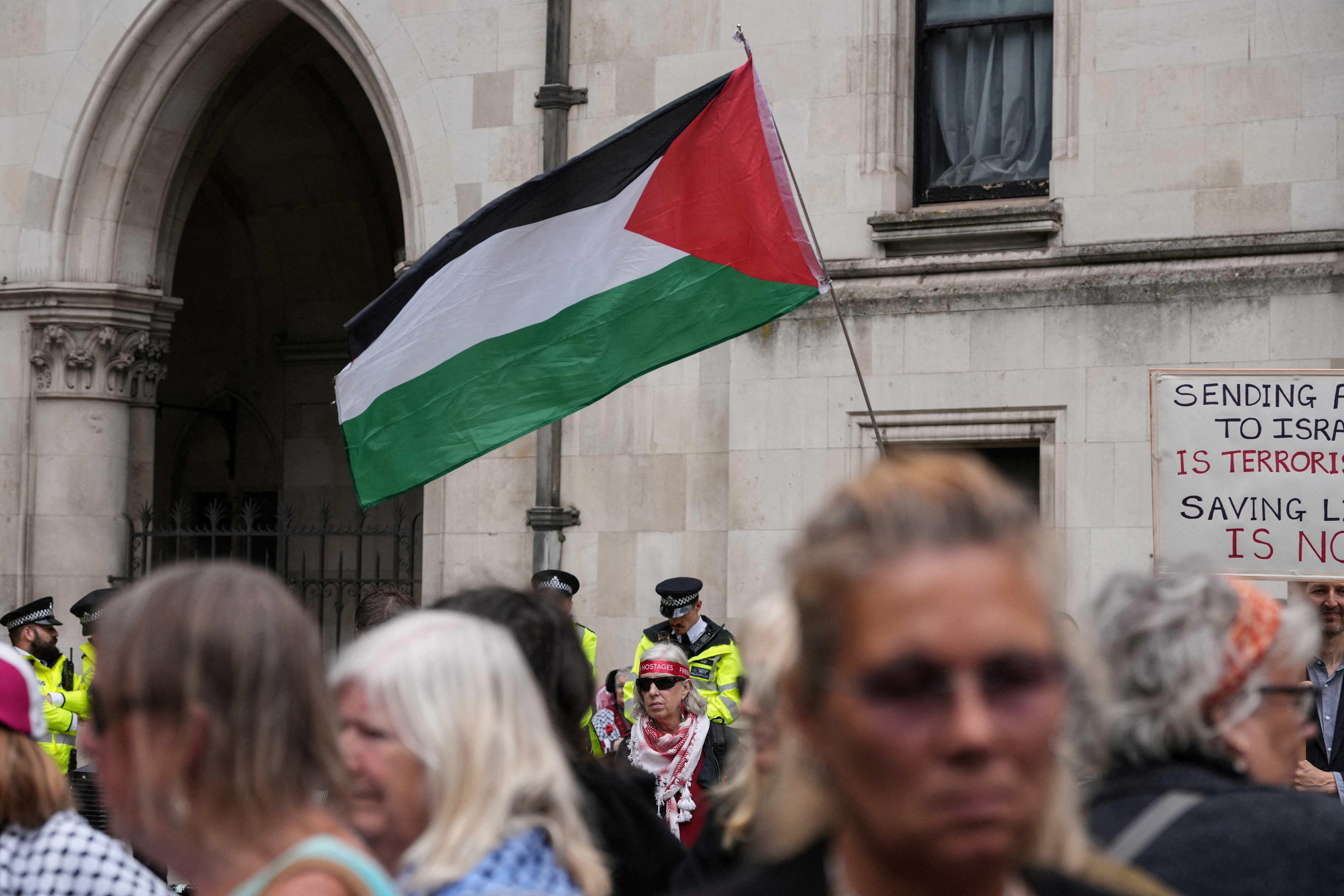
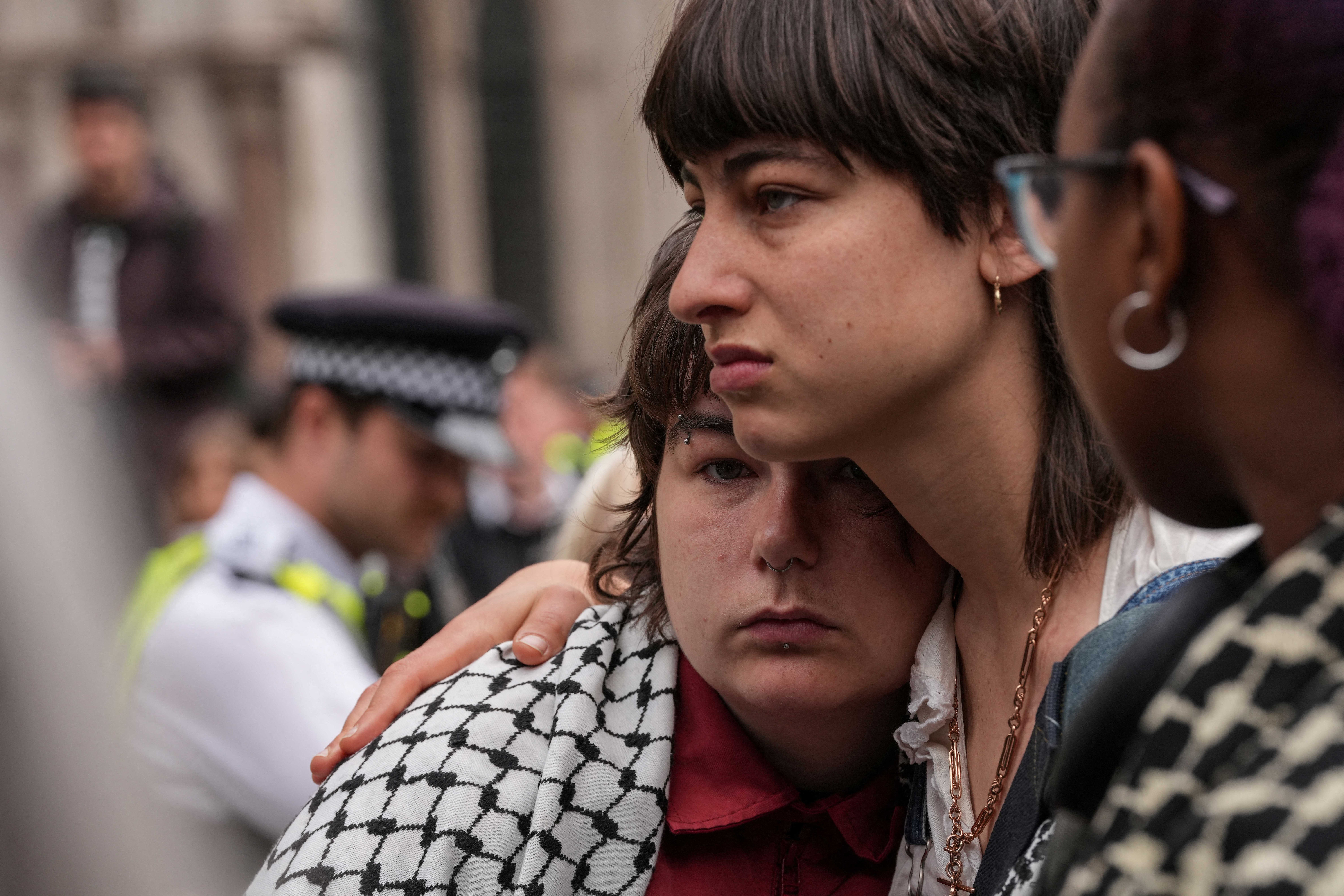
Outside the Royal Courts of Justice on Monday, some protesters gathered in support of Palestine Action were arrested, the Metropolitan Police said.
Akiko Hart, director of human rights charity Liberty, said Monday’s judgment “risks paving the way for current and future governments to use counterterror powers against non-terrorist groups.” She added: “This case has already had, and will continue to have, a chilling effect on protest and free speech, leaving many people too afraid to protest or say the wrong thing.”
The High Court had previously ruled that Ms Cooper’s decision to ban Palestine Action under terrorism legislation was unlawful. Three senior judges at the High Court concluded that only a small number of Palestine Action’s activities amounted to terrorism, and that the group’s acts had not crossed the high bar to make it a terrorist organisation.
The High Court said that Ms Cooper had failed to consider whether imposing a terror ban on Palestine Action was “proportionate” to the threat posed by the organisation. Justice Sharp wrote that, by doing this, Ms Cooper had made a “significant” error by failing to follow the Home Office’s own policy on proscription.
However the Court of Appeal decided that the purpose of the Home Office policy was “not to limit or constrain the discretion of the home secretary”. They found that the home secretary “had the institutional competence and the democratic accountability to make the decision”.
Since the group’s proscription, hundreds of people have been arrested across multiple demonstrations after holding up placards and wearing badges and T-shirts declaring support for Palestine Action.
The chief magistrate has put a pause on the progress of criminal cases for those charged, with a review hearing due to take place on 30 June. With the Court of Appeal ruling that Palestine Action’s ban was lawful, the criminal cases, of which there are more than 700, look set to go ahead.
Dozens of days of court time have already been allocated in the autumn and winter to hear the trials at magistrates’ courts around London, and if prosecutions go forward the courts will have to allocate more time to hear cases.
The Court of Appeal’s decision comes after four Palestine Action activists who mounted a “terrorist” raid on Israel-based defence firm Elbit Systems’ UK factory were jailed.
Charlotte Head, 30, Samuel Corner, 23, Leona Kamio, 30, and Fatema Rajwani, 21, used sledgehammers and crowbars to destroy computers, drones and other equipment before police and security intervened.
Corner, a former student at Oxford, struck police officer Kate Evans twice on the back with a seven-pound sledgehammer, leaving her with a fractured spine.
Mr Justice Johnson gave the four prison sentences of between seven years and eight months and four years and eight months, with each defendant also spending an extra year on licence.
During the hearing on Friday, the judge ruled that the raid amounted to an “act of terrorism”, having been carried out to try to influence the UK government and intimidate a section of the public.