










Sir Keir Starmer has announced a ban on social media for under-16s after the results of a nationwide consultation showed support for the measures.
The prime minister unveiled plans to restrict online activity for children on Monday as he declared “social media is making children unhappy”.
The government has set out intentions to use the same model for a social media ban as Australia, going further to tackle AI chatbots and introducing more measures to enforce age verification.
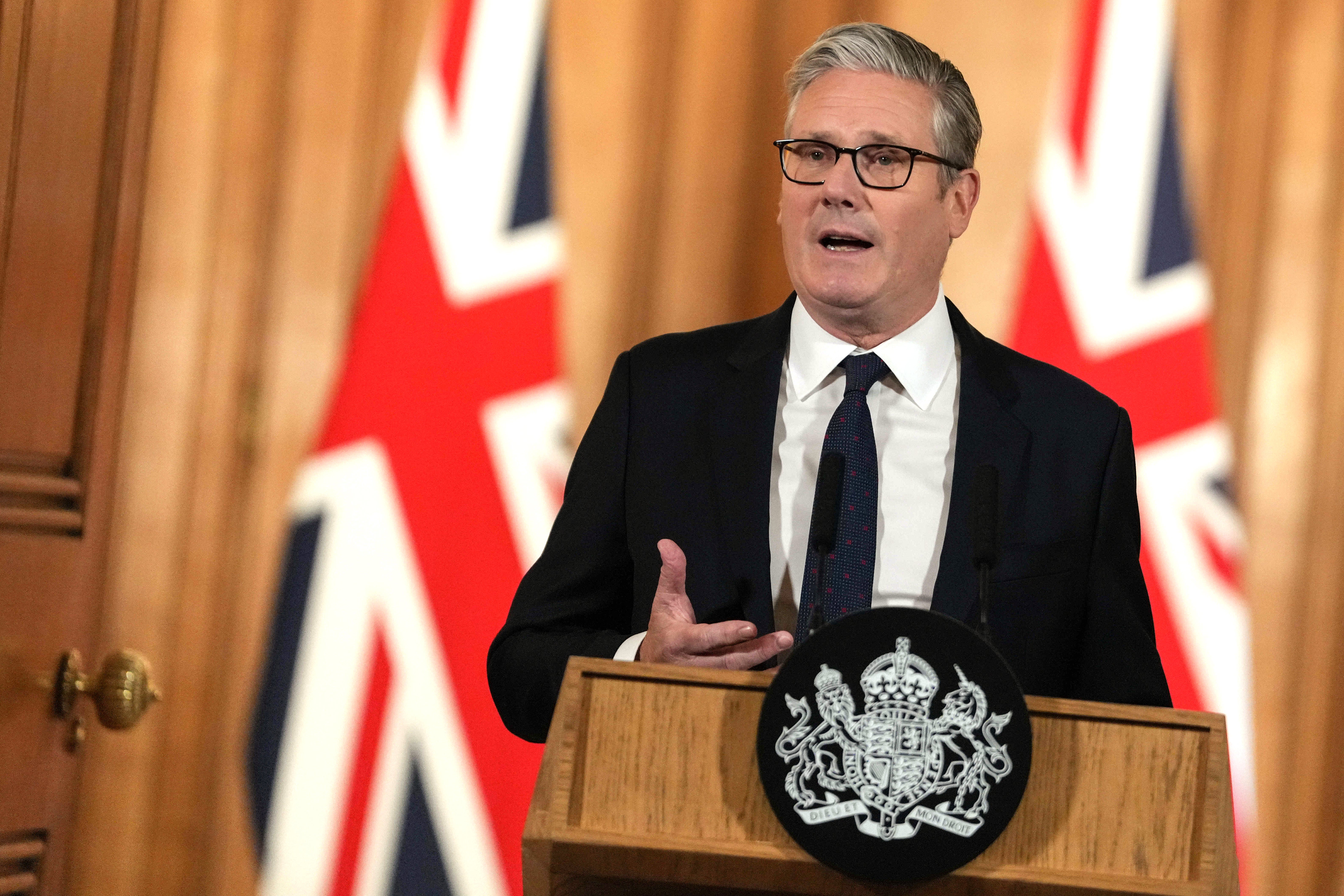
The PM announced the social media ban would take “world-leading” action against social media companies, as well as gaming and livestreaming platforms, so that strangers will not be able to contact children.
A ban on social media for teens has received overwhelming support, with nine in 10 parents backing decisive action.
Sir Keir said that as a father of two himself, a full ban on under-16s accessing social media sites was “the right choice”.
He added: “This is not something I do lightly, and I will not present it as cost-free, as if social media has brought no benefits to young people, because clearly that is wrong.
“But government is always about choices, and it’s clear to me that a full ban is the right choice.”
When will it come into effect?
The first set of regulations as part of the new protection plans could come into effect as soon as spring 2027.

What apps are covered?
Using the same model for a social media ban as Australia, the government would target user-to-user platforms, whose purpose is to enable social interaction and allow users to post material, alongside algorithms.
Platforms like Snapchat, TikTok, YouTube, Instagram, Facebook and X will all come under the ban. Messaging services like WhatsApp and Signal will not be included in the social media ban.
AI chatbots and gaming services could also face restrictions on their functions for certain age groups, while not being explicitly banned.
37 per cent
of UK children aged three to five using social media in 2026
How will it work?
Learning from Australia’s ban, where three in five 12- to 15-year-olds have managed to bypass restrictions to use social media, the government said it will use more highly effective age assurance (HEAA) measures to make it harder for under-16s to use social media.
The communications regulator is set to conduct a rapid study on what is effective age assurance for verifying whether someone is over 16. Liz Kendall, the technology secretary, has also written to the new chair of Ofcom to ask for an urgent review of its enforcement capabilities, with a clear enforcement strategy to be published as soon as possible.
The government will block “harmful functions” on social media platforms for under-16s, such as livestreaming and communication with strangers. This will also apply to other online services such as gaming sites.
AI “romantic companion” chatbots will also have to enforce a minimum age of 18. More widely, AI chatbots will have intimate functionalities restricted for under-18-year-olds.
The government will also look to include overnight curfews and breaks in infinite scrolling for under-18-year-olds, with more details to come in July.
Why is it happening?
The government’s announcements follow a global change in attitude towards social media companies prompted by Australia’s own social media ban for under-16s in December last year. Countries such as Spain, Greece, Portugal and Denmark have all since decided to look at changing the age at which they can access social media.
A consultation for a social media ban, which ended on 26 May, was declared one of the biggest national conversations, with more than 116,000 responses submitted by parents, children and experts across the country.
The responses showed overwhelming public backing for tougher action. Not only did 90 per cent of parents support a ban, but the government also claimed two-thirds of young people agreed that children below 16 should not be allowed to use at least some social media platforms.
Prior to the announcement, children’s commissioner for England Dame Rachel de Souza proposed any ban should be extended to cover 16- and 17-year-olds, who she said should not have “lesser protection”.
London mayor Sir Sadiq Khan also threw his weight behind the proposal, saying tech firms must prove their services are safe for children or face a ban on being available to under-16s.
Will parents or children be fined?
The prime minister insisted in a press conference on Monday that pressure would be on the companies, not the parents or children, if the ban was not adhered to properly.
Tech companies “know very well” that they have a responsibility here, he added.