










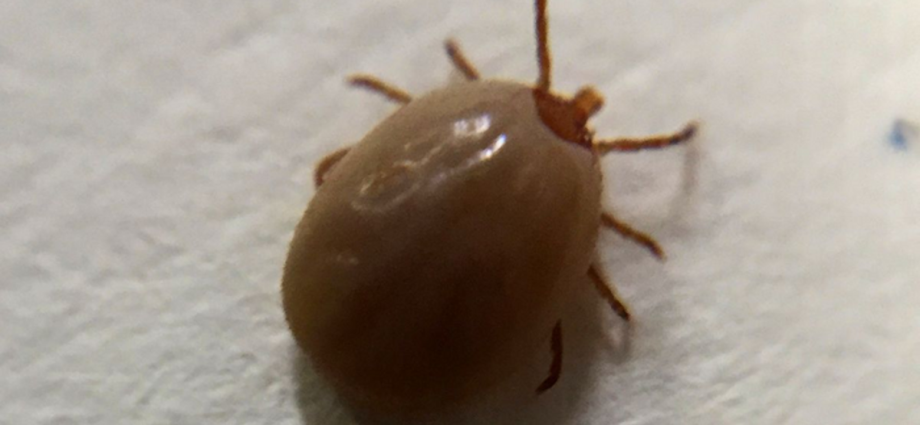
A rare but potentially more dangerous bacterium behind Lyme disease has been detected for the first time in ticks in the state of New York, health authorities warn in a new study.
The bacterium Borrelia mayoniim, known to cause Lyme disease, has previously been identified only in Minnesota and Wisconsin.
But in late June 2025, a resident of Herkimer County in New York, fell ill with symptoms consistent of a tick-borne illness, and test results revealed he was infected with this bacterium.
The patient had not travelled out of state, indicating that the pathogen is likely spreading locally.
While the patient made full recovery after he was treated with the antibiotic doxycycline, subsequent investigation revealed that ticks carrying the same bacterium were present in his neighbourhood.
Lyme disease typically appears about three days to a month following an infected tick bite, with symptoms including a characteristic red rash that sometimes forms a “bull’s-eye” as well as fever, headache, joint/muscle aches, and swollen lymph nodes.
It is commonly spread by the tick-borne bacterium Borrelia burgdorferi.
But another bacterium Borrelia mayonii, carried by black-legged ticks, may lead to more severe cases of Lyme disease, requiring hospitalisation researchers say.
In these cases, the rashes may also be more spread out, compared to the single bull’s-eye rash of B burgdorferi Lyme disease.

Following the Herkimer County case, health authorities collected and assessed ticks from the patient’s property and a nearby forest.
Officials returned later to survey ticks across New York’s 24 counties.
Overall, their analysis of nearly 1,600 ticks revealed that B mayonii was present only in the ticks surveyed in the single property in Herkimer County.
The findings confirm the first documented evidence of B mayonii in New York ticks, and the first locally acquired case of human infection in the state.
Researchers suspect the bacterium is being spread to ticks from a local vertebrate reservoir, such as mice or squirrels.
“This study provides the first evidence of B mayonii presence in New York ticks and locally acquired B mayonii infection in a New York resident,” researchers wrote in the US Center for Disease Control and Prevention’s (CDC’s) weekly report.
“Continued entomological, molecular, and human tick-borne disease surveillance are critical for understanding the distribution and public health significance of emerging tick-borne pathogens in New York,” they wrote.