









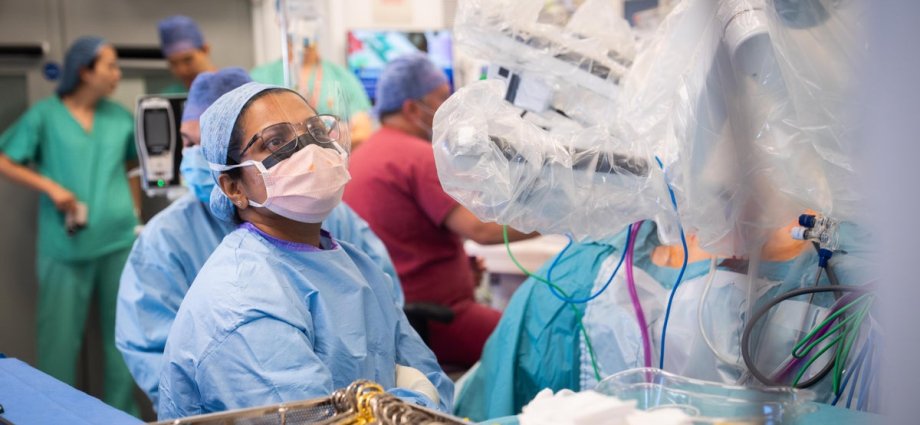
A pioneering AI tool which colour-codes body parts during live operations has been deployed by surgeons for the first time in the UK.
Medics at St Mark’s, the National Bowel Hospital, utilised the system on Thursday during surgery on a patient in her 60s.
The tool, known as Eureka, works alongside robotic or laparoscopic procedures, projecting real-time, colour-coded highlights onto a screen.
This visual aid helps surgeons identify and protect or dissect specific tissues, such as nerves appearing green or connective tissue in turquoise, enhancing precision and safety.
Experts have praised the portable AI unit for boosting efficiency in the operating theatre. It was developed by Japanese surgeons who trained the AI using thousands of surgical video recordings.
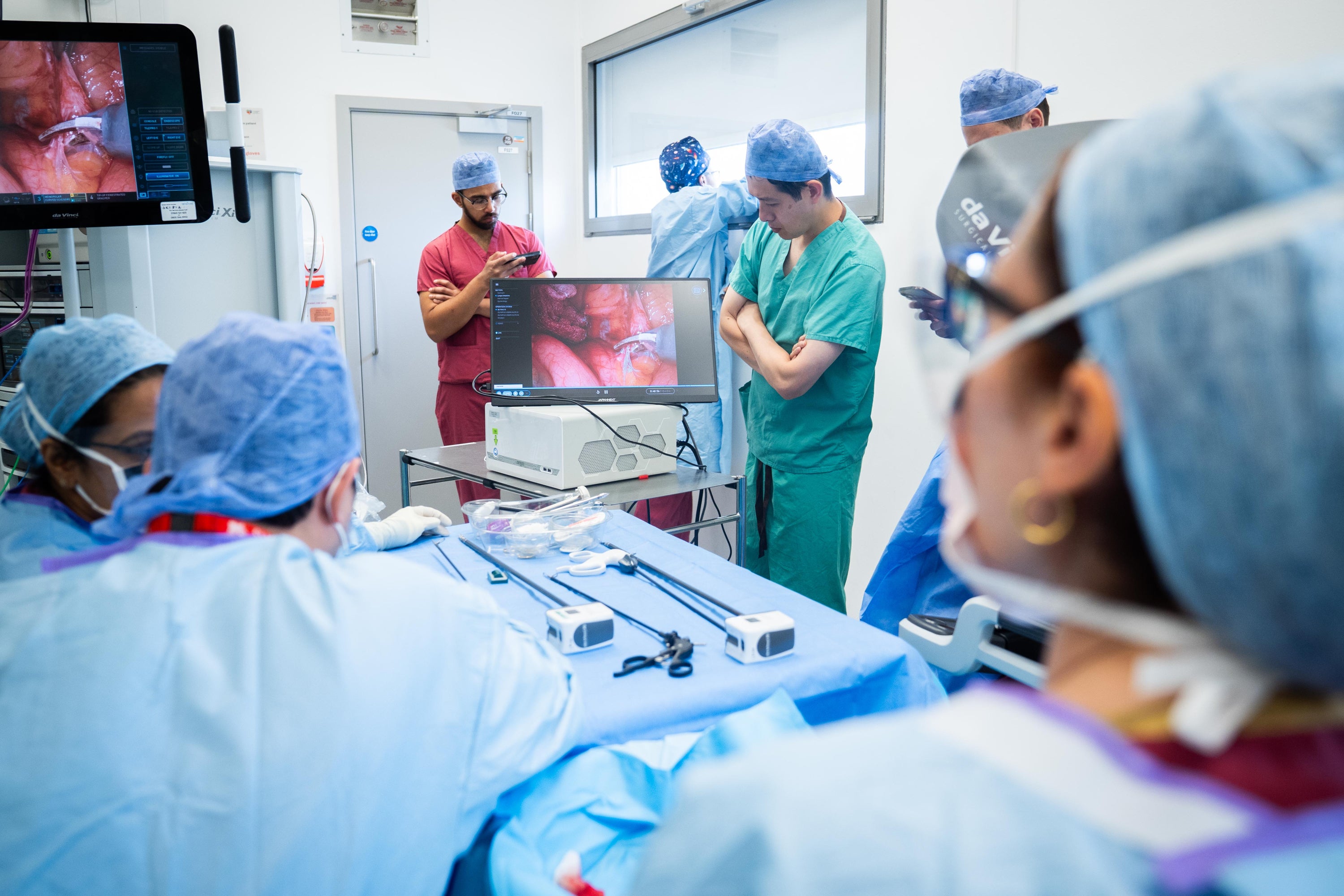
The operation on Thursday was the first time it has been used in the UK.
It was also the first time that it has been used during surgery outside Japan.
The patient, who has not been named, received a bowel resection at the hospital, which is part of London North West University Healthcare NHS Trust.
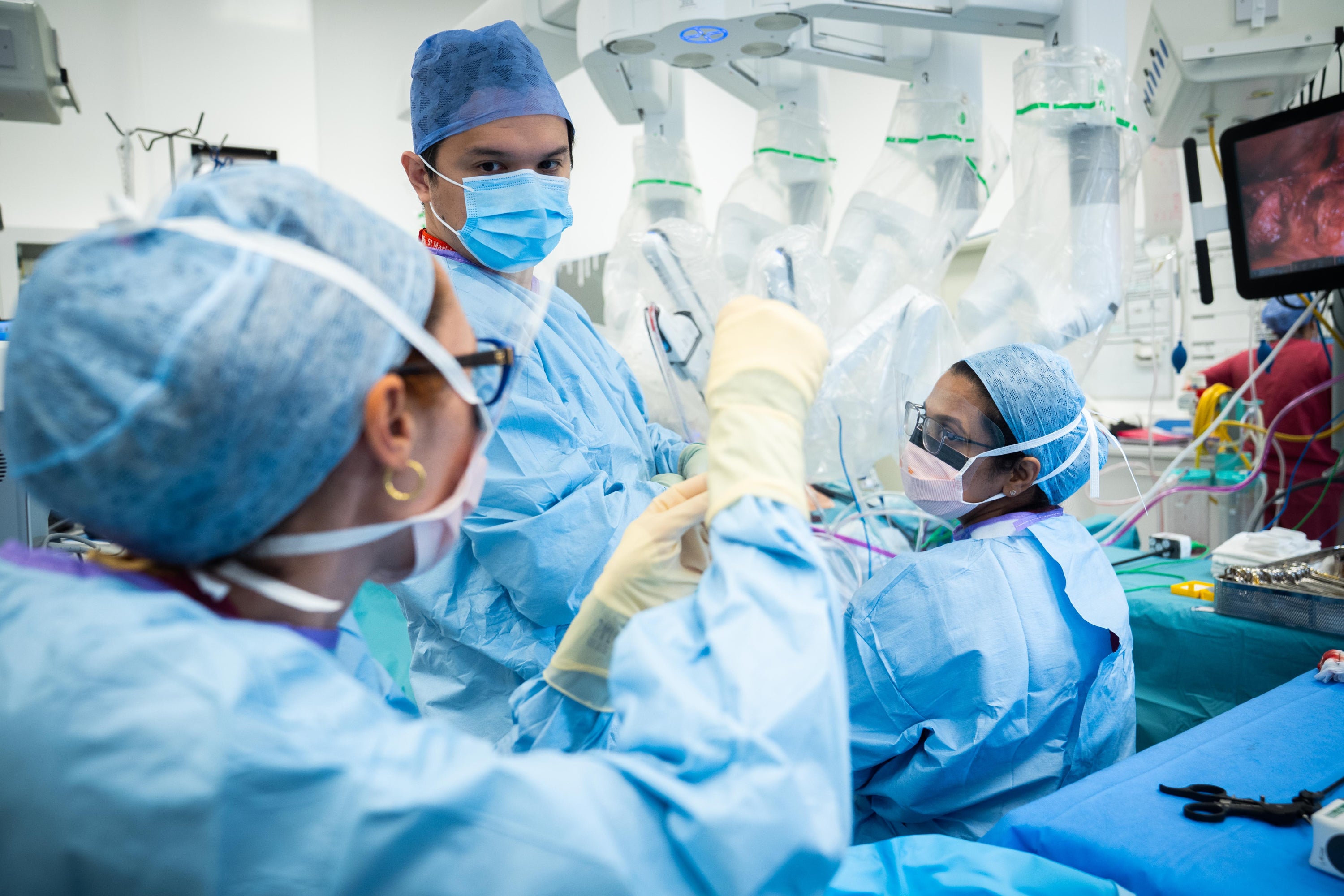
Consultant surgeon Mr Kapil Sahnan described the tool as an “extra helping arm”.
He said that it helps “look at your live surgery and start telling you which are the hidden structures which perhaps you can’t see”.
He added: “And the hope and the idea being is, that if you can identify these, that the operation becomes safer, you have this kind of extra helping arm with artificial intelligence running at the same time as your surgery, preventing errors and making everything a lot more safe.
“And we were the first hospital in the world outside of Japan to use it.”
He went on: “Another way of thinking about it is, I remember that my mother used to use an A to Z when she had to plan routes. Now we all use Google Maps and Waze.
“And this is that version of kind of navigation that now has been applied to surgery.
“The difference has been that real time aspect, so you can see it at the same time as you’re operating.
“The idea being is you want to prevent any errors happening before they do, and one way to do that is use, not human intelligence but intelligence, which has been derived from thousands and thousands and thousands of operative videos where people have gone through and labelled things.
“So the computer can see things before the human eye can.”
He added: “You get these really beautiful images, they put colour overlays over the operative images. which can either be on constantly, or they can pulse.”
Mr Sahnan said work was under way to work out how “we can genuinely prove that this is going to be advantageous and, more importantly, how we can start rolling it out.
“We’re lucky to have it today, but it would be amazing if everybody had it in the next couple of years, it would make surgery for everybody a lot safer.”