









A government minister has admitted the wording of a police commitment to anti-racism, which suggests people should be treated differently according to their ethnicity, is “wrong”.
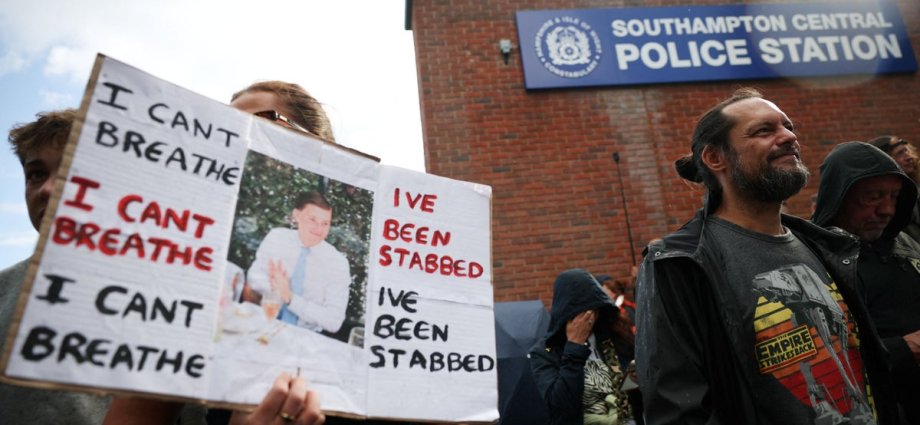
The government facing questions about the guidance document, prompting police chiefs to pledge to review the guidance in the wake of Henry Nowak’s murder.
The document, produced by the National Police Chiefs’ Council (NPCC), says officers should respond to individuals and communities “according to their specific needs”, which “does not mean treating everyone ‘the same’ or being ‘colour blind’”.
It sets out “the long-term aspirations of an anti-racist police service”, rather than forming part of formal training or policy, and states: “Producing equality of policing outcomes for people from different ethnic groups by responding to individuals and communities according to their specific needs, circumstances and experiences, with understanding that these will be racialised and with the aim of reducing harm.
On Wednesday, policing minister Sarah Jones told BBC Radio 4’s Today programme the language in the commitment is “wrong”.
She said: “Everyone should be treated equally under the law and I think it’s right that they are reviewing this document and looking at the language.
“This particular document is a, sort of, values document, it’s quite a short document and I don’t think it forms the basis of any training or any police activity.
“We think the language is wrong, it gives the wrong impression. But I don’t think it affects how our training is done.
The Police Anti-Racism Commitment was drawn up as part of a national Police Race Action Plan, which aimed to make the police service anti-racist and boost trust, particularly among black people.

The prime minister’s spokesperson said on Wednesday that the NPCC is “rightly” seeking to remove “ambiguity” from its commitment, adding: “We don’t think that language is right.”
Asked which wording the prime minister takes issue with, the official said “that is for the NPCC to review” and “I’m not going to go through the guidance line by line”.
“We continue to engage with the NPCC on their plans to review the guidance,” he said.
“The NPCC is independent of government. It’s right that they have the space to review the wording.”
Chief Constable Gavin Stephens, chairman of the National Police Chiefs’ Council, said on Tuesday that black communities have the lowest levels of confidence in the police, and recent inquiries including the damning Casey review of the Metropolitan Police encouraged force chiefs to tackle racism and discrimination.
He said: “It is essential that we police without fear or favour in keeping the peace and enforcing the law. We must do so to earn the confidence of all communities.
“This historic and ongoing mistrust between the police and black communities risks for example people not reporting things to the police if they are in trouble, or aiding our efforts to catch criminals, fight crime and protect all communities.
“We are listening to legitimate concerns about how some of these commitments are worded or phrased, and where needed we can and will make changes, but this should not detract from the intent, which is to improve the quality of policing.”