









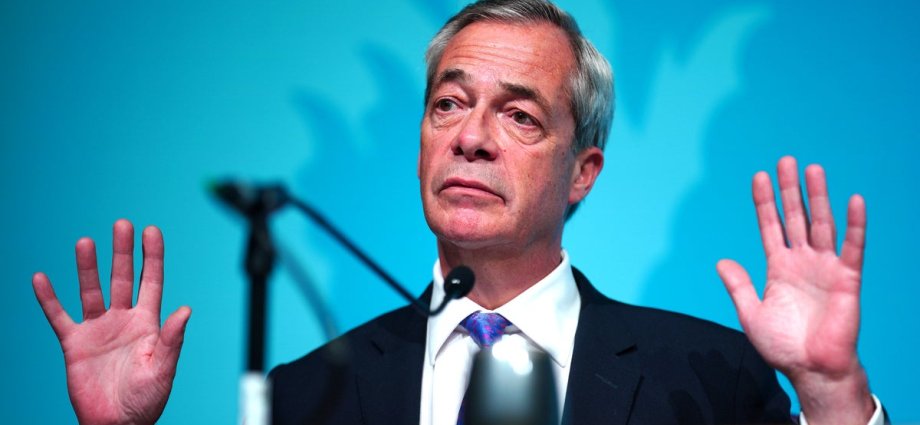
“We are now the main opposition party,” Nigel Farage declared as his party swept to a string of victories in England’s local elections last year.
Mr Farage claimed Reform UK – which has only been around in its current form since January 2021 – had broken the grip of Labour and Conservatives, winning 677 council seats and carving deep inroads in the parties’ long-established heartlands, by taking over 10 councils.
On the back of promises to scrap net zero, target wasteful spending and fix potholes, the right-wing party looked to have hit the right note with disillusioned communities across the country.
But not long after the tables to count ballot papers were folded up, and the election campaign posters were taken down, problems began to arise as the party started to take the reins of local authorities with multi-million-pound budgets.
It began 160 miles from London, in the village of Hodnet, near Market Drayton in Shropshire, where Reform councillor Donna Edmunds was suspended over a social media post just days after the election.
In a statement posted on X, the now-Independent councillor said: “I urged people here on X to lend Reform their support for the short term – for Thursday’s elections – even if they felt they couldn’t for the long term. According to head office, ‘this has brought the party into disrepute and damaged the interests of the party.'”
We all turned into Nigel’s yes-men – ordered to be on best behaviour to help him get to power
Former Reform councillor Nick Brown
Soon after, Warwickshire councillor Luke Shingler switched to serve as an Independent because his undisclosed “sensitive” line of work meant he could not represent a political party, while Nottinghamshire councillor Desmond Clarke stepped down nine days after the local elections due to “significant recent changes to personal circumstances”, according to the local Reform branch, before being replaced at a by-election by a Tory candidate.
In Durham, Reform county councillor Andrew Kilburn resigned a week after being elected for failing to declare he already worked at the local authority. At a subsequent by-election, he was replaced by a Lib Dem candidate.
A month later, Daniel Taylor, 35, who won the Cliftonville ward in Kent, was suspended by the party amid a police investigation that led to him being jailed for behaving in a controlling or coercive way towards his wife.
In the 12 months that have followed, many more have gone – the latest overall count is 68.
According to Open Council Data UK, other parties have also been hit by defections. The number of Labour councillors in the UK has fallen by 289 (5 per cent) in the year since May 1 2025, while the number of Tories has dropped by 234 (5 per cent).
And despite the overall number of Reform councillors in the UK rising 22 per cent since last May, reaching 991 on 1 May, the number of lost councillors – through defections, resignations or ill health – accounts for nine per cent of the 810 a year ago.
It highlights a party, although gaining councillors, also struggling to keep them.
Some have claimed to have been pushed out over social media posts. Others said they left the party over leadership concerns, and who was directing local matters. A small number resigned from their councillor roles completely due to ill health or work commitments.
Nowhere has seen more Reform departures than Kent County Council, which was seen as the flagship council for Reform UK after claiming 57 out of 81 seats. Ten of those councillors have gone or no longer represent Reform since last May.
Laden with a £700m debt and a daily £84k debt interest bill when Reform took control, its leader Linden Kemkaran has faced intense pressure to set an example for how the party can govern effectively – and it all appeared to boil over in a video leaked from a party meeting, in which Ms Kemkaran swore and shouted at members.
‘No longer about real people making a difference’
The first councillor on Kent County Council to depart Reform was Amelia Randall, who first left for UKIP but is now an Independent councillor.
She told The Independent: “Leaving Reform UK was initially a tough decision as I was torn between the people who are great within the party, the hard work I had put into building up my area, but then the fact that Reform UK had lost its identity.
“It became more and more apparent that Reform was no longer about real people making a difference, but was all about building the Tory 2.0 party.”
Despite the departures, Reform is keen to emphasise that other parties have also suffered a loss of councillors, including on Sevenoaks District Council, where there were nine resignations from the Tory party last May.
But like in Kent, where the number of Reform councillors has dipped from 57 to 47, the party’s influence has loosened at several councils, such as in Cornwall, from 28 to 22, and Durham, from 65 to 60.
Now-Independent Durham councillor Nick Brown left Reform in February. “When we took control [of Durham Council], I believed the messages from Nigel Farage that we would make big changes for people living locally,” he told The Independent.
“But really, whenever we had a local issue, we were told to follow the party line. Not to rock the boat, bring press attention on the council. We all turned into Nigel’s yes-men – ordered to be on best behaviour to help him get to power.”
Wanting to uphold a party pledge to cut wasteful council spending, the councillor stepped down before a meeting, saying he was told to vote for a Budget that would bring a 3.1 per cent council tax rise. “We had a huge mandate for Reform, but I saw no meaningful evidence of it.”
Reform’s leader on the council, Andrew Husband, has hit back, calling his resignation letter “the ramblings of a bitter, ill man”, according to the Daily Telegraph.
It was the same in Worcestershire, where Reform councillor David Taylor announced his decision to quit Reform on air over the authority’s plan to raise council tax by 9 per cent. “What will happen is they’re [residents] going to pay more and receive less,” the now-Independent councillor said on the BBC.
In Doncaster, councillor Nickie Brown told The Independent she left Reform because she claimed she was called on to voting for the authority to borrow £57m to reopen Doncaster Sheffield Airport without having the full facts.
Reform has since said it no longer backs the loan.
The councillor, who has since joined Advance UK, said: “I believe in the freedom to speak up for the people I represent without fear or pressure. As a Reform councillor your voice goes through a party media machine. As an Advance UK councillor, my voice is my own. And I’ll keep using it for the benefit of those I represent.”
At the time, a Reform UK spokesperson said they were disappointed by her decision to resign, but that the party remained committed to delivering promises made during the election.
Meanwhile, in contrast, Reform councillors put into senior positions in Cornwall felt that they came under unmanageable pressure from members and HQ to deliver change.
‘We were being sent orders from above’
In the county, where Reform was the largest party but did not have a majority to take full control at the last election, leader Rob Parsonage resigned in November, two days after his deputy Rowland O’Connor also stepped down.
In a strange twist, he’s now a Conservative councillor, having ousted a Tory councillor to win the seat for Reform last year.
He told The Independent: “They [Reform party members] wanted huge changes, but I always said ‘give us to Christmas to get our feet under the table’, and you must remember we did not have control to make decisions,” he said. He claimed he “jumped before he was pushed”.
Reform has reneged and continues to renege on its founding purpose, instead seeking to court the very establishment it claims to oppose
Former Reform councillor Jack Goncalvez
He added: “We were being sent orders from above – they wanted us to vote down everything net zero and fight DEI (diversity, equity and inclusion) – but in the end it turned into a conflict between the national agenda and the role of a councillor.”
Discontent has also been seen in Warwickshire, which made headlines last year when Reform councillor George Finch became the youngest council leader in the UK, aged 19.
Mr Finch has had a turbulent start to his leadership, including a disagreement with the council’s chief executive after he called for a Pride flag to be removed from flying at the council headquarters. In March, he survived a no-confidence call by just one vote.
Reform became the largest party on the council at the last local election, taking 23 out of the 57 council seats.
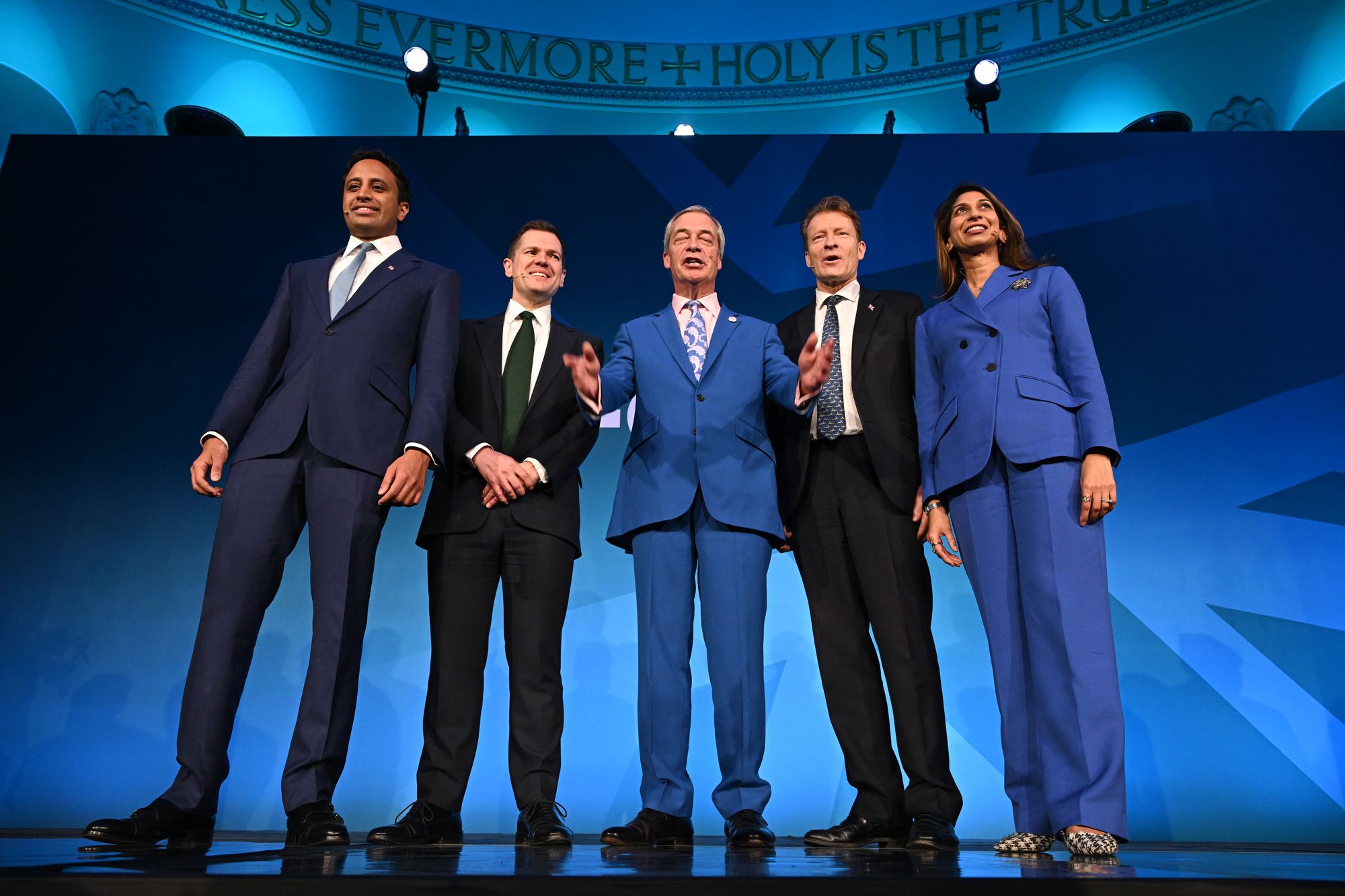
Among them were councillors Luke Cooper and Scott Cameron, who have both since joined Restore Britain, a party set up by Rupert Lowe, the ex-Reform MP who left after falling out with Mr Farage last year.
Councillor Cooper said he fell out with the party because of national issues. He told The Independent: “They have backtracked or shown that they can’t be trusted; from using bad faith interpretations on immigration with Restore that show them to be hypocritical (when compared to their own statements), to employing Tories that have had direct hands in the destruction of their previous party and the current state of the country.”
Just before the pair’s defection February, Mr Finch said: “Reform UK in Warwickshire is here to deliver for residents — not to indulge in stunts designed to create headlines at the expense of local colleagues.”
Leaders at the Reform-controlled North Northamptonshire Council have also been hit by departures, with councillors Darren Rance and Jack Goncalvez initially leaving to stand as Independents, before joining Restore Britain. Councillor Rance has since rejoined Reform according to his councillor webpage.
Councillor Goncalvez posted on X: “Reform has reneged and continues to renege on its founding purpose, instead seeking to court the very establishment it claims to oppose. That could not have been more evident in [last month’s] shadow cabinet announcement, in which two of their top positions have been uptaken by those responsible for inflicting the scourge of mass migration upon our country.”
Many of the councillors who left Reform have ended up at Restore Britain. Others have gone to the right-wing party Advance UK and the Conservatives.
A Reform UK spokesman said: “Churn amongst councillors is normal across every political party. Since May 1st, Labour and the Tories have haemorrhaged at least 259 and 230 councillors respectively through resignations, suspensions and defections.
“Meanwhile, Reform UK councils continue to deliver for local residents, making and identifying over £700 million in efficiency savings and delivering the lowest average council tax position of any political party in the country.”