











The average American spends roughly 4 to 5 hours on their phone a day and for many, it’s the first thing they look at when they wake up in the mornings and the last thing at night before going to sleep.
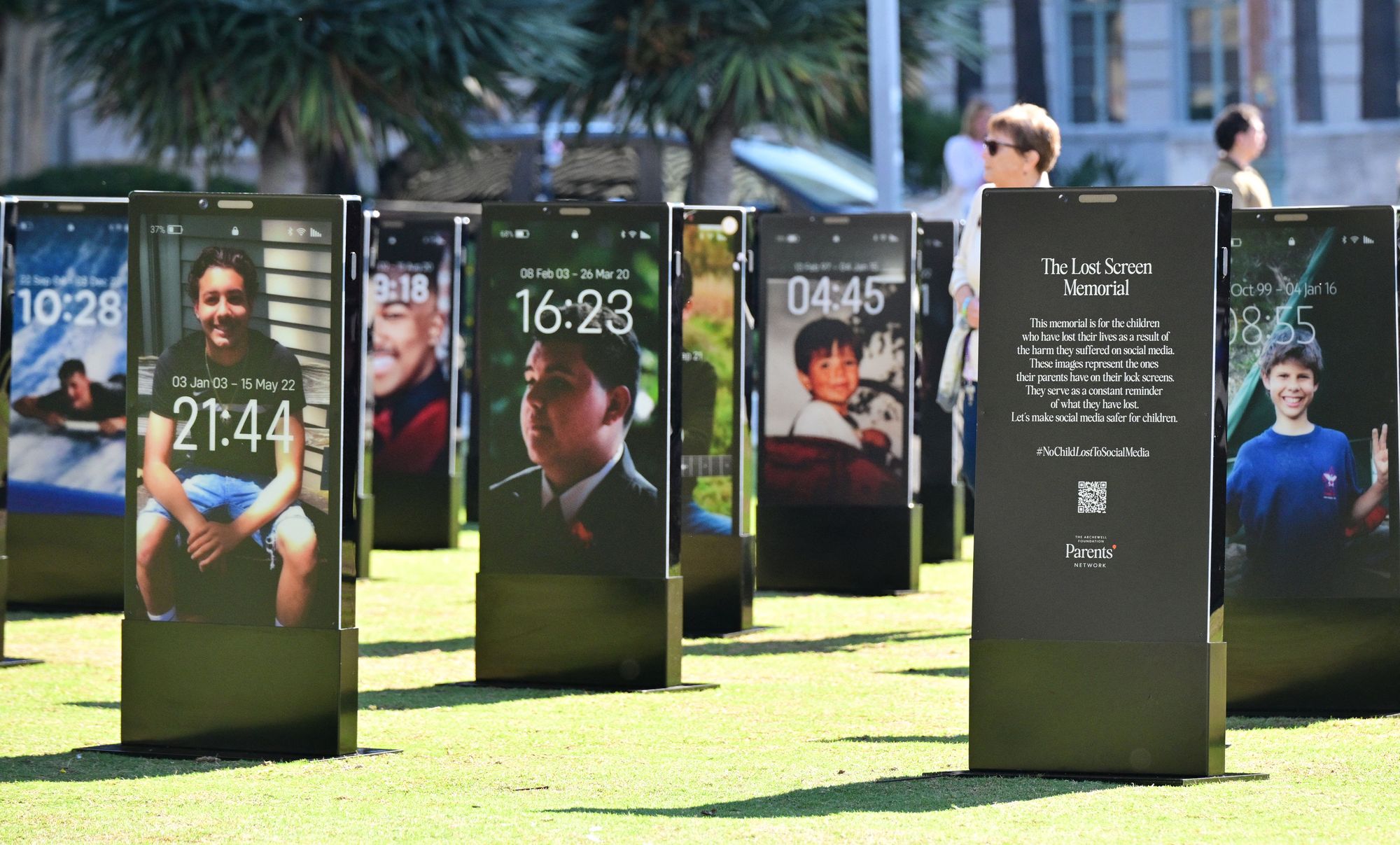
Social media’s hold over Americans is becoming apparent, with the jury in a landmark case last month in California ordering tech giants Meta and YouTube to pay a young woman $6 million in damages after the court heard how she became addicted to the platforms. In New Mexico, a jury in a bellwether case running in tandem to the California one also found that Meta was harmful to children’s mental health and ordered them to pay $375 million in damages for violating state consumer protection law.
The companies have appealed the verdicts but the victory of campaigners in the courts, coupled with emerging scientific research on the potential harms of excessive social media use, suggests the tide is turning.
One study published last year found that a simple digital detox could effectively erase 10 years of age-related cognitive decline, in addition to improving mental health among the 467 participants.

The PNAS Nexus study saw the participants block internet access to their phones via an app for two weeks.
They could still make calls and send text messages on their phones and they could also access the internet from other devices, such as tablets and laptops. The reason being that researchers said phone use is “more compulsive and mindless” than a computer and phones interrupt other social activities such as having dinner, going for a walk or watching a movie.
Researchers found that the average time participants spent online went from 314 minutes to 161 minutes, and by the end of the two weeks, they reported improvements in mood, sustained attention and mental health.
“To put these effects into context, the change in objectively measured sustained attention ability is about the same magnitude as 10 years of age-related decline,” the study’s authors wrote.
Even among the participants who failed to keep to the two-week detox entirely, there was an improvement. “So you don’t have to necessarily restrict yourself forever,” one of the study’s authors, Kostadin Kushlev, an associate professor of psychology at Georgetown University, told The Washington Post. “Even taking a partial digital detox, even for a few days, seems to work.”
Noah Castelo, the study’s co-author and an associate professor at the University of Alberta School of Business, added that the idea for the research came from his own experience of how much his cellphone was interfering with everyday life.
“These technologies can interfere with activities that were otherwise engaging, like having dinner with friends,” he told the outlet.
Another recent study found that even a short time away from being on smartphones can make a difference.
The Harvard study published in the JAMA Network Open in November found that anxiety, depression and insomnia fell on average for participants who reduced their smartphone use for a week.
Researchers noted that not everyone is affected in the same way, and so a key for scientists is identifying the most vulnerable to social media, John Torous, an associate professor and staff psychiatrist at Harvard Medical School and the lead author of the study, told the Post.
The policy response to online social media harms in states and countries varies. Massachusetts this week took one step closer to passing a bill that would ban children under 14 from using social media in the state, while Indonesia became the latest country to usher in a ban for those under 16.
“For some people, their use is too much or too little, and for others it’s just right. To identify who is harmed by it is very important,” Torous told the outlet.
Torous and his team are especially interested in studying those who compare themselves to others in a way that makes them feel worse, people who have sleep issues, and those who resort to the online world as a coping mechanism for loneliness.