









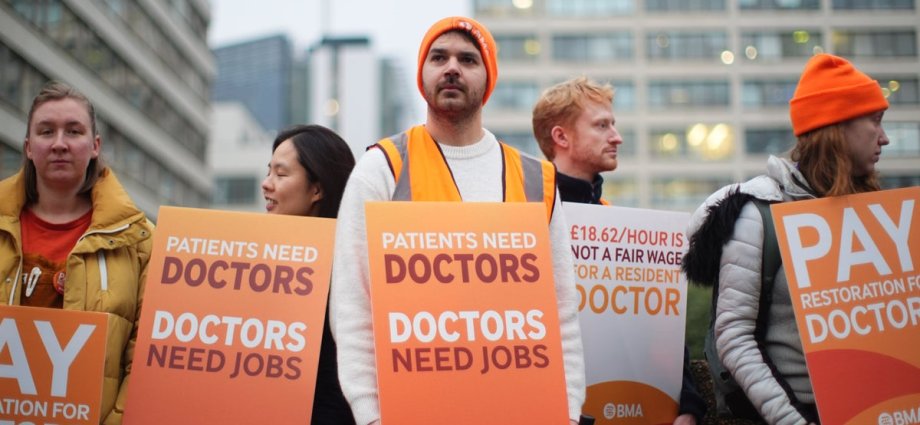
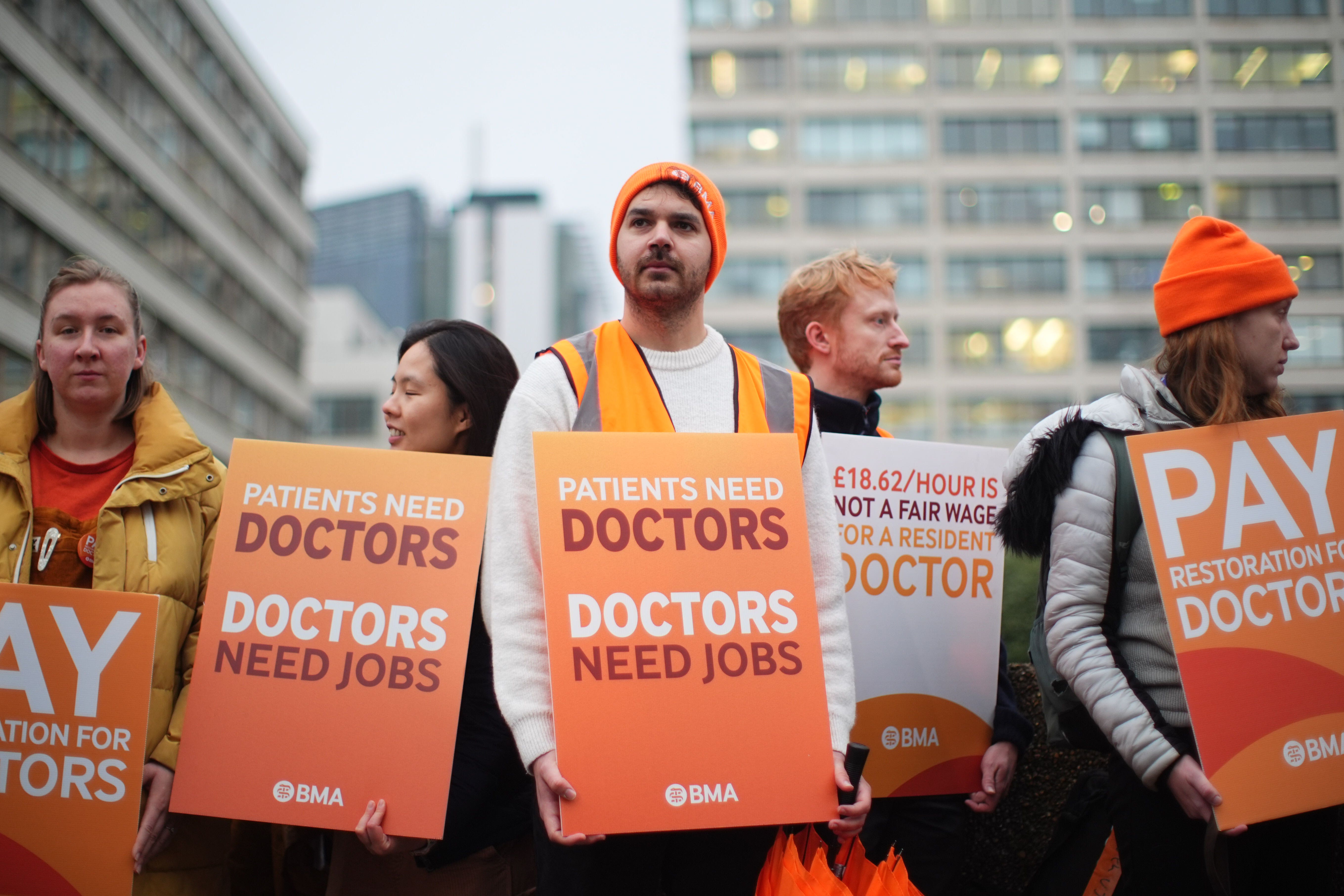
Furious healthcare leaders have hit out at striking resident doctors, warning that the six-day walkout will cause weeks of chaos for patients.
Senior medics have told The Independent that the industrial action, which is due to begin on Tuesday, could be the toughest strike yet, with hospitals scrambling to cover the shifts of tens of thousands of staff during the Easter break.
One “knackered” consultant, who now faces having to fill in for striking staff, hit out at the British Medical Association (BMA), which represents doctors and brought the strike action, saying: “The BMA is trying to put me in an early grave.”
The warning comes after the collapse of talks prompted the government to withdraw an offer of 1,000 additional training places, saying it is no longer considered “financially or operationally” possible after the BMA confirmed its 15th walkout would go ahead and see tens of thousands of resident doctors go on strike.
‘Sting in the tail’
Healthcare leaders have warned that, as well as cancelling appointments and surgeries this week, the disruption will last for weeks, as staff drafted in to cover the strike will need to take leave once it’s over.
Rory Deighton, acute and community care director for the NHS Alliance, told The Independent: “The NHS has had to work out ways of minimising the impact of strikes for patients and staff, not just during but also after walkouts as the full effect is worked through. [Strike] action could leave a real sting in the tail.
“There’s precious little time to prepare, with the bank holiday and Easter break adding to the challenge of adapting services, arranging cover, and then getting back to business as usual in the days and weeks that follow.
“It also comes as health leaders contend with far-reaching organisational change, with posts going locally, regionally and nationally – making it even harder for them to deal with the demands of a strike. It’s not too late for the government and BMA to find a way forward.”
NHS leaders have also warned that this strike could be harder to cope with than previous ones, because of a law change that means less notice is required.
One leader told The Independent: “Each round of industrial action has been harder to manage as other clinical staff have become more weary. This time will be even harder to manage as yet again it falls immediately after a bank holiday period. But it also exploits the new legislation, which means that only 10 days’ notice of strikes has to be given.
“Ten days makes it much harder; if you add a bank holiday into the mix, then it is harder still. Operational teams would normally be planning how to maintain safe, urgent, and emergency care over this period, but they now have to plan for a further six days of industrial action immediately after, so 10 days of disruption in total.”
Another NHS trust chief said: “To be honest, people are a bit stressed as many of the seniors we normally look to act down are already booked off on leave for Easter. So we are struggling to cover the shifts and are worried that we may be asked to pay enhanced BMA rates.”
But NHS England said hospital teams across the country will be working to minimise disruption for patients during the walkout and urged patients to attend planned appointments unless they have been contacted to reschedule, and those with life-threatening emergencies should still call 999 or attend A&E.
Meanwhile, senior consultants have told The Independent the BMA is losing their support. One consultant said the “BMA is trying to put me in an early grave”, while another added: “[We’re] a bit fed up of them [the BMA]… There are big ongoing issues with how resident doctors are treated, and a lot of historic anger about that. But another set of strikes, especially timed after the Easter bank holidays, seems like a tactic designed to cause the most disruption and problems for already stretched services.
“Locally, with the last strikes, lots of residents didn’t partake. I am unsure if they will with these again, as there is a very vocal part of the BMA behind them, but I’m not sure it’s felt the same on the ground.”
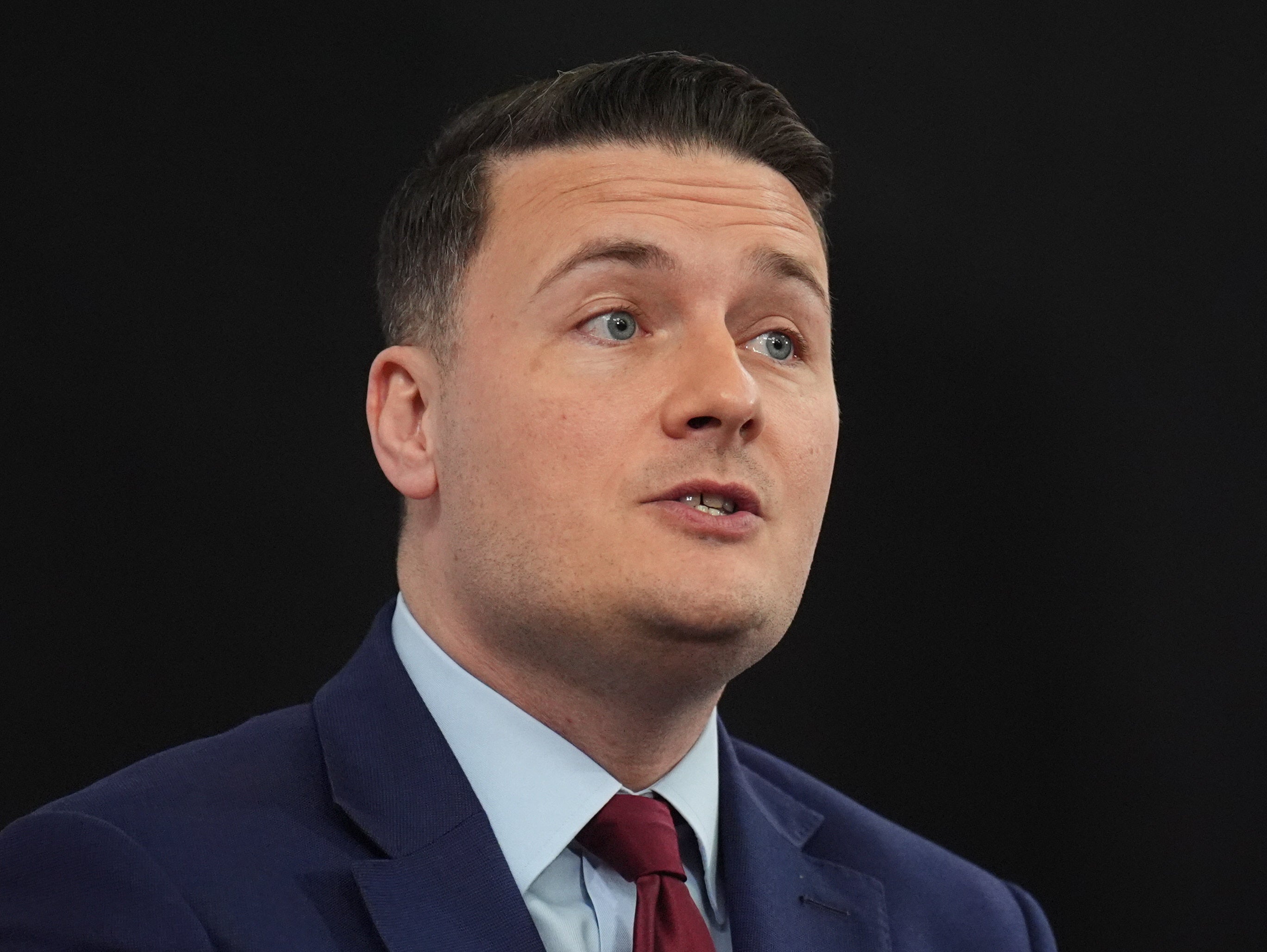
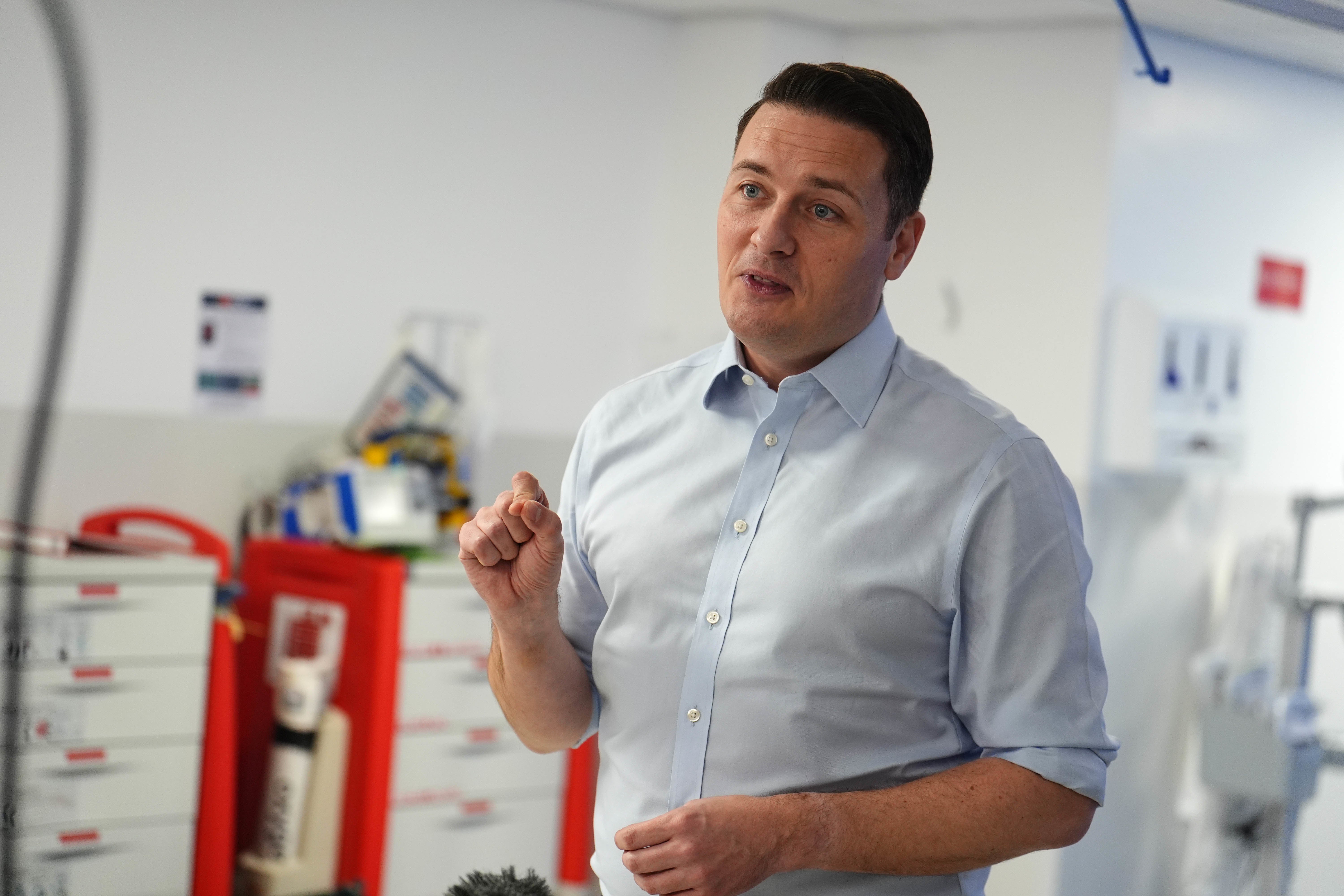
Writing for The Independent last week, health secretary Wes Streeting said negotiations had raised the question about whether the BMA is “serious about reaching an agreement at all”.
He said he did not “underestimate the pressure doctors are under”, but added: “Negotiation is a two-way process. If one side cannot even agree among themselves on an alternative, it becomes increasingly difficult to see how meaningful progress can be made across the table. Good faith cannot run in only one direction.”
Dr Jack Fletcher, chair of the BMA’s resident doctors committee, said on Thursday that he would “happily” meet with ministers over the Easter weekend to avoid walkouts.
When challenged on why the BMA did not put the government’s offer to its members for a vote, Dr Fletcher said it did not meet the threshold, and accused the government of pushing for the move to ensure a six-week referendum.
As the strikes loomed, the head of the NHS in England said last week it would increasingly look at clinical models to reduce its reliance on resident doctors.
Speaking to the Health Service Journal, Jim Mackey said that while the strategy was not meant “as a threat to residents”, it is necessary to consider alternative models “if we continue to have a system that feels unreliable, [when] one of the key things the population needs from us is reliability”. He did not say how that might be achieved.