







Donald Trump has been accused of treating the Iran conflict as a “game show” by a United Nations humanitarian chief after the US hit civilian targets in the country and threatened to “bomb Iran back to the Stone Ages”.
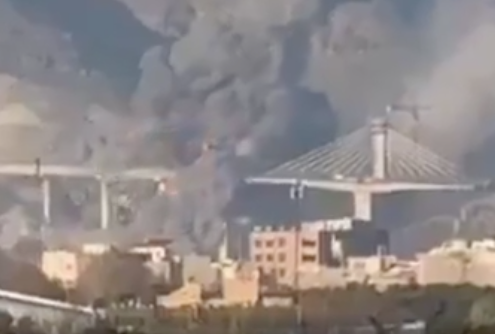
Tom Fletcher, the UN’s under secretary general for humanitarian affairs has accused the US president of war crimes by bombing bridges and threatening further attacks on Iran’s infrastructure, and deplored the “reckless” nature of the conflict and its effect on ordinary people in Iran.
“War is not a game show; peace making is not a real estate deal; the world is not a casino”, said Mr Fletcher, who worked for three former British prime ministers: Tony Blair, Gordon Brown and David Cameron.
“You don’t hit civilian infrastructure. That includes hospitals. You don’t hit schools, energy sources, bridges. That is a war crime. That is absolutely clear in international law.
“Somewhere along the way we have thrown all that aside. We have chosen impunity, indifference and game show gambling over solidarity and humanity”, Mr Fletcher told the BBC.
He added: “We [UN humanitarian aid workers] are out there dealing with the huge unintended consequences of this reckless conflict”.
Mr Fletcher argued there had been a “gradual and then sudden deterioration in the protection of civilians”, adding: “This stuff is not negotiable”.
His comments came after Mr Trump threatened further attacks on Iran’s infrastructure if the country’s leadership refused to agree to US demands.
Posting on Truth Social, he said: “Our Military, the greatest and most powerful (by far!) anywhere in the World, hasn’t even started destroying what’s left in Iran. Bridges next, then Electric Power Plants!
“New Regime leadership knows what has to be done, and has to be done, FAST!”
It comes in the wake of an open letter, signed by more than 100 experts on international law, expressing “profound concern” about what they see as serious violations of international law by the US, Israel and Iran.
The law experts say both the conduct and rhetoric of the US in the war is profoundly concerning and in some cases amounts to violations of international law. They say the attack on Iran was a clear breach of the United Nations Charter, which prohibits the use of force outside of self-defence or when authorised by the UN Security Council.
The experts include former US government officials and professors in international law. They point to “alarming rhetoric” being used by US officials, including President Trump’s threats to “obliterate” Iran’s power plants.
They also highlight the attack on a school in Minab on the war’s first day, which evidence suggests was the result of a US strike, saying it could amount to a war crime if evidence is found that those responsible were reckless. The Pentagon has said it is investigating the attack.
In response to the open letter, a White House spokesperson told the BBC that Trump was “making the entire region safer and more stable”.
The spokesperson added: “The president does not make these incredibly important national security decisions based on the opinions of these so-called ‘experts’, but on the best interest of the American people.”
Mr Trump’s threat to “bomb Iran back to the Stone Ages” was over the need to strike a deal to open the Strait of Hormuz and alleviate chaos in the energy markets.
In the face of ongoing military strikes by the US and Israel, Iran has tightened its grip on the maritime pinchpoint, sending global oil and gas prices skyrocketing.
Foreign secretary Yvette Cooper has signalled Iran could face further sanctions if the vital waterway remains closed after holding talks with more than 40 nations from across the world.
She said collective action to increase pressure on Tehran was being discussed as she accused the country of trying to “hold the global economy hostage” with its stranglehold on the key trade route.
But Mr Trump launched renewed criticism of the UK’s approach to the conflict on Thursday, mocking Sir Keir Starmer as weak and taking a fresh dig at the UK’s navy.
The US president impersonated the Prime Minister as he recounted Sir Keir saying he had to ask his team about sending “two old broken-down aircraft carriers” to the Middle East.
Mr Trump said Britain “should be our best” ally, but had not been in his latest sideswipe over the UK’s refusal to be drawn into the conflict with Tehran, which has emerged in a video from a private Easter White House lunch.
It is not the first time the American leader has been critical of the UK’s aircraft carriers, having previously dismissed them as “toys” that “aren’t the best”.
In the face of criticism by Mr Trump, Ms Cooper said that “our job is to take decisions in the UK national interest”.
“Iran’s closure of the Strait of Hormuz is a direct threat to global prosperity,” she said in a statement following the virtual meeting on Thursday.
“Iran is trying to hold the global economy hostage in the Strait of Hormuz.
“They must not prevail. To that effect, partners today called for the immediate and unconditional reopening of the Strait and respect for the fundamental principles of freedom of navigation and the law of the sea.”
Britain is seeking to lead the diplomatic initiative, including countries such as France, Germany and some Gulf nations, after Mr Trump signalled it was up to others to unblock the waterway not relied upon by the US.
After chairing the video call, Ms Cooper told broadcasters on Thursday: “We’ve taken a different view from the US from early on and we didn’t get drawn into offensive action in the Middle East, because we thought that there were real concerns about escalation risks, impact – including on the economy – and also the need for a proper plan.”