










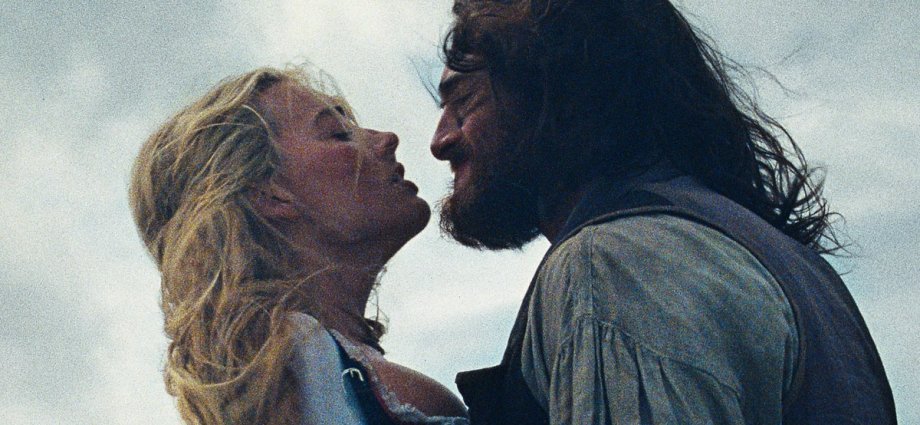
Believe women” is a phrase we’ve heard a lot in recent times – and quite rightly. But there is one instance in which, I must confess, I don’t believe women. And that is every time one tells me that Wuthering Heights is her favourite book.
I still remember the first time I picked up a copy of Emily Brontë’s much-vaunted 1847 literary classic. I’d loved eldest Brontë sister Charlotte’s Jane Eyre; I’d developed a soft spot for the quiet radicalism of youngest sister Anne’s The Tenant of Wildfell Hall. Now, in my mid-twenties, it was finally time to take on the most extravagant, gothic of masterpieces, penned by the extraordinary middle child herself.
Ill-fated lovers torn asunder, yearning across bleak northern vistas, desire so powerful it transcends the grave – I was all set to swoon over this “tragic love story” between Cathy and Heathcliff, in which the backdrop of the Yorkshire Moors “represents the wildness of Heathcliffe’s character” (this information having been gleaned from an episode of Friends in which Phoebe and Rachel join a book group).
And this Heathcliff character sounded like “a bit of me”, as they say on Love Island, a heady mix of Mr Darcy’s brooding, glowering allure and Rhett Butler’s arrogant, magnetic charm. I’ll admit it: I was ready to have my head turned by a sexy leading man in period dress. Sue me.
Yet it wasn’t long before I found myself experiencing the literary equivalent of all dressed up with nowhere to go. Each of the characters, I swiftly discovered, was profoundly and irredeemably unlikeable, by turns cruel, mean-spirited, selfish, wet and/or weak. This cast of misfits ended up dropping dead from all manner of fevers and childbearing and alcoholism and general malaise – which might have elicited some kind of emotional response, had I cared whether any of them lived or died. As it was, the only rational reaction to each demise seemed to be, simply, “good riddance”.
Just to make things even more insufferable, every one of them seemed to be called an unholy combination of the same names mixed together – Linton, Earnshaw, Heathcliff – in a way that scrambled my brain and rivalled only Gabriel García Márquez’s One Hundred Years of Solitude for forcing repeated consultation of the family tree. The piece de resistance is surely Catherine Linton, herself daughter of the infamous Cathy Earnshaw, who marries first one cousin, then another, to become Catherine Heathcliff, then Catherine Earnshaw. It all feels nothing short of elite-level trolling from Emily.

Then there’s the novel’s non-linear narrative framework, which uses multiple narrators telling stories within stories within stories: a kind of early Inception with none of Christopher Nolan’s joyful spectacle. This device, largely panned by critics at the time, has since been held up as a stroke of genius – which just goes to show that you only need wait a sufficient amount of time before something becomes fashionable (as demonstrated by the cursed resurgence of the bucket hat).
Within all this relaying of tales, Emily also saw fit to write swathes of text phonetically to indicate certain characters’ regional accents. The reader couldn’t be trusted to imagine a thick West Riding brogue, and so we’re invited to wade through mind-curdling dialogue such as “T’ maister’s down I’ t’ fowld”, “Yah dunnut loike wer company, there’s maister’s” and, a personal favourite, “There’s nobbut t’ missis; and shoo’ll not oppen ’t an ye mak’ yer flaysome dins till neeght”. It’s enough to make me reconsider my stance on book burning.
And, at the heart of it all, that fabled “love story” between Cathy and Heathcliff. It’s been romanticised and elevated as some kind of tragic, star-crossed lovers’ tale across multiple big and small-screen adaptations over the years – the latest being Emerald Fennell’s upcoming “Wuthering Heights”, starring Jacob Elordi and Margot Robbie, with the quote marks intentionally inserted to stress that this zeitgeisty hot take is likely to stray pretty far from the original. The film’s release date is slated for Valentine’s weekend; the trailer pronounces it to be inspired by “the greatest love story of all time”. To which I can only scratch my head and say, “You what, mate?” I don’t know what Emerald’s been reading, but it surely can’t be the same book that has been consistently disappointing me for more than a decade.
Far be it from me to deny any woman the pleasure of losing her mind over Jacob Elordi sporting a gruff Yorkshire accent and a cravat, but let the record show that the character of Heathcliff, as Emily wrote him, is not a romantic lead. “Grade A a***hole” would be far more accurate a description: a nasty, spiteful abuser who, it’s very heavily implied, commits acts of sexual violence against his wife Isabella after marrying her out of spite. He’s literature’s deeply problematic toxic ex that we keep “hero-washing”, somehow collectively convinced that maybe he wasn’t really that bad, after all. (Spoiler: he was.)
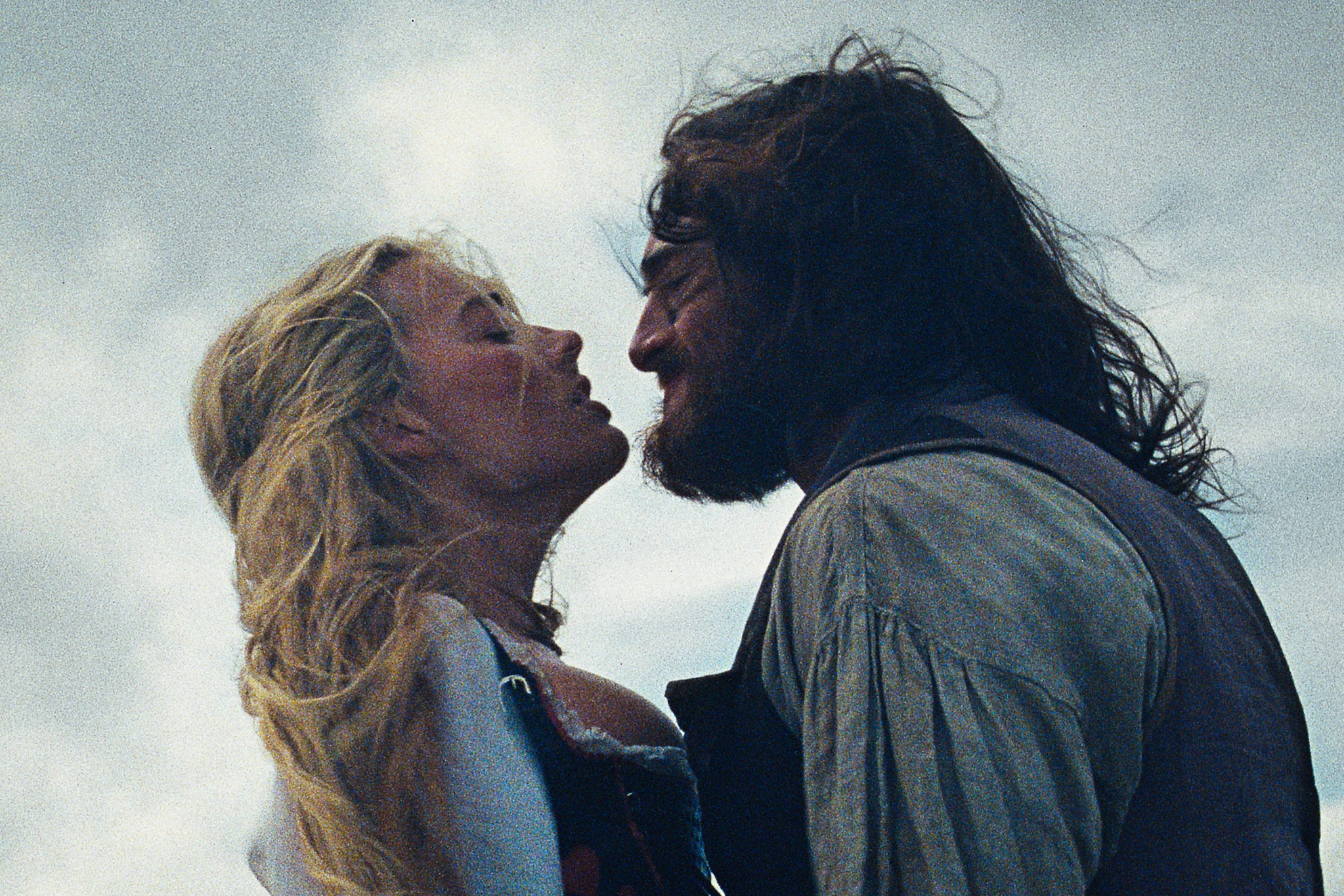
His and Cathy’s doomed romance has about as much in common with love as a writhing pit of venomous snakes, a noxious concoction of possessiveness, jealousy and unhealthy fascination that poisons everything it touches. I suppose one could argue that they’re a perverted version of soulmates, but only in the same way that the two very worst people you’ve ever met were “made for each other”.
In fact, it seems to me that the only good thing to have come out of Wuthering Heights is the near-perfect 1978 Kate Bush song of the same name, which captures all of the novel’s best bits – and allows you to wail, “It’s me, I’m Cathy, I’ve come home!” like a banshee while attempting an interpretive dance – without actually having to read the damn thing.
Of course, we’re all going to have different opinions and different tastes – what a world it would be if we were all the same, etc etc – but I’m afraid I simply refuse to give credence to the idea that anyone has ever derived genuine pleasure from trudging their way through this endlessly maudlin tale.
I can only hope that the latest adaptation deviates as wildly from the text as those inverted commas suggest – at least then there’s a slight chance it might be somewhat enjoyable.
‘Wuthering Heights’ is in cinemas from 13 February