










The NHS is set to trial a new device that could help the eight million people in the UK with the debilitating condition, sleep apnoea.
The chronic disorder causes breathing to repeatedly stop and start during the night due to an airway blockage, leading to severe tiredness, poor concentration, higher risk of heart disease, and increased likelihood of road and workplace accidents.
Although devices such as continuous positive airway pressure (CPAP) machines, which deliver pressurised air through a mask to keep the airway open during sleep, remain the NHS gold-standard treatment, more than half of patients stop using them within a year, often because they find them uncomfortable or disruptive.
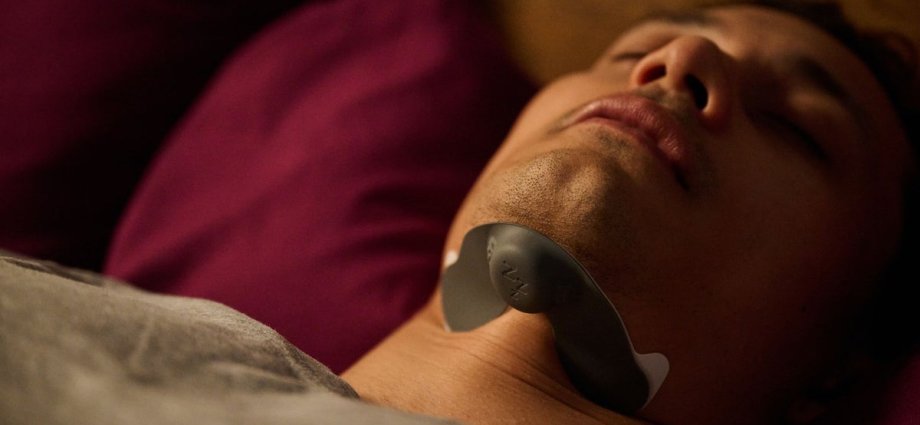
But a new device, which is worn discreetly under the chin, requires no face mask, mouthpiece or invasive procedure, and is set to be tested by experts at Guy’s and St Thomas’ NHS Foundation Trust and King’s College London.
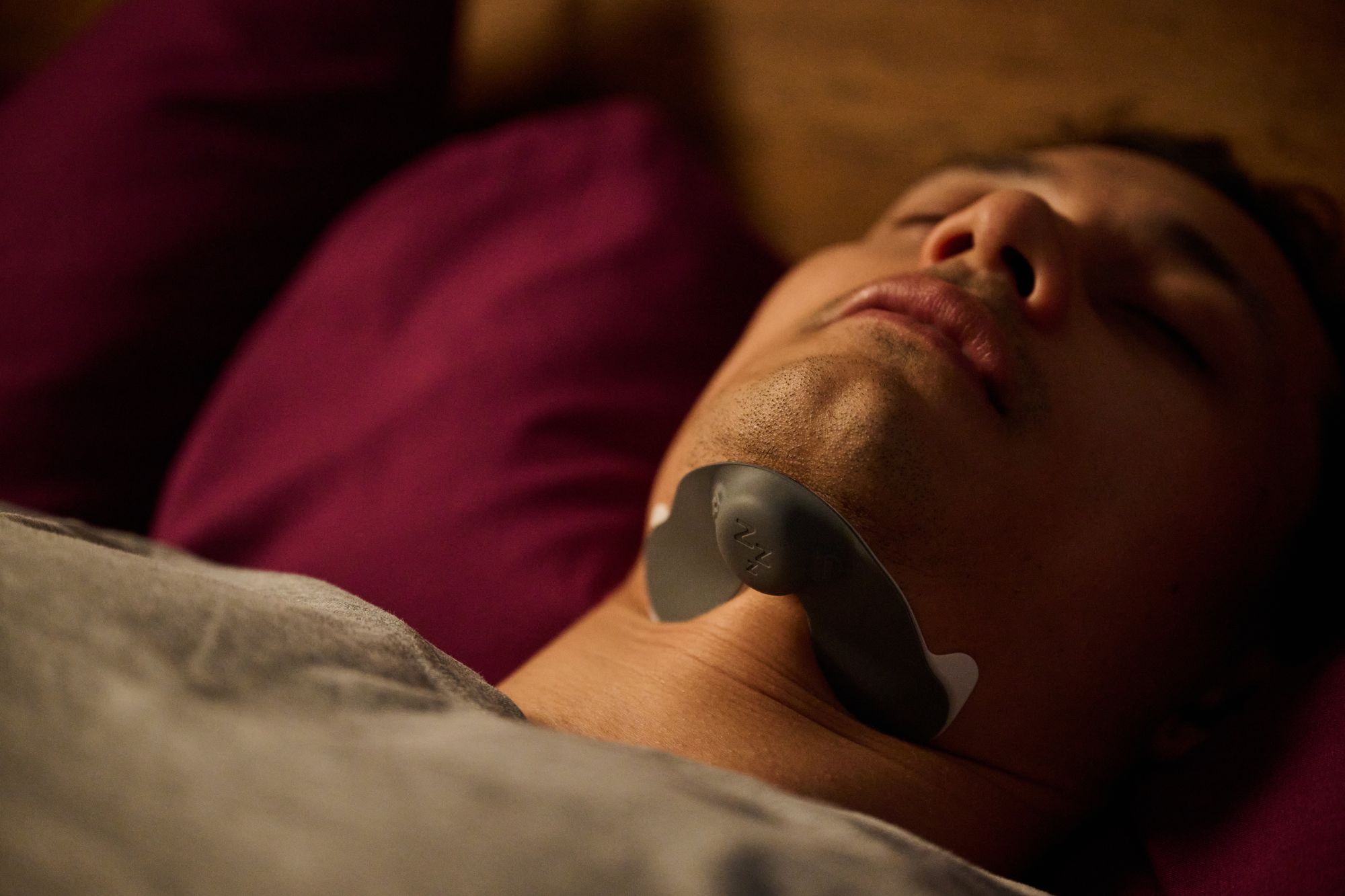
The “Zeus Sleep device” uses gentle electrical stimulation to help prevent airway collapse during sleep by keeping the tongue and throat muscles from relaxing.
If left untreated in the long-term, sleep apnoea can not only cause excessive tiredness during the day, but it can also increase the risk of high blood pressure, stroke, heart disease and type 2 diabetes.
“With the treatment for sleep apnoea, we have an effect on overall mortality and cardiovascular mortality,” Professor Joerg Steier, of King’s College London, told The Independent.
The expert in respiratory and sleep medicine added: “The risk is, you stop breathing, and when you stop breathing, then the oxygen levels fall, and every time this happens, the heart then speeds up to disseminate oxygen faster throughout the body.”
He explained that as the heart rate, blood pressure and stress hormones increase, the brain wakes up from a deep sleep into a superficial sleep state to wake up the body and activate the upper airway muscles. This muscle reactivation allows the body to breathe.
But this pattern happens repeatedly with sleep apnoea and leads to sleepless nights.
“Unfortunately, the more obese our population gets, the more often we see this. So we have seen the prevalence rates of sleep apnoea have gone up,” Prof Steier said.
That is because excess fat deposits around the neck and throat narrow the upper airway, making it more likely to collapse during sleep.
Prof Steier’s 20 years of research at King’s College London sparked the idea for the device. He explained that at about 7cm wide, it is “hardly visible” when compared to a CPAP machine, looks like a patch in the shape of a boomerang and sits underneath the lower jaw and tongue.
While permanent implantable devices that also stimulate the muscles are available, they are expensive and require surgery, so they can’t be provided to many patients.
While a TENS machine, a portable, battery-operated device that delivers mild electrical currents on the skin, can be bought for about £30, this device is currently sold to help reduce snoring for £250. But that’s far cheaper than implantable devices, which can cost £20,000, according to Prof Steier.
“We know it’s not as good as CPAP therapy, particularly for the high end of the severe spectrum of the disease. But it’s good for the majority of moderate and mild conditions,” Prof Steier added.
UK sleep health company Zeus Sleep has been awarded £1.48 million in public funding from the National Institute for Health and Care Research to support the study.
Researchers are aiming to recruit about 200 patients across seven NHS areas in the UK. It’s hoped the study will start this summer and the data will be collected by 2028.
Earlier NHS-led studies have shown promising results, with 84 per cent of users reporting better sleep, 78 per cent feeling more alert during the day, and 85 per cent continuing to use the device long-term, a far higher rate than CPAP currently used on the NHS.