








The secret appeal of Home Alone was never really the booby traps.
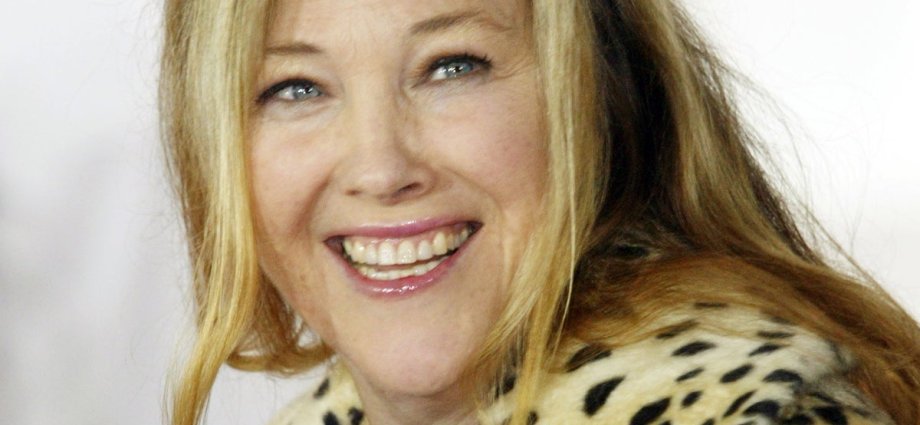
What every child wanted was what Macaulay Culkin had: a house to themselves, no rules, unlimited ice cream. This meant that Catherine O’Hara, playing his catastrophically negligent mother, was performing a curious kind of heroism. I was six when I first saw her racing through Chicago airport in full-blown meltdown, and even then I understood she was the film’s emotional engine. If her character’s flustered inadequacy was what drove the plot, it was O’Hara’s wild-eyed panic that gave the film electricity. O’Hara, who has died aged 71 following a brief illness, spent five decades making deeply flawed people not just bearable but beloved.
For my generation, it’s a role with which she will be forever associated. But one performance, however flawlessly executed, shouldn’t be allowed to obscure the extraordinary scope of what she achieved. O’Hara specialised in playing deluded narcissists whose self-image bore absolutely no relationship to reality. Yet you rooted for them anyway. Beyond technical skill, this demanded a rigorous refusal to condescend to her characters.
Born in 1954, she came up through Toronto’s Second City in the mid-1970s, understudying Gilda Radner before joining SCTV, that legendary sketch-comedy factory. She won an Emmy for her writing, and created magnificently absurd characters: Lola Heatherton, a third-rate lounge singer; pitch-perfect impersonations of Katharine Hepburn and Brooke Shields. What set her apart was an instinct for finding pathos in pomposity.
Her voice was an instrument of extraordinary, endlessly surprising range. As Sally in Tim Burton’s The Nightmare Before Christmas (1993), she sang with a wistful, aching quality utterly at odds with the brassy, pliable trill she deployed elsewhere. That she could oscillate between such radically different registers – the soulful wallflower and the theatrical egotist – without strain was testament to a versatility that years of sketch comedy had trained into her bones.
This gift came into its own in Christopher Guest’s mockumentaries, which suited her perfectly. Guest would hand actors skeletal outlines – sometimes just 15 pages – and they’d improvise everything else. “Acting for thrill-seekers,” O’Hara called it. In Best in Show (2000), she’s Cookie Fleck, a Florida housewife in leopard print who’s married to a catastrophically clumsy man, reminiscing about her romantic history with alarming specificity. O’Hara gives her a gum-chewing vulgarity that softens into something more tender.

In A Mighty Wind (2003), she’s a folk singer whose breakup has precipitated her partner’s nervous breakdown. She and long-time collaborator Eugene Levy played Mitch & Mickey, reunited after decades apart. The film’s denouement hinged on whether they’d recreate their signature smooch during “A Kiss at the End of the Rainbow”. O’Hara learnt autoharp for the song; when they performed it at the 2004 Oscars, she kept her eyes locked on Levy, projecting love and regret simultaneously. It lost to a Lord of the Rings ballad.
But her masterpiece is For Your Consideration (2006). She’s Marilyn Hack, a jobbing actress who catches a whisper of Oscar buzz and proceeds to dismantle herself pursuing it. O’Hara charts the descent with laser-guided precision: the woeful plastic surgery, the obsequious television appearances, the gradual erasure of whatever authentic self existed beneath the professional carapace. There’s a point-and-mock element to the character, but O’Hara deepens this into a portrait of artistic desperation, because of her understanding that hope – particularly the late-arriving kind – can be as corrosive as cynicism.
Empathy pushed to such uncomfortable extremes was O’Hara’s great talent. Take Delia Deetz in Burton’s Beetlejuice. Lesser actors in this macabre fantasia would have played her as merely eccentric. O’Hara made her something stranger – a grotesque so genuinely committed to her dreadful art that you almost admired the conviction. When she reprised the role last year in Burton’s belated sequel, older but no less absurd, it felt less like nostalgia than a reminder she’d never stopped being unique.
The late-career fillip came via Schitt’s Creek. The Canadian sitcom was already gaining considerable traction before the pandemic sent it stratospheric – a sweet antidote to lockdown anxiety. Across six seasons, the show followed the formerly wealthy Roses, forced by fraud to rebuild their lives in a tiny town. O’Hara played Moira, the former soap star matriarch with a wig collection and an accent from nowhere – or rather, from everywhere, a vocal affectation assembled from spare parts of the mid-Atlantic register. The character was pure O’Hara: monumentally self-absorbed, completely ridiculous, and somehow the show’s wounded core. It won her the Emmy and Golden Globe acting awards that had eluded her for decades. Moira’s wardrobe became as famous as her malapropisms, but it was O’Hara’s voice – that wonderfully bizarre instrument – that made the character indelible.

Watch Apple TV+ free for 7 day
New subscribers only. £9.99/mo. after free trial. Plan auto-renews until cancelled.
ADVERTISEMENT. If you sign up to this service we will earn commission. This revenue helps to fund journalism across The Independent.

She married production designer Bo Welch in 1992, having met him on the Beetlejuice set. They had two sons together. By all accounts, she was as unlike her characters as it’s possible to be: warm, self-deprecating, determinedly private. “I love the idea,” she once remarked, “that human beings think they can control the impression they make.” Coming from someone who’d spent her career exposing that delusion, it sounded halfway to a mission statement.
Among her final roles was opposite Seth Rogen in Apple TV+‘s The Studio, playing a Hollywood executive aggrieved to have been given the sack. She earned yet another Emmy nod. Quite right too. Her last public appearance came at the Toronto Film Festival in September 2025, where she received a lifetime achievement award. Levy, her dear friend and co-star from SCTV, the Guest films, and Schitt’s Creek, presented it to her. “When I think of my happiest days in show business,” she said, “I realise most of them have been with you.”
Though she didn’t do many interviews, what O’Hara said always stuck. “I think everyone is born funny,” she once remarked. “Sadly, some lives beat it out of them.” Hers never did. What an awful loss.