










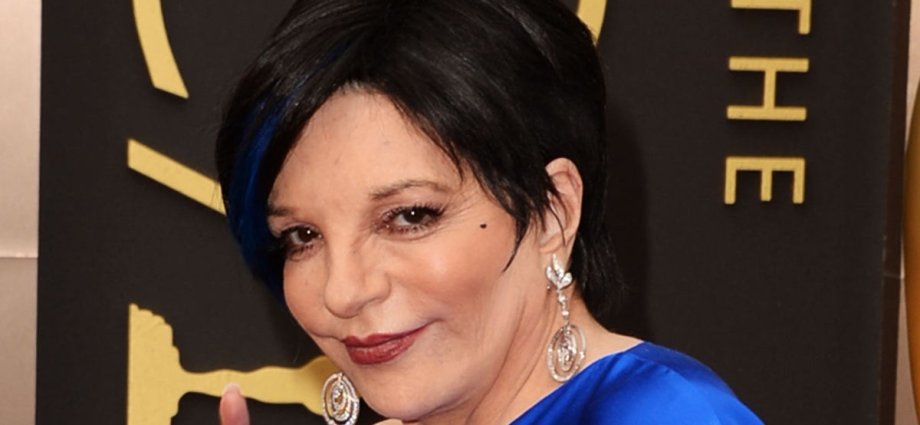
Liza Minnelli has pushed back at criticism over the use of AI in her new single and clarified that the technology was used for musical arrangements, not to replicate her voice.
Minnelli’s new track, “Kids Wait Till You Hear This”, was released this week as part of The Eleven Album, a compilation by AI voice platform ElevenLabs.
The song, which also shares its title with Minnelli’s forthcoming memoir, features an AI-created dance and deep-house arrangement, with Minnelli contributing spoken lines and shout-outs rather than sung vocals.
On Thursday, Minnelli said in a statement on Facebook that she had received backlash for the track, but she would never allow “great company” ElevenLabs to “copy my voice”.
“I’m happy as a clam, laughing like hell and losing my mind! It’s all goin’ on at the time,” the Broadway icon began.
She goes on to describe the ElevenLabs as a “six billion dollar techno behemoth” that does “amazing things”.
“What I will not allow this great company to do? Create, clone or copy my voice! On this dance track, “Kids Wait Till You Hear This” which is a tease for my book, we used AI arrangements. Not AI vocals. A few trolls didn’t bother to read the truth, check with me or my partners. The shout outs are all mine!” she wrote.
“Go listen, enjoy, and shake your pretty buns to the music, as we glide down the runway to send my book into the world and your very own hot hands.”
In a press release accompanying the album, Minnelli explained her reasons for participating in the project.

Enjoy unlimited access to 100 million ad-free songs and podcasts with Amazon Music
Sign up now for a 30-day free trial. Terms apply.
ADVERTISEMENT. If you sign up to this service we will earn commission. This revenue helps to fund journalism across The Independent.
Enjoy unlimited access to 100 million ad-free songs and podcasts with Amazon Music
Sign up now for a 30-day free trial. Terms apply.
ADVERTISEMENT. If you sign up to this service we will earn commission. This revenue helps to fund journalism across The Independent.
“I’ve always believed that music is about connection and emotional truth. What interested me here was the idea of using my voice and new tools in service of expression, not instead of it,” she said.
“I grew up watching my parents create wonderful dreams that were owned by other people,” Minnelli said, referring to her parents, Judy Garland and Vincente Minnelli.
“ElevenLabs makes it possible for anyone to be a creator and owner. That matters.”
Minnelli last released new music in 2013, when she recorded “A Love Letter from the Times” for the second season of the NBC musical drama Smash. Her most recent studio album, Confessions, was released in 2010.

The album also includes contributions from other artists, including Art Garfunkel, whose track “Authorship” includes a spoken excerpt from his memoir What Is It All But Luminous set to an AI-generated piano backing.
The album, according to ElevenLabs, uses its AI system to help artists “spark new ideas and accelerate their creative workflows” and helps them “co-create” original music.
Both Minnelli and Garfunkel, along with Oscar winners Matthew McConaughey and Michael Caine, are part of ElevenLabs’ Iconic Voice Marketplace, which allows the company to create licensed synthetic versions of their voices for authorised commercial use.
Last week, McConaughey filed to trademark his signature catchphrase “alright, alright, alright” to protect his likeness from unauthorised AI misuse, including his voice, his smile, and the famous phrase, which he first improvised in Richard Linklater’s 1993 comedy Dazed and Confused.
In September last year, multiple stars spoke out after a Deadline report that said several Hollywood talent agents had shown interest in signing “AI actress” Tilly Norwood. Norwood is a white, brunette, and brown-eyed entirely virtual AI creation owned by Xicoia, a talent studio attached to the AI production company Particle6.
In April last year, Australian Radio Network’s CADA station faced heavy backlash after using ElevenLabs to create an AI-generated host named Thy for six months.