










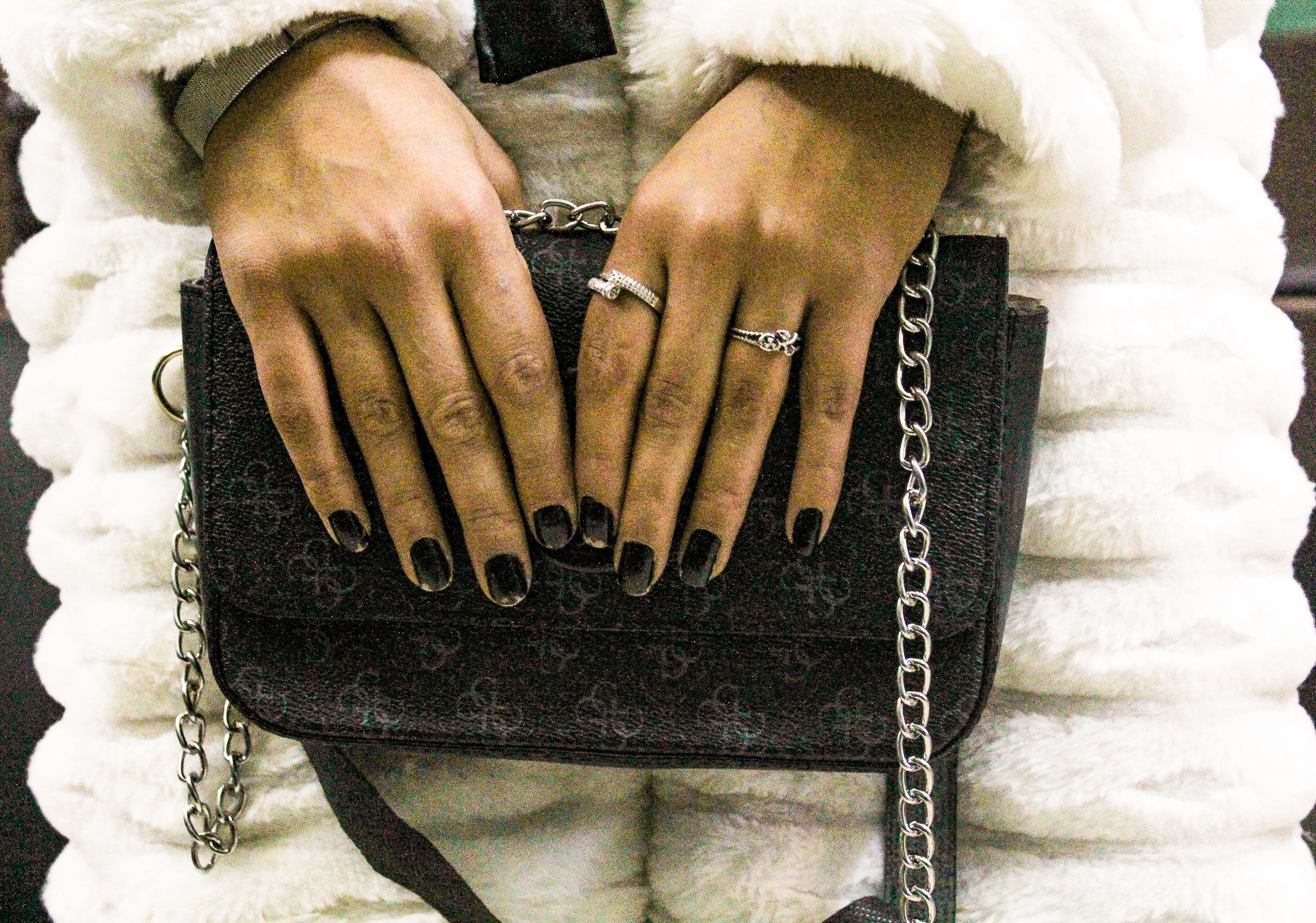
Noor* has travelled to Damascus from Madaya, a small town in the mountains surrounding the Syrian capital. Her nails, painted black, are visibly bitten as she moves her hands while she speaks. Her home became known around the world in 2016 when it was under siege by Bashar al-Assad’s forces – with no food to eat the starving population was forced to survive on leaves and grass.
After the brutal Assad regime was ousted by opposition forces in December 2024, many Syrians celebrated the fall of the longtime dictator, but just a few weeks later the only women’s center in Madaya closed down. It would have devastating consequences for the local women, including Noor, 21. The center was her only safe space to escape a violent family home.
Getting married in the summer of 2025 only made Noor’s situation worse. Just twenty days later she divorced her husband. “He was an alcoholic and he beat me,” she says. “From the second day he started to break everything. He broke the dishes, he opened the cupboards, he threw everything on the ground.” Her father disagreed with her decision to end the marriage. “My dad held a knife in front of me and he told me, ‘if you do not get back to your husband I will kill you.’” She continues to bear the brunt of his violence to protect her other family members. “He hates me –- if he didn’t beat me, he would beat my mum or my sister,” she says.
Her family situation has only deteriorated further in the last few months. Noor’s father recently kicked her out of the house for coming back from work at 5.30pm. “I arrived home and he said, ‘You are late, go outside, find somebody to feed you, I will not accept you to stay at my home and to arrive at late hours,’” she says, adding that she has also tried to run away from home several times. “I want to live alone, but I can’t do it.” Her uncle told her that if she leaves home, her dad will divorce her mum. “They always make me feel that if I left I will be responsible for all my family. My dad will destroy my mum and all the family will be broken.”
The center in Madaya was run by the Syrian Family Planning Association (SFPA), a non-profit which focuses on sexual and reproductive health, and combating gender-based violence (GBV). They run 14 women’s centers in 14 governorates across Syria, along with 11 clinics. The center was where Noor went to get psychosocial support. “The counselor helped me to know how to face my family, and what to do when I was subjected to physical violence. She was giving me solutions.”
SFPA has been forced to close down three women’s centers in the Damascus governorate over the last year, including the one in Madaya. Ruba Lakmssha, director of gender-based violence at SFPA, says the reason they cannot open another women’s center in Madaya or in a nearby area is because of aid cuts, particularly those by Donald Trump in the US. The group has lost 15 staff members because of delays in paying salaries. Before Trump closed the US Agency for International Development (USAID) – bringing its remnants under the auspices the State Department – the US was the single largest humanitarian donor to Syria, accounting for a quarter of the country’s humanitarian funding in 2024, nearly $400 million (£298m).
What should be a watershed moment for Syria as it emerges from 14 years of civil war is being undermined by a funding crisis. Noor is now trying to find other ways to cope. She says she can’t report her father to the police, and has taken up smoking to ease her stress. Her friends are also supporting her, along with a volunteer group she has started in Madaya to pass on what she has learned to other women. “Our team includes doctors, engineers, service providers and specialists. We work on spreading awareness about rights, social skills, life skills, and psychosocial support,” she says. They try to meet as often as they can, however they don’t have a dedicated place where they can gather – the nearest youth center is an hour’s drive away and would cost them a lot to get to. “We need a safe space,” she says.
’A 40% cut in our budget’
At the end of 2025, only 32 per cent of Syria’s Humanitarian Response Plan for 2025 had been funded, with $2.15 billion (£1.86bn) more needed to meet requirements. With over three million displaced Syrians returning to their homes over the last 12 months, already limited public services are now completely overstretched.
As non-governmental organisations (NGOs) face tough decisions on where to focus their efforts, essential programmes for women and girls – – such as GBV support and maternity care – – are being slashed, eroding hard-won rights and protection. “Unfortunately any activity related to gender is cancelled, because it’s treated not as a life-saving kind of situation. But it is life-saving,” says Yasmin Al-Syed, protection specialist at the Syrian non-profit Hand in Hand for Aid and Development.
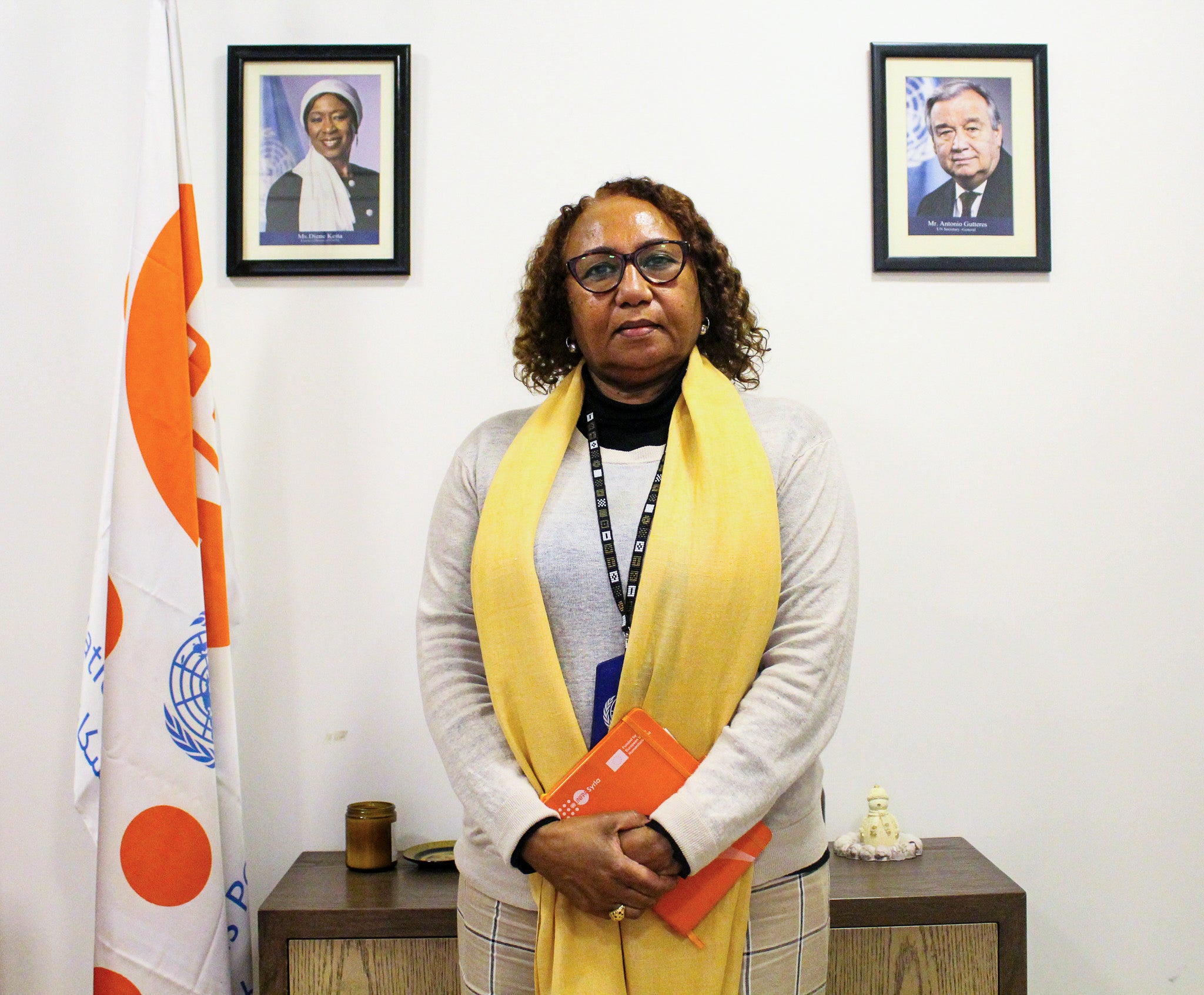
Many other women in Syria are in a similar position to Noor as the cuts are starting to be felt across the country – and it is likely to get worse over the next year. SFPA is partnered with the United Nations’ sexual and reproductive health agency (UNFPA), which is also facing hard choices. “We are expecting [a] more than 40 per cent cut on our budget, if we compare 2025 to 2026,” says Enshrah Ahmed, UNFPA’s representative in Syria.
The agency supports 100 facilities that work on sexual and reproductive health and rights in Syria and partially support 700 more. They will have to close one third of all those facilities in the next year, along with 30 of 78 safe spaces for women and girls which support survivors of gender-based violence. “The impact is going to be huge,” Ahmed says. “We’re basically working on one of the essential human rights, which is the right to life. Imagine how many women will lose their lives.”
Following the lead of the US, other major donor governments like the UK, France, and Germany, have also announced their own cuts, which Juan Gabriel Wells, the country director in Syria for the International Rescue Committee (IRC), one of the world’s largest NGOs, describes as a “race to the bottom”. The IRC has worked in Syria since 2012, and are now dealing with a 30 per cent cut in funding. They have already closed four safe spaces for women and girls over the past year and are trying to cultivate other sources of funding from philanthropists and private foundations.
Despite this, the IRC opened a new women’s center in Homs, a city in western Syria, in October. The Shams Center for Women and Girls serves more than 150 women, including 20 who receive support for gender-based violence. “Women have been flooding in [to the new center]. That just gives you a sense of the demand for it,” says Wells. Before the fall of Assad, areas that were tightly controlled by the regime – like Homs and Damascus – were inaccessible to many NGOs, resulting in a lack of services tailored to women. Now, with the influx of returnees –- both voluntary and forced –- and the increasing pressures caused by an economy eviscerated by war and sanctions, these programmes are needed more than ever.
‘Fear is very deep in the community’
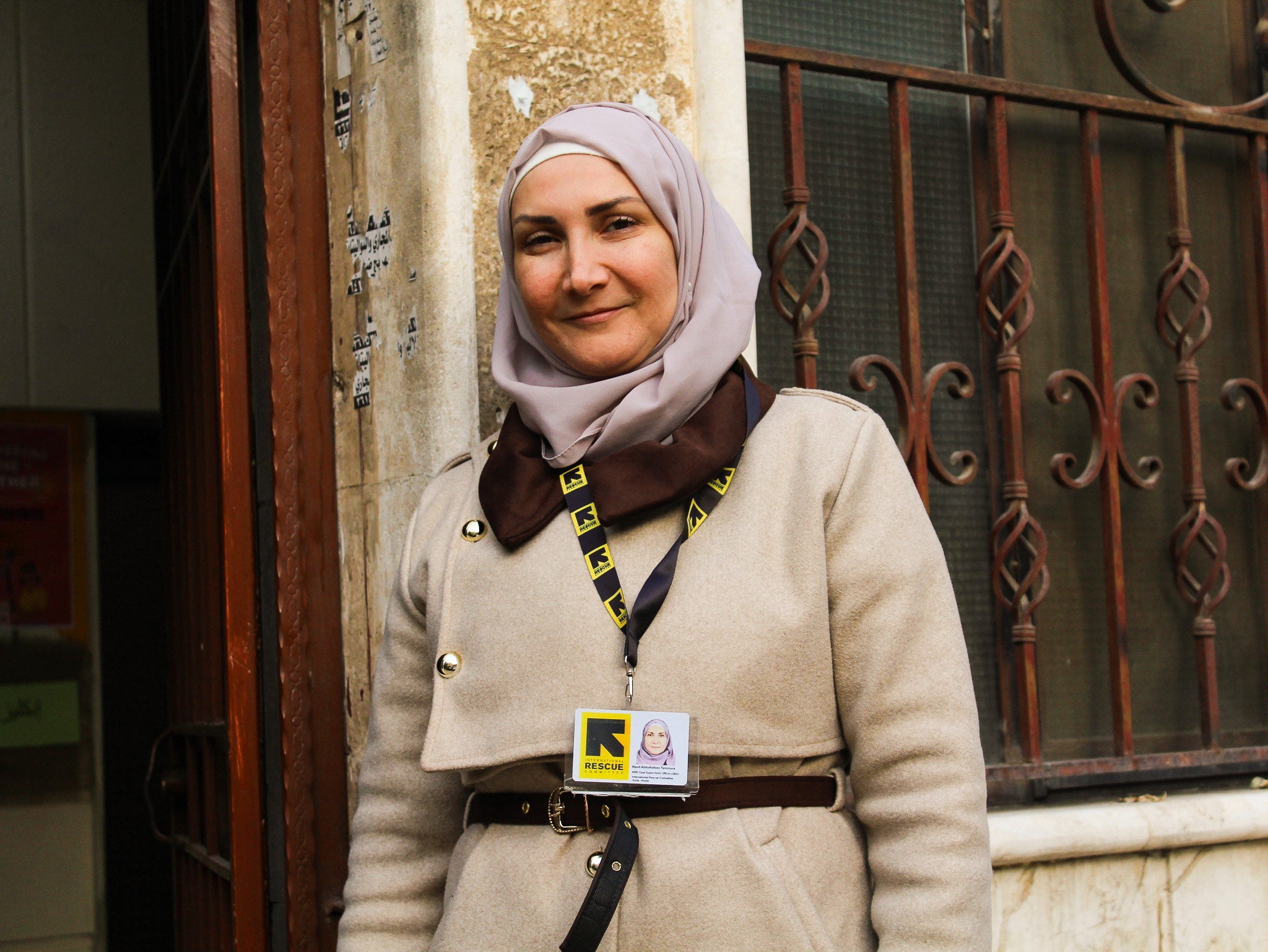
Waed Tannoura, the manager of the Shams Center for Women and Girls, says she has seen an increase in gender-based violence in the last year, as well as an increase of child marriage. Approximately 8.5 million people in Syria require GBV assistance – the majority of which are women and girls. Tannoura estimates that roughly three out of four women in Homs are experiencing some form of violence, although many are scared to report it. “We really need to work on consistent trust, and it takes time to build this,” says the 47-year-old, over Arabic coffee in her office.
Like Noor, the most common cases they see at the center is physical violence committed by a woman’s husband or father, which she says is being exacerbated by increasing economic pressures. There is no women’s shelter in Homs where a woman can go to for safety if she wants to escape the violence – the closest one is in Damascus, a two hour drive away – so the center runs psychosocial support sessions for survivors and teaches techniques to help minimise the violence.
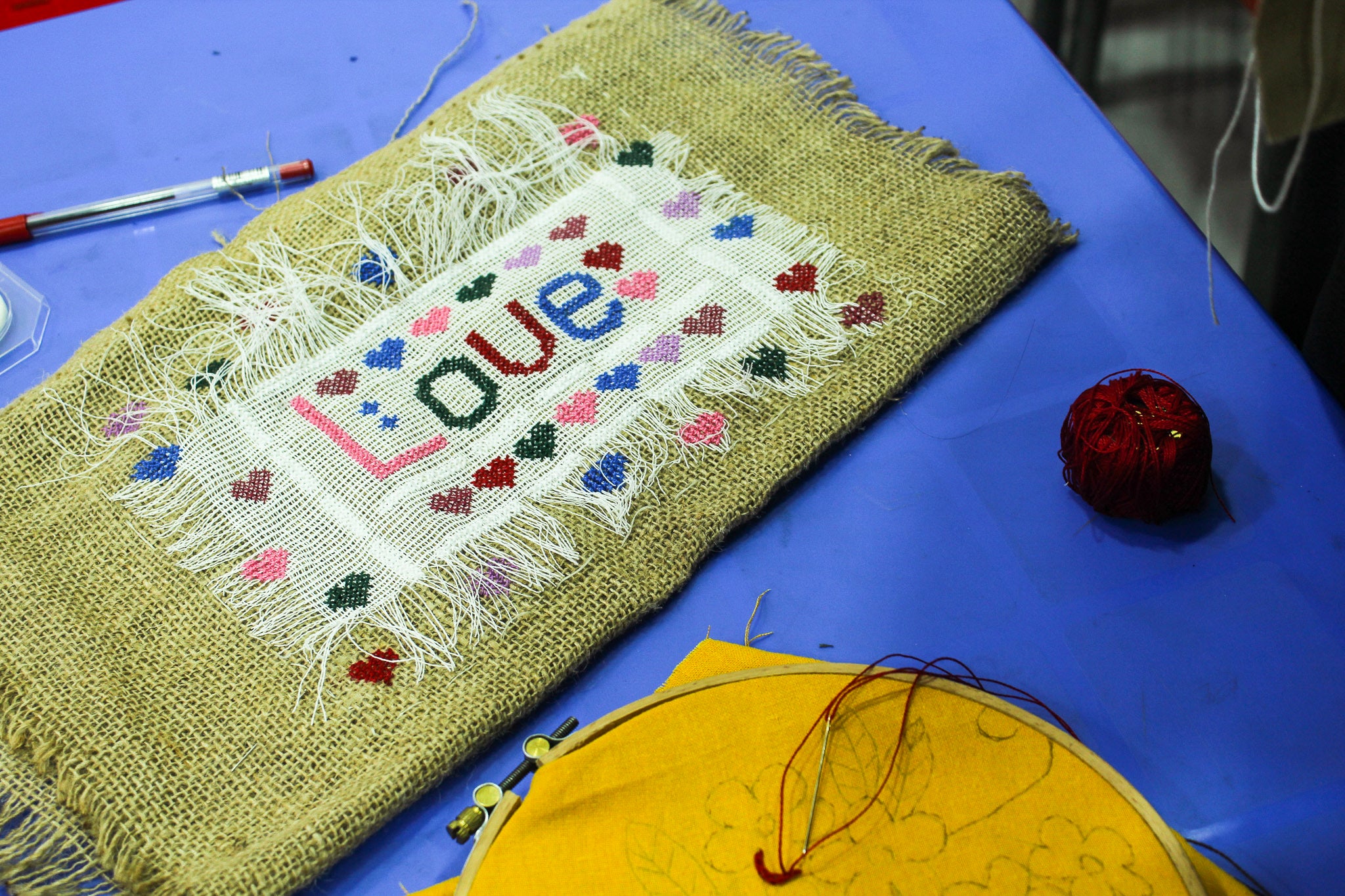
A group of women sit in a semi-circle at the center sharing fresh bread and sipping sweet tea as they talk about their experiences. Samar details the trauma of life in Homs during the war. The city was a key battleground during the uprising against Assad that fed into the war in 2011, with widespread protests by residents leading to it being dubbed the “capital of the revolution”. She lived in a neighbourhood that saw a lot of heavy bombing. “I had no other place to stay. I lost my two brothers – they disappeared, and we don’t know anything about what happened to them,” says the 48-year-old. “I came to the center to get help to find them. The women here were nice, they offered me legal advice so I could find out their fate after 14 years.”
All of the women speak of the rising cost of living and their struggles to access basic services, like electricity. Some of them returned to Syria to find their homes had been destroyed or looted, with only a gutted shell remaining, while others are now the main breadwinners, but job opportunities are scarce. The UN estimates that over 90 percent of Syrians live below the poverty line. “People can’t afford so many things. I am worried about providing diapers for my children because everything is very expensive,” says Raja, 33. “After the fall of the Assad regime, now is our time to thrive and build our country,” she says. But Naima, a 43-year-old teacher, adds: “How can we create a society if we don’t have a home?”
’I want to protect myself… my family’
“The future for women and girls in Syria is challenging,” says Tannoura . “Everyone thinks that after the fall of the regime, Syria became heaven, but a lot of work is needed. The response [from the international community] should be larger, not smaller.” She says they are afraid that the aid cuts will force them to shut down the center and “leave all of these women behind”.
It is undeniable that the lives and health of many women in the country are at risk if sustainable funding is not found. Half of Syria’s hospitals are non-functional, according to the World Health Organisation, while over 400 health facilities across the country have been affected by funding cuts since mid-2025 and 366 have suspended or reduced services. Dr Dijla Mahmod works in the only maternity hospital in Raqqa governorate – where she also gave birth to her first child five months ago. The hospital is already under intense pressure, with a high number of patients from across the northeast. “Last week, a woman who had given birth at home arrived in a very bad condition as the placenta had remained in her uterus,” says the 29-year-old.
She says there is a lack of awareness on women’s health in the area –- the patient had stayed at home for three days with the placenta still inside, which can lead to sepsis, heavy bleeding, and even death. The doctors at the hospital saved her life, but others aren’t so lucky – roughly two women per month die at the hospital because of difficulties in accessing services, only coming to hospital when they are in a critical condition. She thinks cases like this will increase as the aid cuts hit next year and resources and staff at the hospital are reduced.
“I don’t feel good about the future of women [in Syria], because [the new government] are depending on the Islamic ideas,” adds Dr Mahmod, especially, she says, as a woman who is part of the Kurdish minority. “We are fearful of the Damascus government,” she says, referencing the sectarian violence and targeting of minorities in Latakia and Suwayda. Recent fighting between the Kurdish-led Syrian Democratic Forces (SDF) and the Syrian government forces in the northeast is not helping to ease fears among Kurds and other minorities.
Back in Madaya, when the SFPA’s women’s center closed down in 2024, Rehab, 35, lost her job as a counselor. Now she works in one of the organisation’s mobile medical teams, traveling to rural communities, along with a doctor, gynecologist, and midwife. These mobile teams are essential, especially in areas where there are non-functioning health centres. Still, it is not enough to replace the services they once offered. “At the clinic where I used to work we distributed medicine for 45 women per day, now we don’t have any medicines after the closure,” says Rehab. “We also provided reproductive health services, family planning services, and IUDs, free of charge. Outside of the clinic each woman would have to pay around 800,000 Syrian pounds [approximately £53] to get an IUD.”
There is some hope on the horizon. At the tail end of 2025, the United States pledged to give the United Nations $2 billion in 2026 to respond to the world’s most urgent humanitarian crises in seventeen countries – Syria being one of them. Although it is a tiny portion of the estimated $33 billion needed to respond to humanitarian crises this year, and it is unclear whether the US will have the power to prevent funds from going to women’s sexual and reproductive health services, which they have previously done through the implementation of the “global gag rule”. This prohibits foreign NGOs who receive US global health assistance from providing legal abortion services or referrals, while also barring advocacy for abortion law reform
Despite the difficulties Syrian women are facing, they are determined to rebuild a country that is safe for them all. Noor is optimistic about the future: she is in her third year of a law degree, which she began because of her experiences. “When I finish my studies, I want to raise a case against my dad,” she says. “I want to be sure that if anybody hurts me, I know how to confront it. My dad has no authority to beat me or to harm me. I want to protect myself, my mum, my sisters, my family, from my dad.”
*Names changed to protect identity
This article was produced as part of The Independent’s Rethinking Global Aid project